

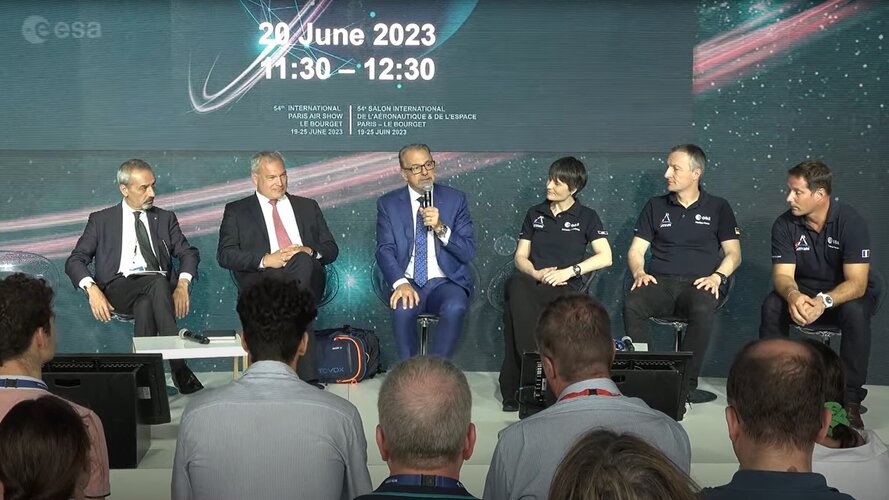
Paris Air Show Live - session on the ambitions of Europe in human and robotic exploration
 Video:
00:47:00
Video:
00:47:00
Watch the replay of the conference on Europe’s ambitions in human and robotic space exploration, streamed live from Le Bourget. Speakers include ESA Director General Josef Aschbacher, CNES CEO Philippe Baptiste and Director General of the German Space Agency Walther Pelzer. ESA astronauts Thomas Pesquet, Samantha Cristoforetti and Matthias Maurer will contribute their views.
Introducing Crew-7!
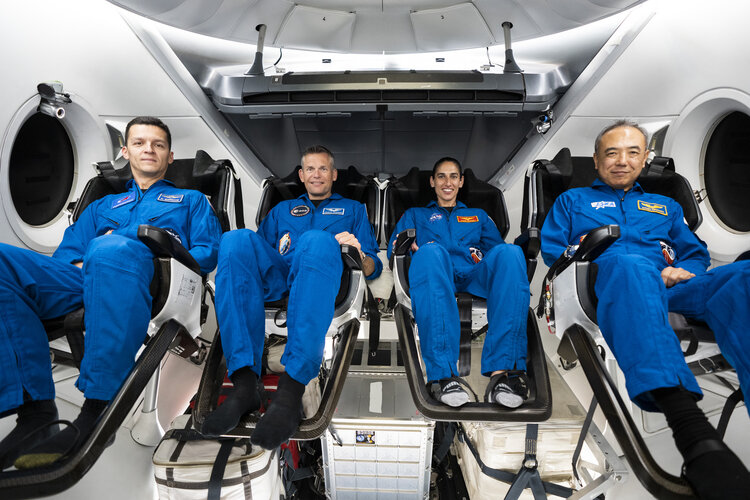
The final two crewmembers of Crew-7, for which ESA astronaut Andreas Mogensen is the pilot, have been announced. They will fly to the International Space Station (ISS) later this summer.
Printing electronics to help space missions lose weight
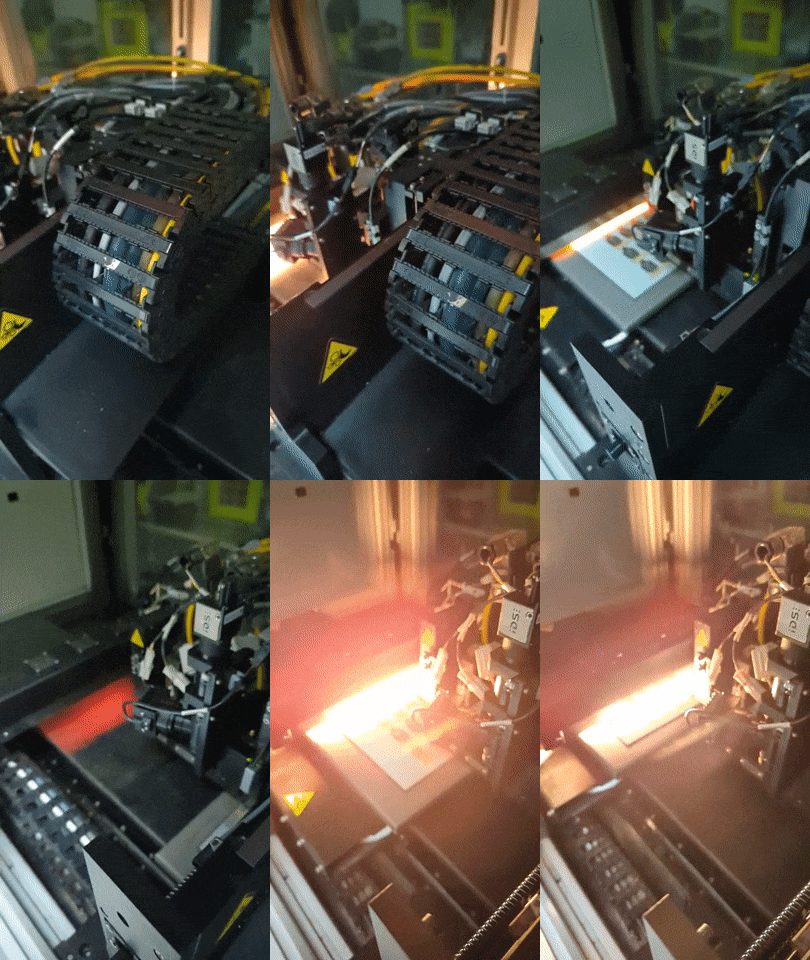
The functionality of any space mission is determined by its electrical, electronic and electro-mechanical (EEE) components. While individually small in size, a standard satellite can contain thousands of these active and passive devices, along with several kilometres of connective links ESA is looking into printing these electronics, to boost overall robustness while driving down mass, manufacturing lead times, and cost.
Intelsat orders another servicing mission from Northrop Grumman’s SpaceLogistics

SpaceLogistics announced June 20 it has three confirmed orders for its refueling pods that will fly to orbit on a servicing mission in early 2025.
True Anomaly to pursue military contracts for virtual, live training tech

True Anomaly announced plans to provide digital and live training ranges as a service.
Orbital Composites leans into space market

Orbital Composites is gaining traction in the emerging in-space servicing, assembly and manufacturing sector thanks to government contracts and partnerships.
Ramon.Space reveals partnership with Foxconn subsidiary Ingrasys

Ramon.Space announced a strategic partnership June 20 with Foxconn subsidiary Ingrasys aimed at high-volume production of satellite computing technology.
The post Ramon.Space reveals partnership with Foxconn subsidiary Ingrasys appeared first on SpaceNews.
A trio of images highlight BepiColombo’s third Mercury flyby
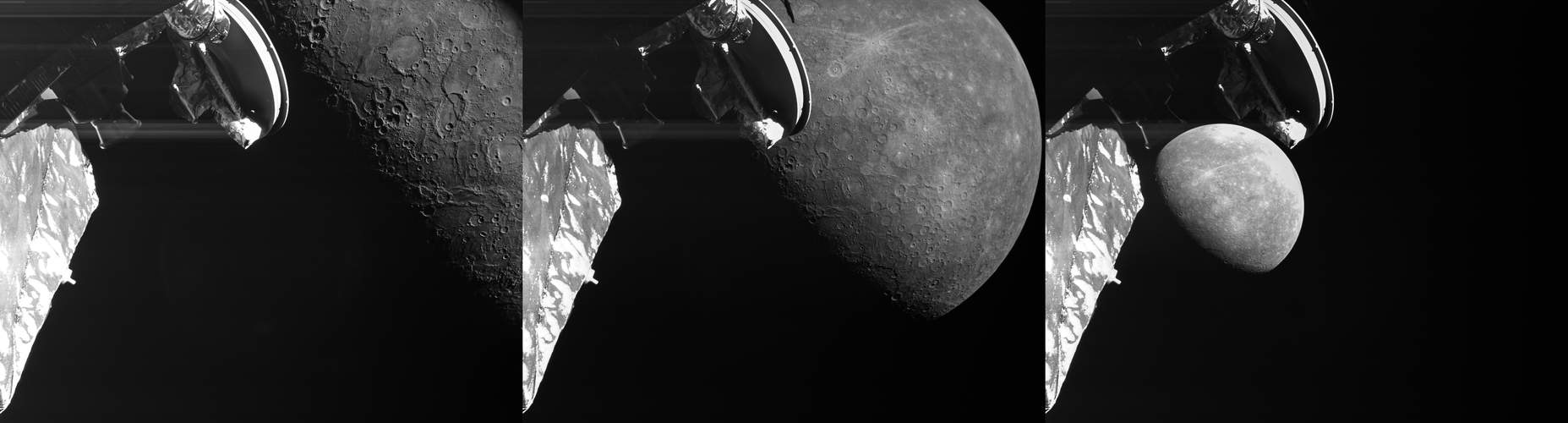
The ESA/JAXA BepiColombo mission has made its third of six gravity assist flybys at Mercury, snapping images of a newly named impact crater as well as tectonic and volcanic curiosities as it adjusts its trajectory for entering Mercury orbit in 2025.
Even though they're bigger, Generation 2 Starlinks are fainter than Gen1
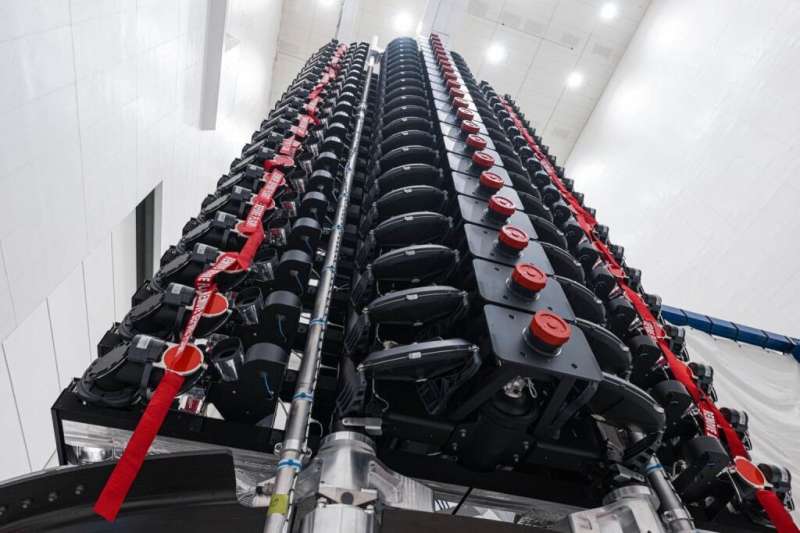
We've filed plenty of reports here at UT warning about the potential impact of Starlink and similar satellites on the field of astronomy. We've gone so far as to point out that the granddaddy of space-based telescopes—Hubble—has already had some of its images tarnished by passing Starlink satellites.
However, SpaceX has been aware of the problem and is working to limit their product's brightness. The recently launched Gen2 satellites seem to have made a significant step forward—research from a team of amateur astronomers finds that the new Gen2 Starlinks are more than 10x fainter than previous Gen1 iterations.
Admittedly, that finding comes with a lot of caveats. But the pedigree of the team doing the research isn't in question. It was led by Anthony Mallama, a senior engineer at Raytheon and an author of numerous technical papers and articles discussing Starlink's brightness. He and six other amateur astronomers collected their own data for this paper, recently released on the arXiv pre-print server.
FAA reduces airspace restrictions for Cape Canaveral launches

The FAA has started to reduce the amount of airspace it closes for launches from Cape Canaveral as part of efforts to limit the impact of growing launch activity on commercial aviation.


