

Astrobotic and Westinghouse team to power outer space
 At the 2023 Keystone Space Conference last week, Westinghouse Electric Company and Astrobotic announced the signing of a Memorandum of Understanding to explore collaboration on space technology programs for NASA and the Department of Defense.
The collaboration will focus on the development of space nuclear technology and delivery systems. The joint effort will also include strengthening th
At the 2023 Keystone Space Conference last week, Westinghouse Electric Company and Astrobotic announced the signing of a Memorandum of Understanding to explore collaboration on space technology programs for NASA and the Department of Defense.
The collaboration will focus on the development of space nuclear technology and delivery systems. The joint effort will also include strengthening th USTC reveals reconfiguration process of solar eruptions
 Recently, a research team led by Prof. GOU Yanyu from the University of Science and Technology of China (USTC) of the Chinese Academy of Sciences (CAS) found that the solar outburst structure undergoes a complex reconfiguration evolution during the early outbursts, thus making important advances in the study of solar outburst activity. This study was published in Nature Astronomy.
In class
Recently, a research team led by Prof. GOU Yanyu from the University of Science and Technology of China (USTC) of the Chinese Academy of Sciences (CAS) found that the solar outburst structure undergoes a complex reconfiguration evolution during the early outbursts, thus making important advances in the study of solar outburst activity. This study was published in Nature Astronomy.
In class New keen-sighted satellite will view distant stars, assist Webb telescope
 NASA's James Webb Space Telescope (JWST), the most powerful telescope ever launched into space, will soon get a new "sidekick"-a small but nimble satellite that borrows its name from a multicolored sea creature.
Last month, NASA selected the $8.5 million space mission, which is called Monitoring Activity from Nearby sTars with uv Imaging and Spectroscopy (MANTIS). This "CubeSat," or mini-s
NASA's James Webb Space Telescope (JWST), the most powerful telescope ever launched into space, will soon get a new "sidekick"-a small but nimble satellite that borrows its name from a multicolored sea creature.
Last month, NASA selected the $8.5 million space mission, which is called Monitoring Activity from Nearby sTars with uv Imaging and Spectroscopy (MANTIS). This "CubeSat," or mini-s What's the dark matter with Euclid
 Euclid is ESA's mission to shed light on dark matter and dark energy, but teams at the Agency's mission control centre in Darmstadt, Germany, are also in the dark. A series of problems have befallen the mission in pre-launch simulations.
Currently about halfway through the Euclid simulations campaign, the key focus in the Main Control Room is the Launch and Early Orbit Phase (LEOP) and spa
Euclid is ESA's mission to shed light on dark matter and dark energy, but teams at the Agency's mission control centre in Darmstadt, Germany, are also in the dark. A series of problems have befallen the mission in pre-launch simulations.
Currently about halfway through the Euclid simulations campaign, the key focus in the Main Control Room is the Launch and Early Orbit Phase (LEOP) and spa Rogers in draft NDAA bill presses Air Force on relocation of U.S. Space Command

House Armed Services Committee Chairman Rep. Mike Rogers (R-Ala.) on June 12 released his proposed bill for the National Defense Authorization Act for Fiscal Year 2024, known as the chairman’s mark.
Nanosats launched that use light to talk
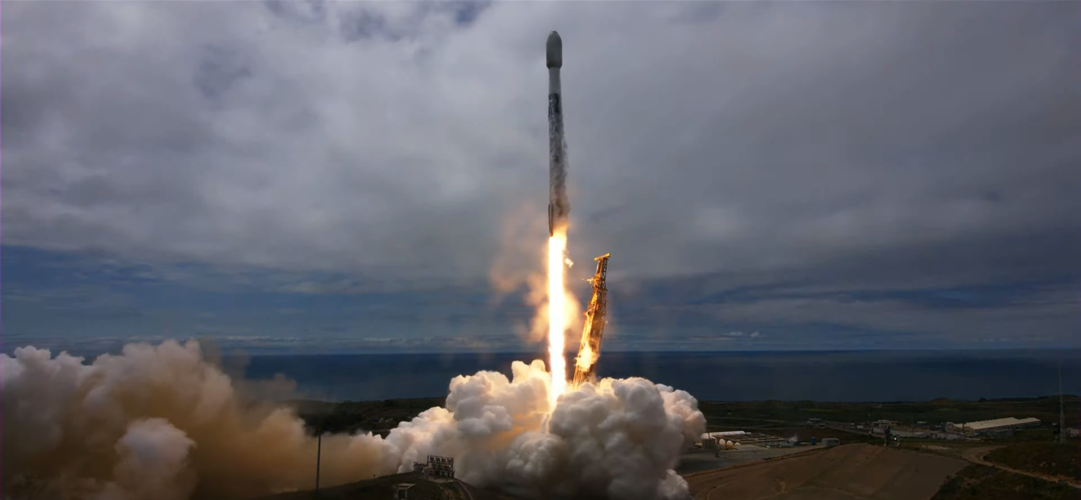
A second pair of satellites that use light to communicate with each other has been launched.
Air Force orders a Viasat-3 terminal to demonstrate space relay service

The Air Force Research Laboratory has ordered a Viasat-3 space terminal that will be used to demonstrate communications services for low-Earth orbit spacecraft.
Space Force eager to harness satellite-servicing technologies

The Space Force is investing in early-stage technologies and laying out a strategy to buy commercial services to refuel and service satellites in geostationary orbit by the early 2030s.
China is trying to stop its boosters from randomly crashing into villages
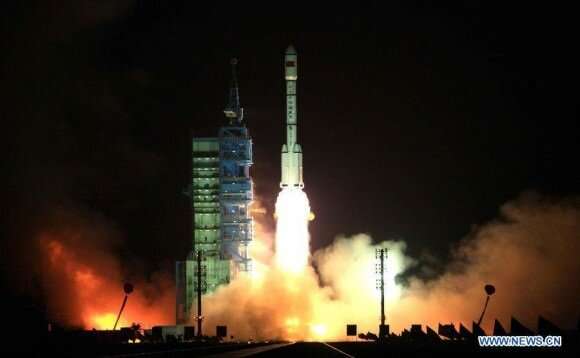
China's space program has advanced by leaps and bounds in a relatively short time. However, it has suffered some bad publicity in recent years due to certain "uncontrolled reentries" (aka crashes). On multiple occasions, spent first stages have fallen back to Earth, posing a potential threat to populated areas and prompting backlash from NASA and the ESA, who claimed China was taking "unnecessary risks." To curb the risk caused by spent first stages, China has developed a parachute system that can guide fallen rocket boosters to predetermined landing zones.
According to the Chinese Academy of Launch Vehicle Technology (CALT), which developed the system, the system was successfully tested on a Long March-3B (CZ-3B) rocket on Friday, June 9th. As they indicated in their statement, a review of the test data and an in-situ analysis of the debris showed that the parachute system helped narrow the range of the landing area by 80%.
Satellite execs call for more data to improve space sustainability

A lack of data and collaboration continues to hold back efforts to ensure a sustainable orbital environment, satellite operator executives said June 13.


