

Picking up lightsabres for Mars
 Video:
00:02:10
Video:
00:02:10
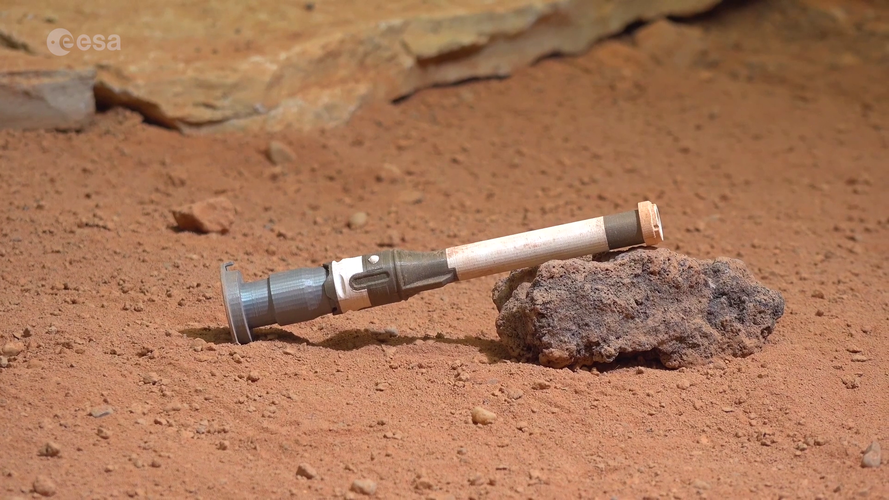
Detect, fetch and collect. A seemingly easy task is being tested to find the best strategy to collect samples on the martian surface, some 290 000 million km away from home.
Testing technologies for Mars exploration is part of the daily job of Laura Bielenberg, an ESA graduate trainee for the Mars Sample Return campaign.
The test takes place at the rock-strewn recreation of the Red Planet at ESA’s ESTEC technical centre in Noordwijk, the Netherlands. The nickname of this test site is the ‘Mars Yard’ and is part of the Planetary Robotics Laboratory.
The tube is a replica of the sample
Viasat’s Inmarsat acquisition clears all regulatory hurdles

Viasat has secured all regulatory clearances needed to buy British satellite operator Inmarsat after getting unconditional approval from the European Commission May 25.
South Korea’s KSLV-2 rocket launches seven satellites, one unaccounted for

South Korea’s KSLV-2 rocket put seven satellites, including one equipped with synthetic aperture radar, into sun-synchronous orbit May 25, although an eighth cubesat is believed to have not deployed properly.
South Korea hails successful launch of homegrown rocket (Update)
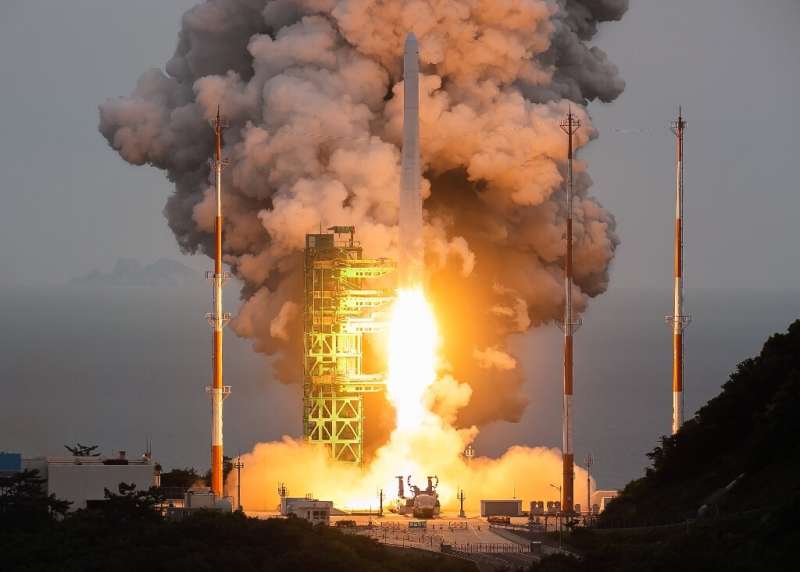
South Korea launched its homegrown Nuri rocket on Thursday, officials said, a day after it was forced to postpone due to a technical glitch just hours before lift-off.
It marks the third launch of the Nuri, which successfully put test satellites into orbit last year after a failed 2021 attempt saw the rocket's third-stage engine burn out too early.
Wednesday's launch was called off over a computer communication error which was resolved by Thursday, allowing the launch—a key step forward for the country's burgeoning space program—to go ahead.
The three-stage rocket, more than 47 meters (155 feet) long and weighing 200 tons, soared into the sky from the Naro Space Center in South Korea's southern coastal region, leaving a huge trail of white smoke.
Northrop Grumman wins $45 million Space Force contract to launch small weather satellite

Northrop Grumman won a $45.5 million contract to launch a small weather satellite in 2025, the U.S.
Virgin Galactic makes first suborbital spaceflight in nearly two years

Virgin Galactic’s SpaceShipTwo suborbital vehicle flew to space for the first time in nearly two years May 25 on what the company projected to be the vehicle’s final test flight before commencing commercial operations.
Virgin Galactic resumes spaceflights after two year pause
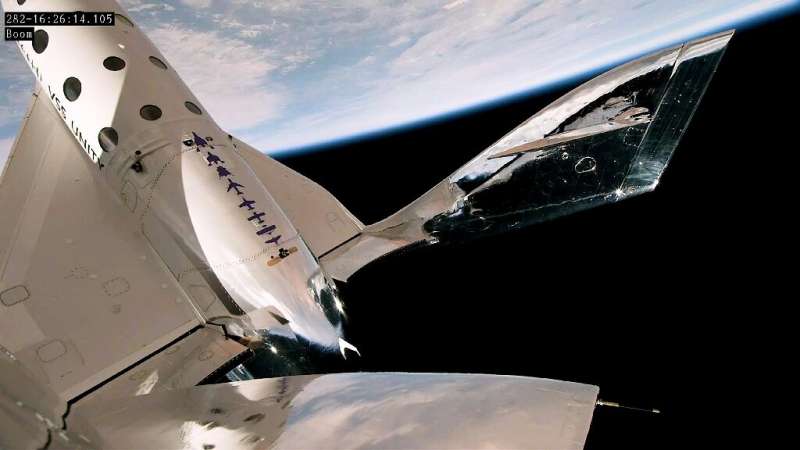
Virgin Galactic successfully carried out its first spaceflight in nearly two years Thursday, the company said, after an "enhancement period" to make safety upgrades to its fleet.
It was the fifth time the space tourism company brushed the boundary of space, and has been billed as the final test before commercial operations can begin in late June, with members of the Italian Air Force as the first paying customers.
"Touchdown, VSS Unity!" the company tweeted, referring to the name of the company's spaceplane. "Our crew and spaceship are back on Earth after landing smoothly at Spaceport America, New Mexico."
The mission "was a fantastic achievement for everyone at Virgin Galactic," added CEO Michael Colglazier, in a statement.
The Unity 25 mission flew four of the company employees to an altitude of just over 54 miles (87 kilometers) above sea level.
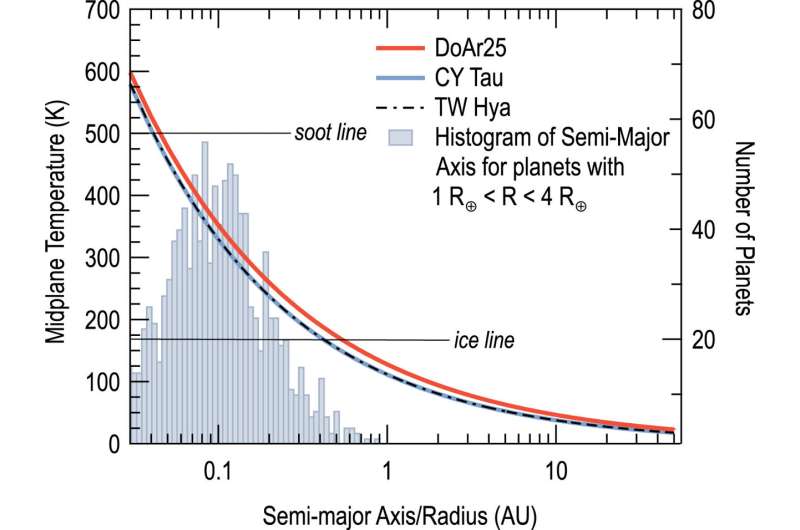
The soot line: A new way to expand the search for habitable planets
NASA safety panel skeptical of Starliner readiness for crewed flight

The chair of a NASA safety panel urged the agency not to rush into a crewed test flight of Boeing’s CST-100 Starliner vehicle, calling for an independent “deep look” at technical issues with the spacecraft.
Orbit Fab selects Impulse Space’s orbital vehicle for in-space refueling demo

Orbit Fab announced May 25 it selected an orbital vehicle made by startup Impulse Space to host a fuel depot for an in-orbit refueling demonstration funded by the U.S.


