

Solar-powered balloons detect mysterious sounds in the stratosphere
 Imagine if sending your science experiment 70,000 ft in the air just took painter's plastic, tape, a dash of charcoal dust, and plenty of sunlight.
Daniel Bowman of Sandia National Laboratories will present his findings using solar-powered hot air balloons to eavesdrop on stratospheric sounds at the upcoming 184th Meeting of the Acoustical Society of America, running May 8-12 at the Chicag
Imagine if sending your science experiment 70,000 ft in the air just took painter's plastic, tape, a dash of charcoal dust, and plenty of sunlight.
Daniel Bowman of Sandia National Laboratories will present his findings using solar-powered hot air balloons to eavesdrop on stratospheric sounds at the upcoming 184th Meeting of the Acoustical Society of America, running May 8-12 at the Chicag China unveils first 3D rainfall maps from inaugural Fengyun-3G Satellite
 On May 15, the China Meteorological Administration unveiled the first set of maps from the country's premier low-inclination orbit precipitation measurement satellite, Fengyun-3 G (FY-3G). These images, supplied by the National Satellite Meteorological Center, illustrate the three-dimensional structure of precipitation at different levels. This invaluable data, collected from the six payloads ab
 Axiom astronauts to train at the European Astronaut Centre
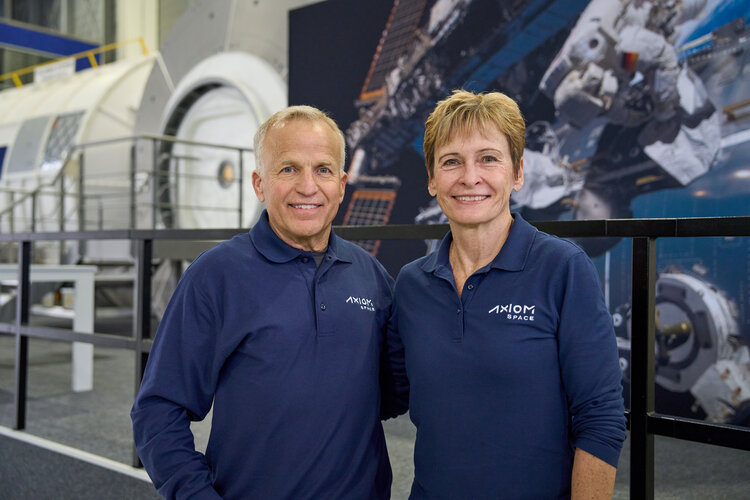
Facilities at ESA's European Astronaut Centre are buzzing with training activities. While a new generation of ESA astronauts began their basic training last month, private astronauts Peggy Whitson and John Shoffner, part of Axiom Space's Crew-2, visited the European Astronaut Centre (EAC) near Cologne, Germany, in February to receive training by ESA instructors for their upcoming journey to the International Space Station.
The Axiom-2 crew is currently scheduled to launch no earlier than 21 May 2023.
Space Force looks at options for relieving Cape Canaveral launch congestion

With increasing activity pushing Florida’s launch sites to their limits, the Space Force is studying ways to move some of that activity elsewhere, including to California.
FCC denies Dish Network 5G plan over Starlink interference concerns

U.S. regulators voted May 18 to protect Starlink’s access to 12 GHz spectrum, which Dish Network had hoped to use for terrestrial 5G in a plan SpaceX warned would deny its satellite broadband network to most Americans.
Inmarsat orders 3 smallsats to bolster L-band safety services

Inmarsat has ordered three small geostationary satellites from 3D printing specialist Swissto12 for a launch in 2026 to fortify its L-band safety services.
NASA's Lucy spacecraft adjusts course for asteroid flyby in November
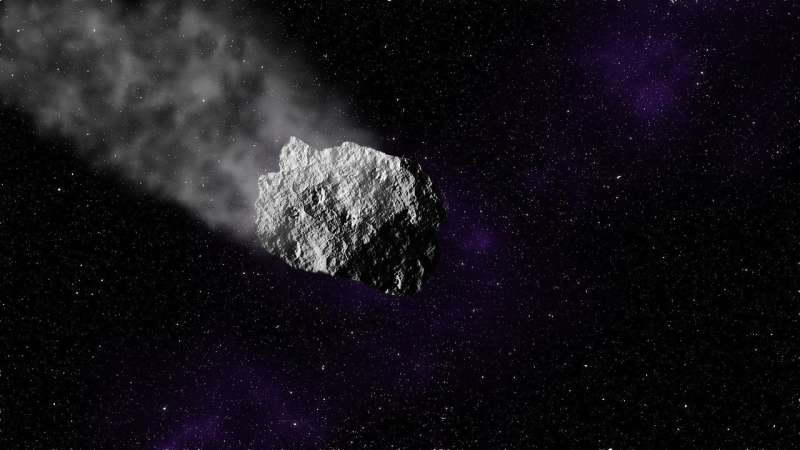
On May 9, NASA's Lucy spacecraft carried out a trajectory correction maneuver to set the spacecraft on course for its close encounter with the small main belt asteroid Dinkinesh. The maneuver changed the velocity of the spacecraft by only about 7.7 mph (3.4 m/s).
Even though the spacecraft is currently traveling at approximately 43,000 mph (19.4 km/s), this small nudge is enough to move the spacecraft nearly 40,000 miles (65,000 km) closer to the asteroid during the planned encounter on Nov. 1, 2023. The spacecraft will fly a mere 265 miles (425 km) from the small, half-mile-(sub-km)-sized asteroid, while traveling at a relative speed of 10,000 mph (4.5 km/s).
The Lucy team will continue to monitor the spacecraft's trajectory and will have further opportunities to fine tune the flight path if needed.
The Lucy team is also continuing to analyze the data collected from its spring instrument calibration campaign and make other preparations for the mission's first asteroid encounter. This encounter will provide a valuable test of the spacecraft's systems and procedures to make sure that everything operates as expected during the mission's high-speed asteroid encounters.
Technical strengths and lower cost led NASA to select Blue Origin lander

NASA selected Blue Origin to develop a second Artemis lunar lander because of technical strengths such as an aggressive schedule of test flights as well as its lower cost.
HASC chairman questions ‘continued delays’ in settling dispute over Space Command’s location

The chairman of the House Armed Services Committee Rep. Mike Rogers (R-Ala.
NASA selects Blue Origin to develop second Artemis lunar lander

NASA has selected Blue Origin to develop a lunar lander to transport astronauts on Artemis missions starting at the end of the decade.


