

Tianzhou 6 docks with Tiangong space station
 The Tianzhou 6 robotic cargo ship connected with the Tiangong space station early Thursday morning, according to the China Manned Space Agency.
In a brief news release, the agency said the cargo craft docked with the Tiangong station's rear hatch at 5:16 am and began to fly with the station in a low-Earth orbit about 400 kilometers above Earth.
Crew members of the Shenzhou XV mission
The Tianzhou 6 robotic cargo ship connected with the Tiangong space station early Thursday morning, according to the China Manned Space Agency.
In a brief news release, the agency said the cargo craft docked with the Tiangong station's rear hatch at 5:16 am and began to fly with the station in a low-Earth orbit about 400 kilometers above Earth.
Crew members of the Shenzhou XV mission Monitoring fluctuating forest carbon from space

Monitoring fluctuating forest carbon from space
China’s spaceplane conducted proximity and capture maneuvers with subsatellite, data suggests

China’s secretive spaceplane may have performed multiple recaptures of an object it released into orbit during its recently completed second flight as part of on-orbit testing.
The answer to solving the digital divide is hybrid connectivity infrastructures

Satellite and terrestrial communications infrastructures must evolve to democratize access to connectivity worldwide. As a fundamental need in today’s technology-driven society, hybrid network infrastructures can democratize access to connectivity for American citizens and the nearly three billion people in the world who remain unconnected.
Foust Forward | Big opportunities for big science with big rockets

Attendees of this year’s Space Symposium were understandably distracted by what was going on a thousand miles from Colorado Springs.
OHB expects first Ariane 6 launch in early 2024

A key Ariane 6 supplier expects the rocket to make its first launch within a year, but ruled out any chance the vehicle could fly before the end of 2023.
Telesat eyes 2026 for first Lightspeed launches amid funding delays

Telesat now expects to start deploying satellites for Lightspeed around 2026, six years later than originally planned as talks to fund the low Earth orbit broadband constellation drag on.
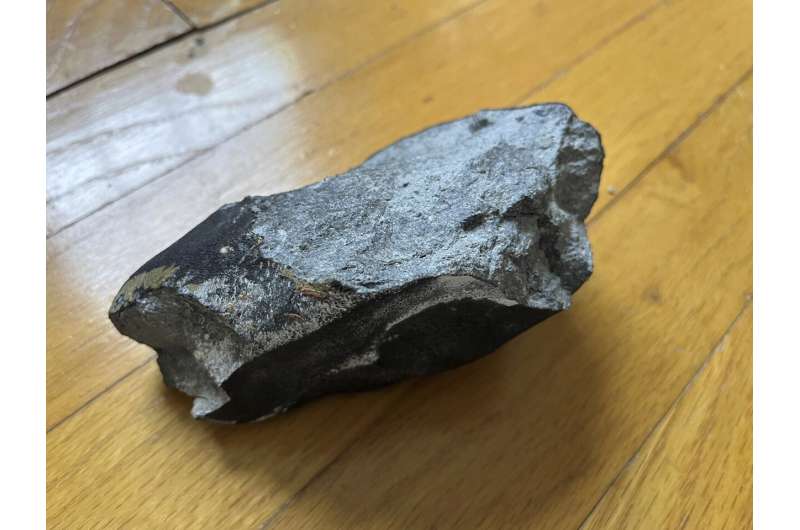
Experts: Metallic object that crashed into New Jersey home was a meteorite
What if Titan Dragonfly had a fusion engine?
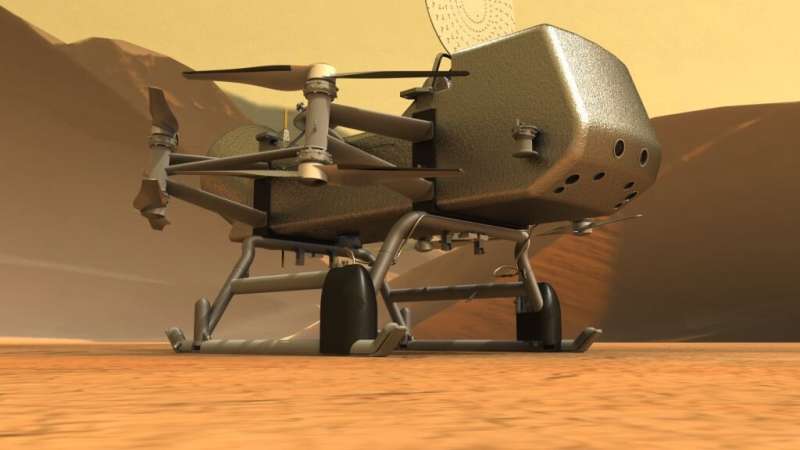
In a little over four years, NASA's Dragonfly mission will launch into space and begin its long journey towards Titan, Saturn's largest moon. As part of the New Frontiers program, this quadcopter will explore Titan's atmosphere, surface, and methane lakes for possible indications of life (aka. biosignatures).
This will commence in 2034, with a science phase lasting for three years and three and a half months. The robotic explorer will rely on a nuclear battery—a Multi-Mission Radioisotope Thermal Generator (MMRTG)—to ensure its longevity.
But what if Dragonfly were equipped with a next-generation fusion power system? In a recent mission study paper, a team of researchers from Princeton Satellite Systems demonstrated how a direct fusion drive (DFD) could greatly enhance a mission to Titan. This New Jersey-based aerospace company is developing fusion systems that rely on the Princeton Field-Reversed Configuration (PFRC).
This research could lead to compact fusion reactors that could lead to rapid transits, longer-duration missions, and miniature nuclear reactors here on Earth.
USAF awards contract to Above: Orbital and Ascent Solar for on-orbit PV production
 Above: Orbital, Inc. has been awarded a significant contract from the United States Air Force for On-orbit Manufacturing of Thin-Film Solar Photovoltaics in partnership with Ascent Solar Technologies, Inc. (NASDAQ: ASTI), the leading U.S. innovator in the design and manufacture of featherweight, flexible, and durable CIGS thin-film photovoltaic (PV) solutions.
The Small Business Innovation
Above: Orbital, Inc. has been awarded a significant contract from the United States Air Force for On-orbit Manufacturing of Thin-Film Solar Photovoltaics in partnership with Ascent Solar Technologies, Inc. (NASDAQ: ASTI), the leading U.S. innovator in the design and manufacture of featherweight, flexible, and durable CIGS thin-film photovoltaic (PV) solutions.
The Small Business Innovation 


