

Kepler Communications raises $92 million for optical data relay network

Canadian small satellite operator Kepler Communications said April 13 it has raised $92 million to start deploying an optical data-relay constellation next year.
Europe's JUICE mission to launch for Jupiter's icy moons
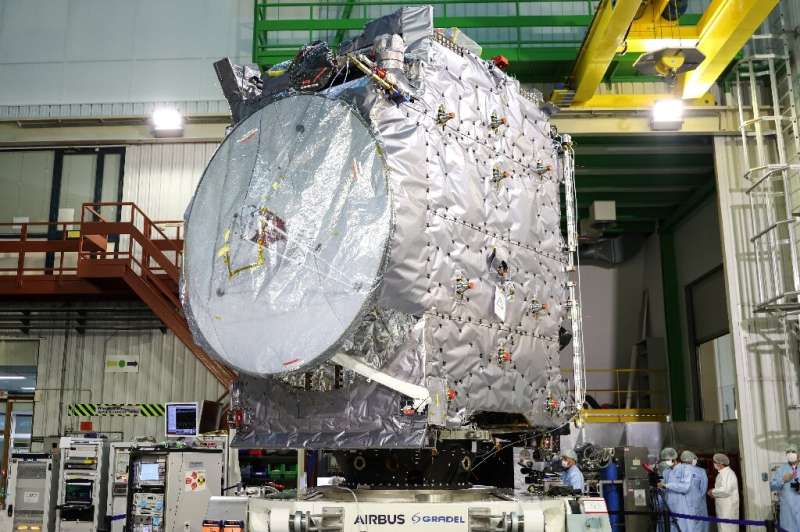
The European Space Agency's JUICE spacecraft is to blast off Thursday on an eight-year journey through the Solar System to discover whether Jupiter's icy moons are capable of hosting extraterrestrial life in their vast, hidden oceans.
The JUpiter ICy Moons Explorer (JUICE) has received the green light for its scheduled launch on an Ariane 5 rocket from Europe's spaceport in Kourou, French Guiana at 1215 GMT.
"The weather conditions are good," Guiana Space Center director Marie-Anne Clair said on Wednesday in the control room, where Belgium's King Philippe was among those in attendance.
The six-tonne spacecraft, which is roughly four square meters, will separate from the rocket at an altitude of 1,500 kilometers (930 miles) a little under half an hour after blast-off.
Space Systems Command’s Tetra-1 begins mission operations

Millennium Space Systems announced the handoff April 13 of the Tetra-1 microsatellite to the U.S. Space Force Space Systems Command for the start of mission operations.
Launch of Europe's JUICE spacecraft postponed to Friday (Update)
The European Space Agency's JUICE spacecraft is to blast off Thursday on an eight-year journey through the Solar System to discover whether Jupiter's icy moons are capable of hosting extraterrestrial life in their vast, hidden oceans.
The JUpiter ICy Moons Explorer (JUICE) has received the green light for its scheduled launch on an Ariane 5 rocket from Europe's spaceport in Kourou, French Guiana at 1215 GMT.
"The weather conditions are good," Guiana Space Center director Marie-Anne Clair said on Wednesday in the control room, where Belgium's King Philippe was among those in attendance.
The six-tonne spacecraft, which is roughly four square meters, will separate from the rocket at an altitude of 1,500 kilometers (930 miles) a little under half an hour after blast-off.
Wobbling star found in Gaia-Hipparcos data confirmed to host exoplanet
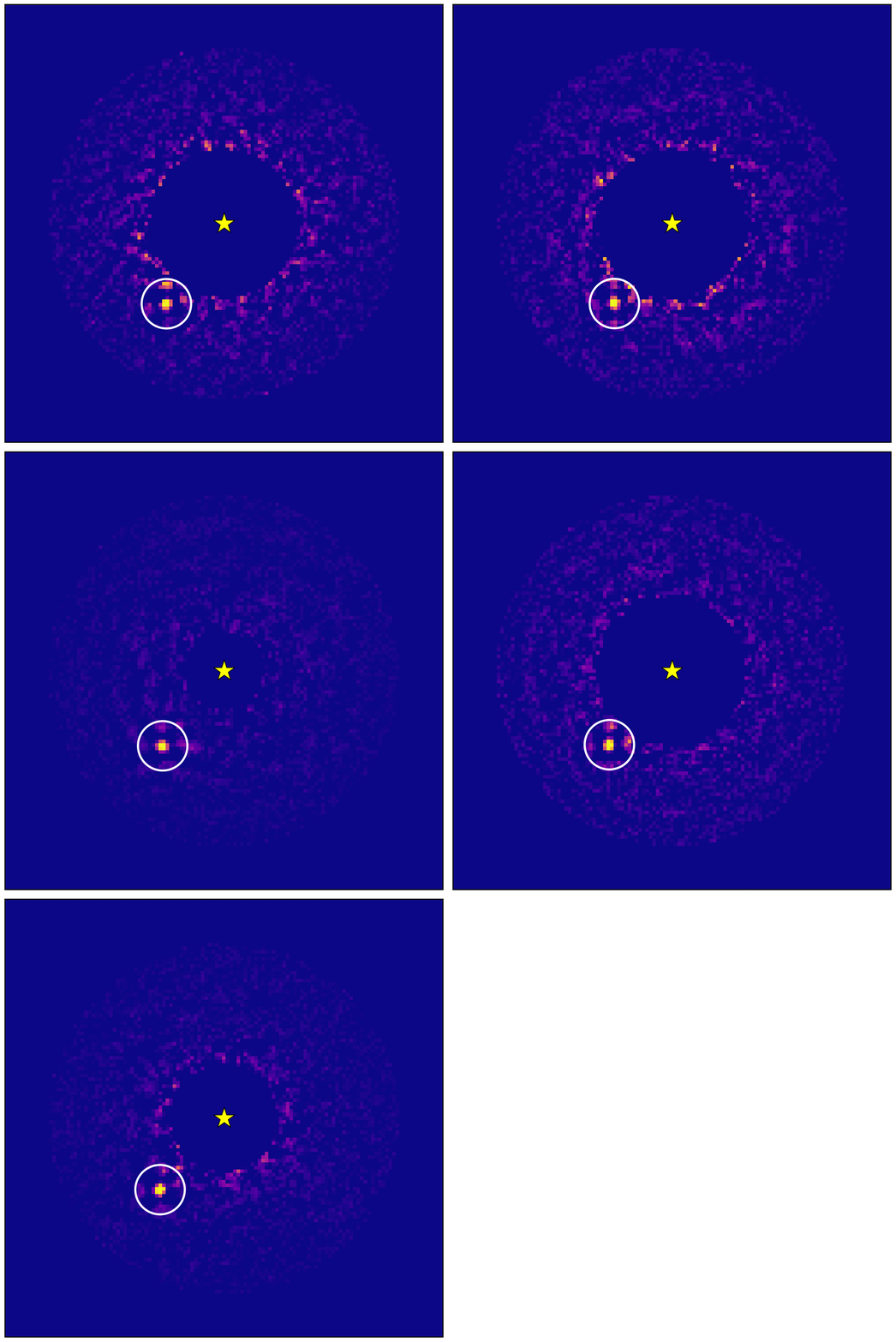
Data from ESA’s star-mapping Gaia spacecraft has allowed astronomers to image a gigantic exoplanet using Japan's Subaru Telescope. This world is the first confirmed exoplanet found by Gaia’s ability to sense the gravitational tug or ‘wobble’ a planet induces on its star. And the technique points the way to the future of direct exoplanet imaging.
NOAA looks to update weather satellite and ground systems

The National Oceanic and Atmospheric Administration is soliciting proposals for research and development on microwave weather sensors, ground systems and technology to reduce interference from 5G networks.
Boeing unveils WGS-11 design with new military payload

A new version of the U.S. military’s Wideband Global Satcom (WGS) satellite unveiled by Boeing on April 13 has a new payload that the company designed under a U.S.
Draper completes initial milestones for NASA CLPS mission

Draper has completed the first milestones of a NASA award to perform the first commercial landing on the far side of the moon in 2025.
NASA's Curiosity Mars rover gets a major software upgrade
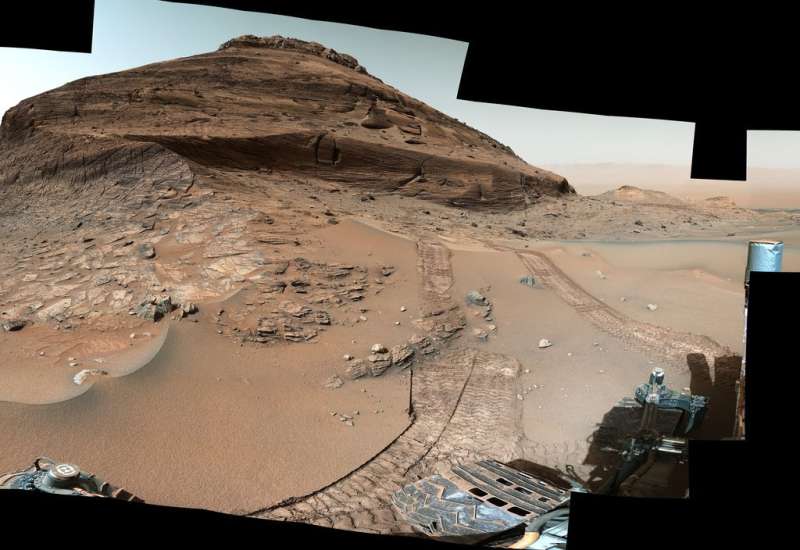
The update brings loads of improvements, the most significant being new driving capabilities.
Years in the making, a major software update that has been installed on NASA's Curiosity rover will enable the Mars robot to drive faster and reduce wear and tear on its wheels.
A rocket-powered spaceplane completes a successful test flight
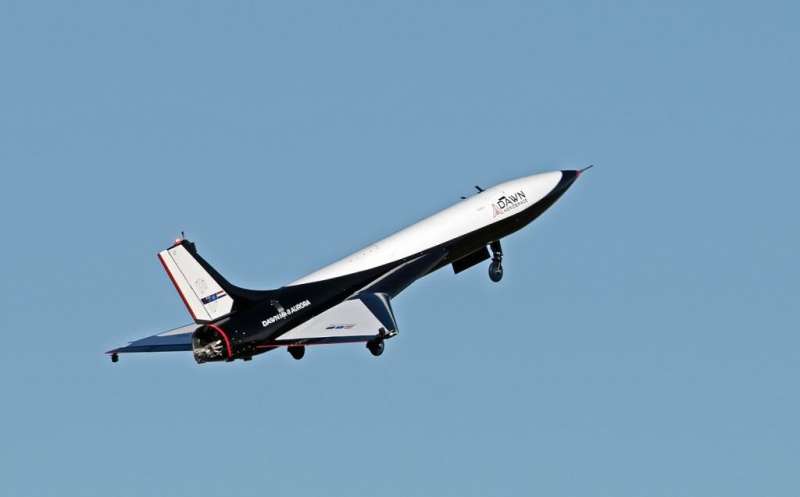
Access to space is getting easier and more accessible as more and more platforms are coming online that can significantly decrease the cost of getting into Earth's orbit or even beyond. Now, another company has taken a step forward in making inexpensive, reusable access to space a reality. Dawn Aerospace, which operates out of the U.S., New Zealand, and the Netherlands, has successfully tested a prototype spaceplane.
This isn't Dawn's first success, as the company already has satellite propulsion systems in orbit on 15 different satellites. It isn't even its first successful space plane test—they had previously completed some testing using jet engines. However, it is the first time the company has successfully tested a rocket-powered plane.
The series of three tests happened at the end of March at the Glentanner Aerodrome in New Zealand, where the plane successfully fired its rocket engine. Clocking it at over 170 knots and 6,000 ft of altitude may not seem like much, but it is a first step for the technology.


