Italian airline signs up for space-enabled flights
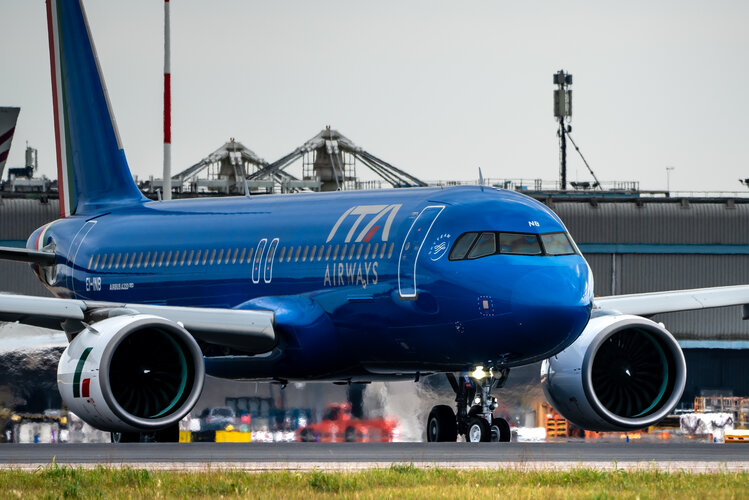
Passengers flying on Italy’s national carrier ITA Airways will experience fewer flight delays and greener travel thanks to pilots being able to use satellites to route their planes.
Navigation Lab exploring Galileo’s future – and beyond
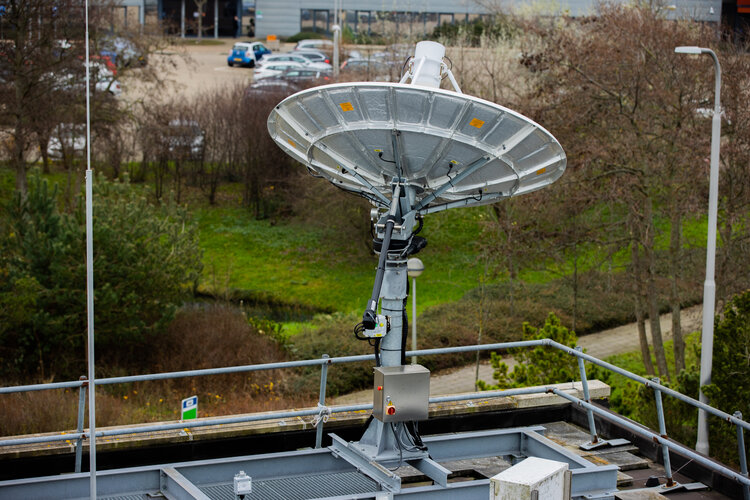
Would you like to know the future of satellite navigation? Try ESA’s Navigation Laboratory. This is a site where navigation engineers test prototypes of tomorrow's user receivers, using simulated versions of the navigation signals planned for the coming decade, such as set to be transmitted from Galileo’s Second Generation satellites.
Shield Capital adds retired general Goldfein to national security advisory board

Shield Capital, a venture firm that invests in defense and space startups, announced that retired U.S.
ISS dodges commercial imaging satellite

The International Space Station adjusted its orbit March 6 to avoid a close approach by an imaging satellite operated by Satellogic, the latest evidence of growing congestion in low Earth orbit.
NASA's IBEX spacecraft resumes science operations
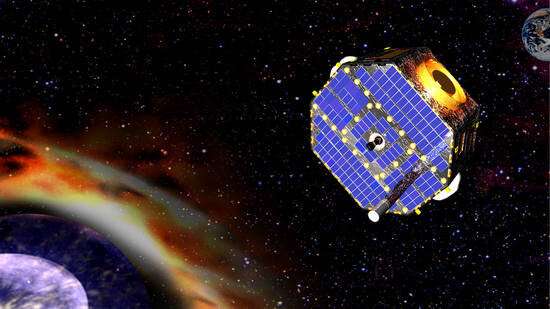
NASA's Interstellar Boundary Explorer (IBEX) is fully operational after the mission team successfully reset the spacecraft on March 2.
To take the spacecraft out of a contingency mode it entered last month, the mission team performed a firecode reset (which is an external reset of the spacecraft) instead of waiting for the spacecraft to perform an autonomous reset and power cycle on March 4. The decision took advantage of a favorable communications environment around IBEX's perigee—the point in the spacecraft's orbit where it is closest to Earth.
After the firecode reset, command capability was restored. IBEX telemetry shows that the spacecraft is fully operational and functioning normally.
Launched on Oct. 19, 2008, IBEX is a small explorer NASA mission tasked with mapping the boundary where winds from the sun interact with winds from other stars. IBEX, the size of a bus tire, uses instruments that look toward the interstellar boundary from a nine-day orbit around Earth.
NASA gathering tools that can assess damage, verify parts made in space
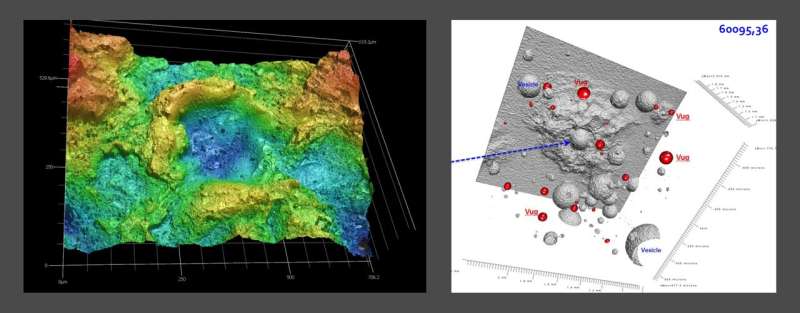
An ensemble of microscopes, medical-style equipment, and other 3D scanners is providing insights that could help human and robotic explorers survive the harsh environments of deep space, the moon, Mars and beyond.
U.S. Space Force game plan: Compete with China, prevent shooting war in orbit

In the space domain, the plan is to be in a state of “perpetual competition" with rival powers, said Gen.
Starfish Space raises $14 million for in-orbit servicers

Starfish Space has raised $14 million for its planned satellite life extension and debris removal service in a funding round led by insurance giant Munich Re, the startup announced March 8.
Lunar telescope project aims to search for ancient radio waves
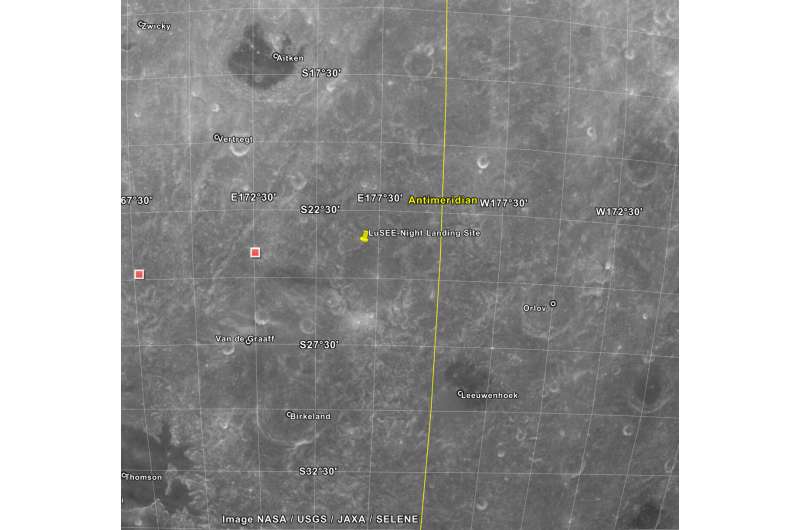
Scientists at the U.S. Department of Energy's (DOE) Brookhaven National Laboratory are leading a new effort to land a radio telescope on the moon. If successful, the project will mark the first step towards exploring the Dark Ages of the universe.
The Dark Ages are an early era of cosmological history starting about 380,000 years after the Big Bang. There were no stars or planets in the Dark Ages. It's a point in time that scientists have never been able to observe.
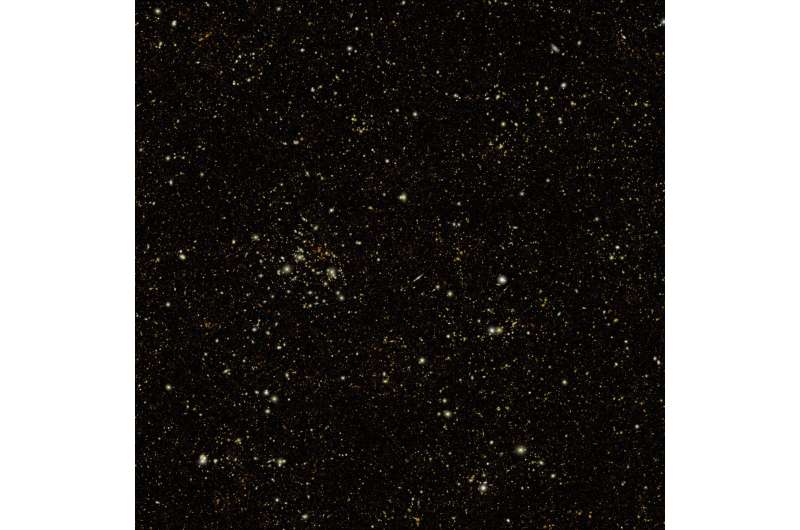
Millions of galaxies emerge in new simulated images from NASA's Nancy Grace Roman Space Telescope