

Juice one step closer to launch
 Video:
00:04:54
Video:
00:04:54
After many years of study, development, building and testing, ESA’s Jupiter Icy Moons Explorer, Juice, has finally arrived at Europe’s Spaceport in Kourou, French Guiana. At the end of 2022 the spacecraft underwent its final thermal vacuum test at an Airbus Defence and Space facility in Toulouse, as well as its final software verification tests, whereby it was controlled from the ESOC mission control centre in Darmstadt, Germany.
Soon, an Ariane 5 will lift Juice into orbit and send it on its journey to explore the largest planet in our Solar System and its three icy moons, Europa,
Japan aborts H3 launch moments before liftoff

Japan’s space agency JAXA aborted the long-awaited first launch of H3 rocket Feb.
Space Force to change how it buys national security launches

The U.S. Space Force on Feb. 16 released its procurement strategy for the next national security launch services contracts expected to be awarded in 2024.
Planetary scientist lays out arguments for sending a dedicated probe to Uranus
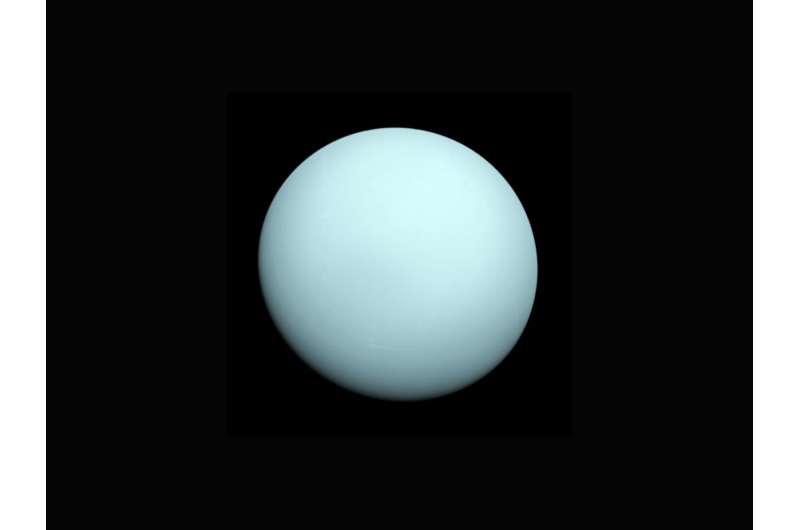
Kathleen Mandt, a planetary scientist at Johns Hopkins University's Applied Physics Laboratory has published a Perspectives piece in the journal Science arguing that NASA should send a dedicated probe to the planet Uranus. She notes that a window is opening in 2032 for the launch of such a probe.
Planetary scientists have spent far more time studying Mars than they have other planets, partly due to its close proximity and partly due to the fact that Mars has a surface upon which craft can land. Planets that have thick atmospheres, on the other hand, are more difficult to study, especially if they provide no place to land.
Still, Mandt argues, such research is important. And initiating the development of a probe to study Uranus, she adds, would be a good start. She further notes that now would be a good time to begin such plans because the next good window for launching a Uranus probe would be in 2032, when Jupiter's alignment with Earth will allow a slingshot maneuver toward Uranus.
Japan aborts launch of new rocket carrying missile sensor
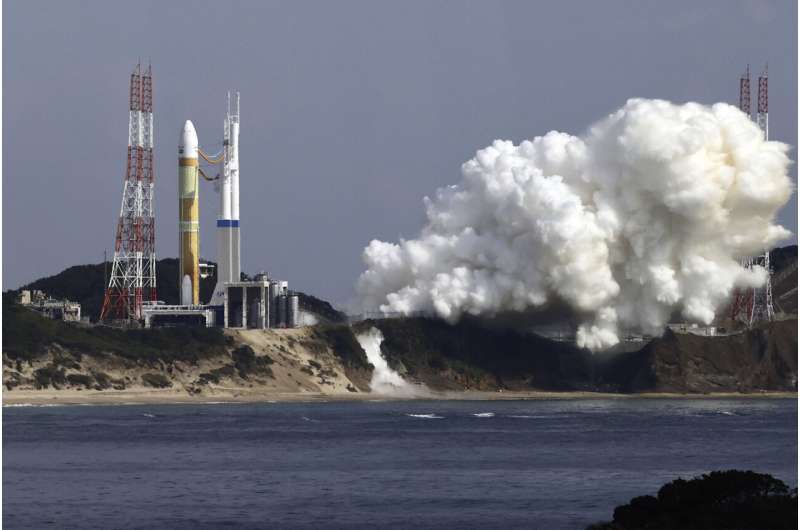
The launch of a new flagship series H3 rocket carrying an observation satellite and an experimental infrared sensor that could detect missile launches was aborted Friday after its auxiliary booster engines failed to ignite, Japan's space agency said.
The countdown had started. The Japan Aerospace Exploration Agency livestream and TV footage showed white smoke billowing from the H3's main engine.
NASA conducting cybersecurity review of Deep Space Network tracking site

A popular public website that tracks activities on NASA’s Deep Space Network (DSN) has been taken offline for what NASA calls a “cybersecurity review” linked to future Artemis missions.
Op-ed | Enlisting AI to secure the space domain

AI will transform how decisions are made across every human activity, especially as nations begin to further operate and compete in space.
Opinion | Inflation’s squeeze on space and national security contracts

For companies who provide unique capabilities, or deliver sophisticated platforms or components to the Department of Defense, the intelligence community, or NASA, inflationary pressures and delivery delays are seriously challenging America’s defense industrial base and our future efforts in space
FAA proposes fining SpaceX for missing launch data

The FAA announced Feb. 17 it is seeking to fine SpaceX $175,000 for failing to provide collision avoidance data before a Falcon 9 launch last year.


