

Euclid in a nutshell
 Video:
00:01:00
Video:
00:01:00
ESA's Euclid mission is designed to explore the composition and evolution of the dark Universe. The space telescope will create a great map of the large-scale structure of the Universe across space and time by observing billions of galaxies out to 10 billion light-years, across more than a third of the sky. Euclid will explore how the Universe has expanded and how structure has formed over cosmic history, revealing more about the role of gravity and the nature of dark energy and dark matter.
Euclid is a fully European mission, built and operated by ESA, with contributions from
Launches of Chinese commercial rockets could double in 2023

HELSINKI — Launches conducted by commercial Chinese launch service providers could more than double those attempted last year, according to firms’ plans for 2023.
Introducing Juice’s odyssey of exploration
 Video:
00:01:00
Video:
00:01:00
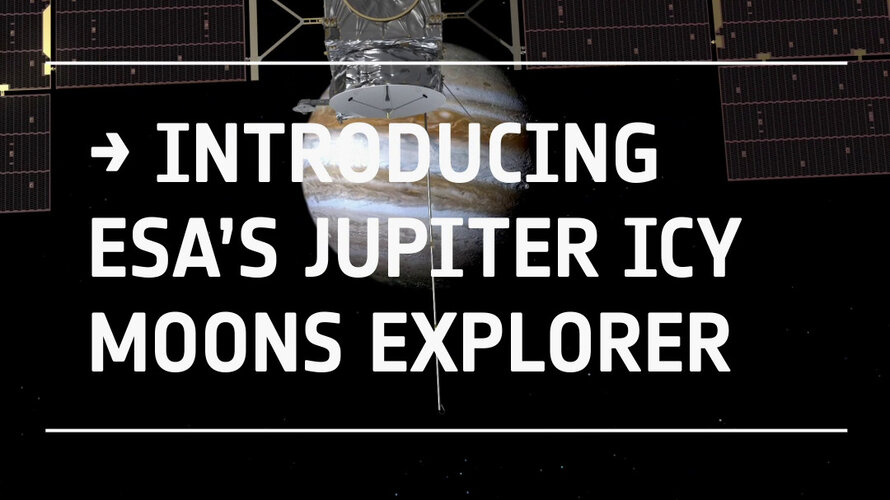
ESA’s Jupiter Icy Moons Explorer, Juice, has an ambitious mission ahead. Juice will observe Jupiter and its three largest moons: Callisto, Europa, and in particular Ganymede. The moons’ buried oceans could tell us whether life can arise in different environments across the cosmos. Juice will examine Jupiter and its complex environment to transform our understanding of how the planet works. Its discoveries may also shed new light on solar system evolution, both in our home system and in the diverse array of exoplanet systems beyond our own.
Juice will launch on an Ariane 5 from Europe’s Spaceport in Kourou,
World’s first space platforms utilising H2O2 in concentration above 98% – next level of green space propulsion

Polish leading R&D aerospace entity: Łukasiewicz – Institute of Aviation (Łukasiewicz – ILOT) concludes 2022 with major advances in its strategic area of green space propulsion and sets off with announcing ambitious plans for 2023 and further technology developments.
Saudi astronauts selected for Axiom private astronaut mission

The government of Saudi Arabia has announced the two astronauts who will fly to the International Space Station this spring on a private astronaut mission by Axiom Space.
Orbit Logic acquired by aerospace and defense contractor Boecore

Orbit Logic, a developer of mission planning and scheduling software for satellite ground systems, has been acquired by aerospace and defense engineering contractor Boecore.
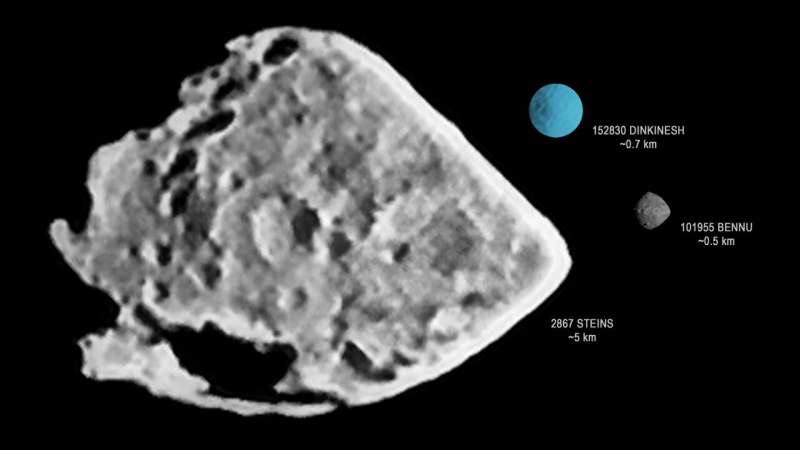
NASA's Lucy asteroid target gets a name
Saudi Arabia to send its first woman into space

Saudi Arabia will send its first ever woman astronaut on a space mission later this year, state media has reported, in the latest move to revamp the kingdom's ultra-conservative image.
Rayyana Barnawi will join fellow Saudi male astronaut Ali Al-Qarni on a mission to the International Space Station (ISS) "during the second quarter of 2023", the official Saudi Press Agency said on Sunday.
The astronauts "will join the crew of the AX-2 space mission" and the space flight will "launch from the USA", the agency said.
The oil-rich country will be following in the footsteps of the neighbouring United Arab Emirates which in 2019 became the first Arab country to send one of its citizens into space.
At the time, astronaut Hazzaa al-Mansoori spent eight days on the ISS. Another fellow Emirati, Sultan al-Neyadi, will also make a voyage later this month.
Nicknamed the "Sultan of Space", 41-year-old Neyadi will become the first Arab astronaut to spend six months in space when he blasts off for the ISS aboard a SpaceX Falcon 9 rocket.
Gulf monarchies have been seeking to diversify their energy-reliant economies through a plethora of projects.
Seventh shooting star ever spotted before strike
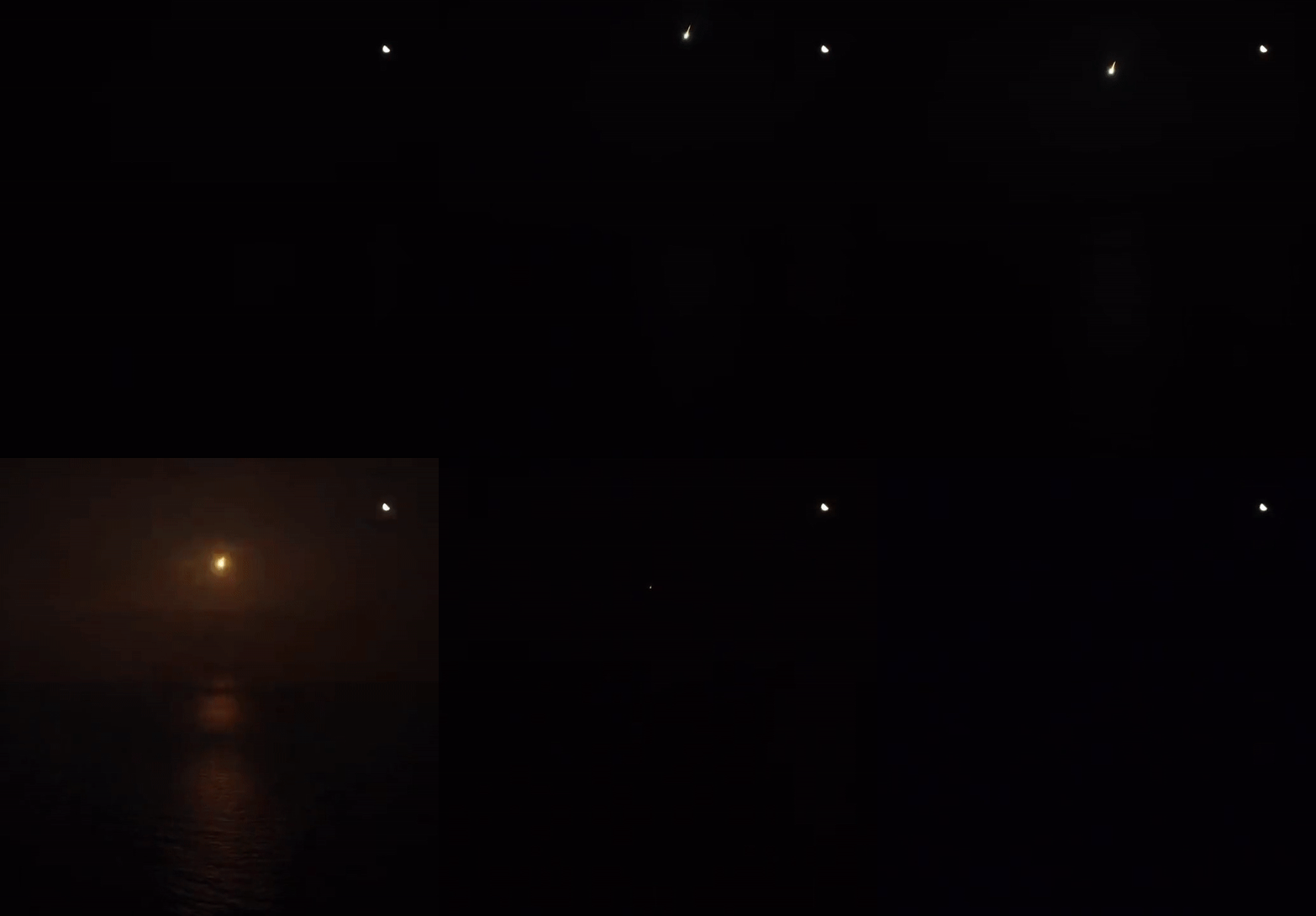 Image:
For the seventh time, a small asteroid – a meteoroid as astronomers call it – was discovered in space as it raced towards Earth for impact. The predicted time and location of the impact (02:50 - 03:03 UTC, above northern France) were made possible with observations by European astronomer Krisztián Sárneczky using the 60 cm Schmidt telescope from the Piszkéstető Observatory in Hungary. 2023 CX1 is the second impactor discovered by Krisztián, after the impact of 2022 EB5 less than a year ago.
The last three predicted impacts have
Russia delays launch to space station while leak is probed
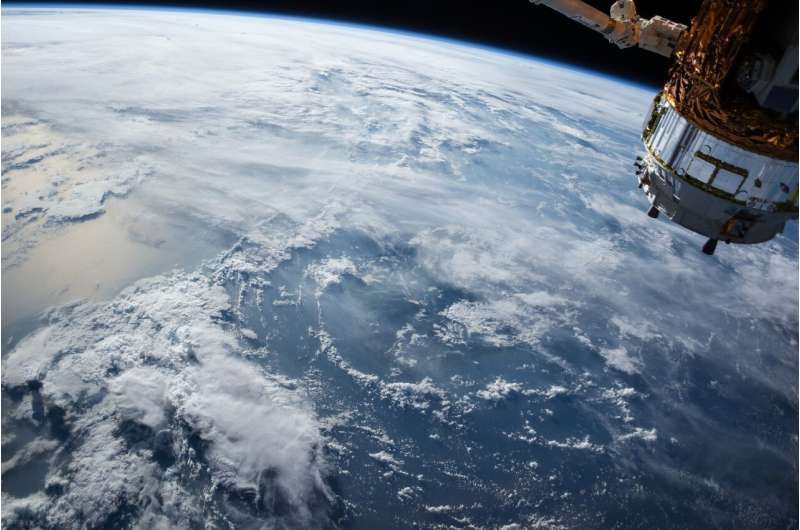
Russia will postpone the launch of an empty space capsule to the International Space Station pending further investigation of a coolant leak on a supply ship docked to the station, the second such leak at a docked Russian craft in two months, the head of Russia's space corporation Roscosmos said Monday.
The Soyuz capsule was to be launched in automatic mode on Feb. 20 and dock with the orbiting outpost two days later, to serve as a lifeboat for crew evacuation in case of an emergency. Roscosmos director Yuri Borisov said the launch will be delayed, at most until early March.
A Soyuz capsule that can accommodate an astronaut capsule and was already docked to the station developed a coolant leak in December.
Russians Sergey Prokopyev and Dmitri Petelin and NASA astronaut Frank Rubio were supposed to return to Earth in March in that capsule, but Russian space officials said higher temperatures from the coolant leak could make that dangerous.
Then another coolant leak was detected Saturday in a docked supply ship. The leak was detected after a second supply ship docked with the space station.


