Space Launch System: One Step Closer to the Moon—and Beyond

With the successful launch of Artemis I and the second SLS rocket nearing completion, aerospace experts engage the next generation, assuring them that this is just the beginning of a long and mind-blowing highway into deep space.
On National Security | U.S.-China milspace competition reaching critical stage

China’s ambitions to surpass the United States as the world’s space superpower have been known for decades and highlighted by the Pentagon in annual reports mandated by Congress.
The post On National Security | U.S.-China milspace competition reaching critical stage appeared first on SpaceNews.
South Korean spacecraft enters lunar orbit with deceleration maneuver
South Korea’s first robotic lunar orbiter, Danuri, entered the lunar orbit after conducting its first lunar orbit insertion maneuver Dec. 16.
The post South Korean spacecraft enters lunar orbit with deceleration maneuver appeared first on SpaceNews.
NASA developing AI to navigate the lunar surface using landmarks
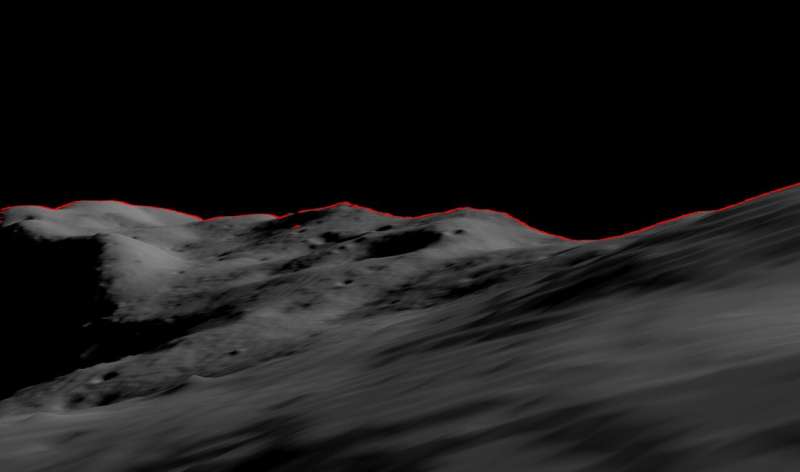
Much like how familiar landmarks can give travelers a sense of direction when their smart phones lose their lock on GPS signals, a NASA engineer is teaching a machine to use features on the Moon's horizon to navigate across the lunar surface.
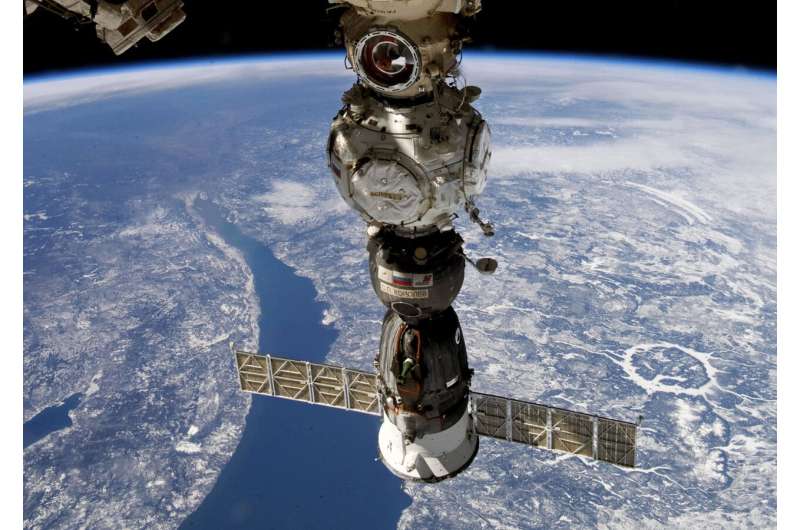
Russia may expedite launch of next space capsule after leak
Corralling the devices capable of operating in the cold of deep space
The future of electric aircraft and deep space missions will rely on our ability to develop electrical and electronic components that can operate at the very low temperatures of the upper atmosphere and the cryogenic temperatures of space. A review of such technology is presented in the International Journal of Powertrains. The review looks specifically at semiconductor devices, passive components, and superconducting devices that operate at very low temperatures.
Mustafeez Ul-Hassan, Yalda Azadeh, Asif Imran Emon, and Fang Luo of the Department of Electrical and Computer Engineering at Stony Brook University, New York, U.S., point out that in terms of aeronautics and space travel there is a pressing need to usurp pneumatic, hydraulic, and mechanical systems with electrical components.
In terms of aircraft, such components will operate at the low temperatures of high-altitude flight, but also benefit from being held at cryogenic temperatures in terms of improving their efficiency. Indeed, the development of superconducting technology that by necessity operates at such temperatures would not only make electric aircraft more feasible and improve space travel option but improve the generation efficiency of wind turbines.
Weather and range issues delay first Electron launch from Wallops to January

Rocket Lab will have to wait until January for its next attempt at its inaugural Electron launch from Virginia after suffering delays because of weather and range issues.
The post Weather and range issues delay first Electron launch from Wallops to January appeared first on SpaceNews.
SpaceX preparing to start Starlink Gen2 launches this month

SpaceX could start launching second-generation Starlink satellites in the coming weeks to add more capacity to its increasingly congested broadband network.
The post SpaceX preparing to start Starlink Gen2 launches this month appeared first on SpaceNews.
US space entities examine future space technology
 Seventy professionals from the space ecosystem gathered for the Space Futures Workshop, Nov. 29-30, to examine future technologies and forge a path towards ensuring the U.S. maintains its advantage in the increasingly congested and contested space domain.
Convened by NewSpace New Mexico, the event held at the University of Colorado Boulder, marked the fifth time that U.S. Space Force leade
Seventy professionals from the space ecosystem gathered for the Space Futures Workshop, Nov. 29-30, to examine future technologies and forge a path towards ensuring the U.S. maintains its advantage in the increasingly congested and contested space domain.
Convened by NewSpace New Mexico, the event held at the University of Colorado Boulder, marked the fifth time that U.S. Space Force leade First deep space biology experiment begins, follow along in real-time
 NASA's BioSentinel has carried living organisms farther from Earth than ever before - more than one million miles. Aboard the shoebox-sized CubeSat are microorganisms, in the form of yeast - the very same yeast that makes bread rise and beer brew.
On Dec. 5, BioSentinel was 655,730 miles from Earth when the BioSentinel team at NASA's Ames Research Center in California's Silicon Valley sent
NASA's BioSentinel has carried living organisms farther from Earth than ever before - more than one million miles. Aboard the shoebox-sized CubeSat are microorganisms, in the form of yeast - the very same yeast that makes bread rise and beer brew.
On Dec. 5, BioSentinel was 655,730 miles from Earth when the BioSentinel team at NASA's Ames Research Center in California's Silicon Valley sent