China is considering expanding its Tiangong space station
China is already considering adding modules to its recently-completed Tiangong space station complex, according to a senior space official.
MTG-I1 never to be seen again
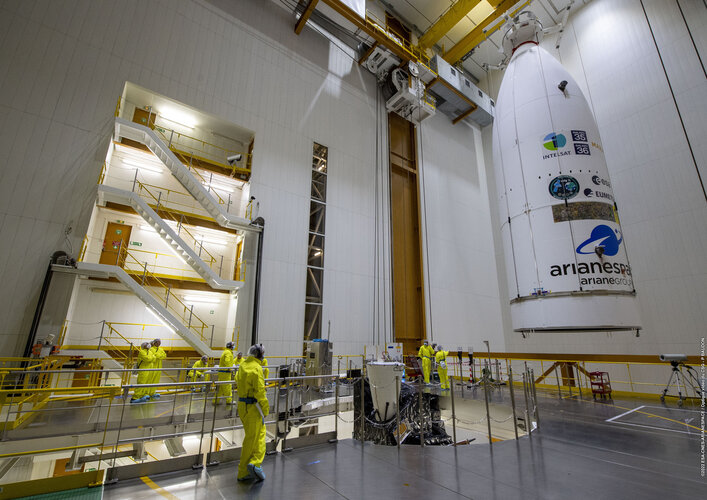
As preparations to launch Europe’s first Meteosat Third Generation Imager satellite continue, the team at Europe’s Spaceport in Kourou, French Guiana, has bid farewell to their precious satellite as it was sealed from view within the Ariane 5 rocket’s fairing. This all-new weather satellite is set to take to the skies on 13 December.
Launches secured for five Sentinel satellites
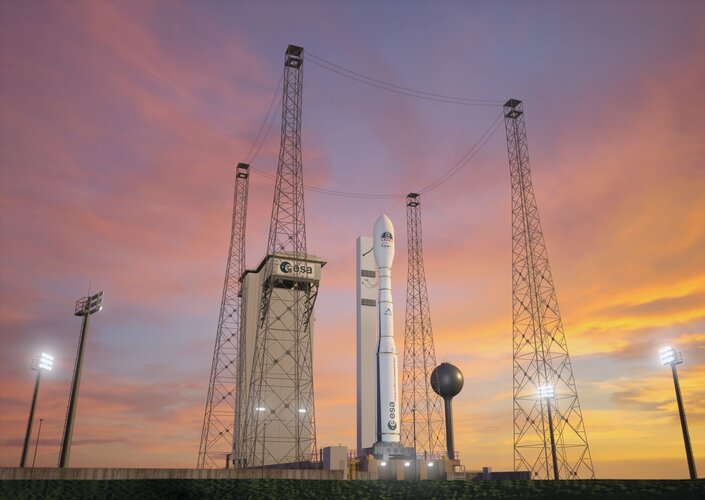
A contract signed today between ESA and Arianespace has ensured rides into orbit for five Copernicus Sentinels: Sentinel-1D, Sentinel-2C, Sentinel-3C, and the Copernicus Anthropogenic Carbon Dioxide-A and -B satellites. All the satellites will be launched on Vega-C rockets from Europe’s Spaceport in French Guiana and are scheduled to take place between 2024 and 2026.
ESA plasma sampler headed to the Moon and ISS

An innovative ESA-backed instrument to sample the space weather environment in-situ is set to join the International Space Station. Norway’s multi-Needle Langmuir Probe, m-NLP, due to be fitted to the European-made Bartolomeo platform on the ISS, a ‘front porch’ open to space, will map the ionospheric plasma surrounding the Station in unprecedented high resolution, performing almost 10 000 measurements per second continuously along its orbit.
Op-ed | Running the Space Playbook in Chile
Chile holds half or more of the world’s astronomy infrastructure, but the nation's future in space is not just relegated to looking up.
The post Op-ed | Running the Space Playbook in Chile appeared first on SpaceNews.
TriSept and SpiderOak unveil strategic partnership

TriSept, a launch integration and mission management specialist, announced a strategic partnership Dec. 7 with cybersecurity firm SpiderOak to offer an “end-to-end security system” for satellites and ground systems.
The post TriSept and SpiderOak unveil strategic partnership appeared first on SpaceNews.
NDAA compromise bill wants more focus on satellite protection, responsive launch
A bipartisan compromise version of the 2023 National Defense Authorization Act released overnight on Dec. 6 directs DoD to figure out a strategy to protect military satellites from threats in orbit.
Blue Origin and Dynetics bidding on second Artemis lunar lander
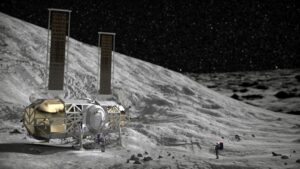
Teams led by Blue Origin and Dynetics, runners-up in NASA’s first competition to develop a lander to transport astronauts to the lunar surface, have submitted proposals for a NASA competition to select a second lander.
How karst caves can be used as a terrestrial simulation platform to test and design human bases in lunar lava tubes
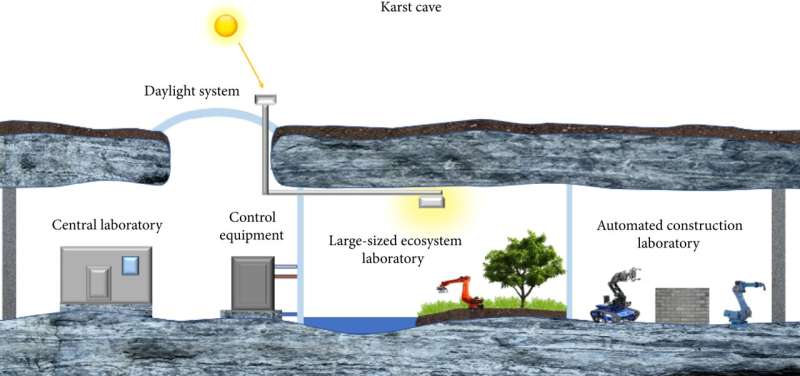
If human beings want to survive on the other planets for a long time, they must first find or set up a safe, stable, and long-term shelter. Lunar lava tubes are geological structures on the moon discovered in recent years. They take the form of hollow pipe-shaped caves formed on the surface of the planet by volcanic activity.
Because a lunar lava tube has a hard basalt roof, its internal environmental factors such as temperature changes, radiation doses, and the probability of being hit by meteorites are relatively limited. As such, it offers in theory an ideal human lunar habitat. Until now, more than 300 potential cave entrances have been identified on the moon. The "skylights" they display are the result of a kind of pit caused by the active lava tube collapsing.
In a new article published in Space: Science & Technology, the research team led by Gengxin Xie and Linli Guo has discussed the feasibility of using lunar lava tubes for human habitation, proposed the idea of using the Earth's karst caves to simulate extraterrestrial lava tubes, selected caves in Chongqing as the simulation site, and demonstrated the feasibility in terms of both structural and environmental aspects.
Will we ever go back to explore the ice giants? Yes, if we keep the missions simple and affordable
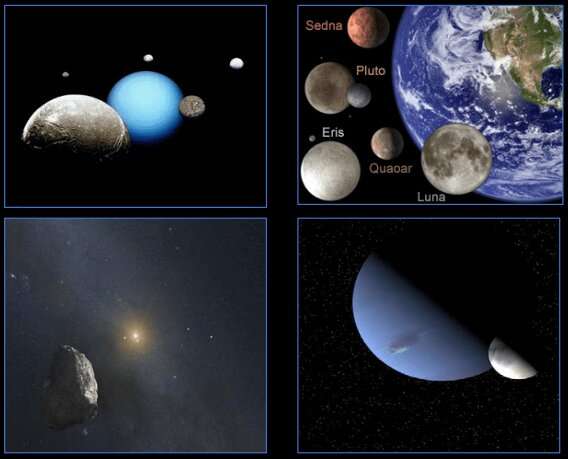
It's been over 35 years since a spacecraft visited Uranus and Neptune. That was Voyager 2, and it only did flybys. Will we ever go back? There are discoveries waiting to be made on these fascinating ice giants and their moons.