
Flexibility and resiliency define Arianespace's performance in 2020
 Building on a year that confirmed Arianespace's unique capability to offer launch service solutions tailored for its customers' varied requirements, the company is well prepared for the future with its family of launchers and the capacity of three spaceports.
CEO Stephane Israel said Arianespace continues to demonstrate its flexibility in responding to both commercial and institutional mar
Building on a year that confirmed Arianespace's unique capability to offer launch service solutions tailored for its customers' varied requirements, the company is well prepared for the future with its family of launchers and the capacity of three spaceports.
CEO Stephane Israel said Arianespace continues to demonstrate its flexibility in responding to both commercial and institutional mar Minuteman III missile should be scrapped, STRATCOM chief says
 The Minuteman III program of 450 missiles, begun in1970, must be replaced and not extended, U.S. Strategic Command chief Adm. Charles Richard said.
Richard's comments, made during a virtual briefing on Tuesday, come as President-elect Joe Biden's incoming administration considers ways to reduce the cost of a planned 30-year, $1.2 trillion modernization of the United States' nuclear defe
The Minuteman III program of 450 missiles, begun in1970, must be replaced and not extended, U.S. Strategic Command chief Adm. Charles Richard said.
Richard's comments, made during a virtual briefing on Tuesday, come as President-elect Joe Biden's incoming administration considers ways to reduce the cost of a planned 30-year, $1.2 trillion modernization of the United States' nuclear defe Terahertz security for e-commerce distribution centres & US border
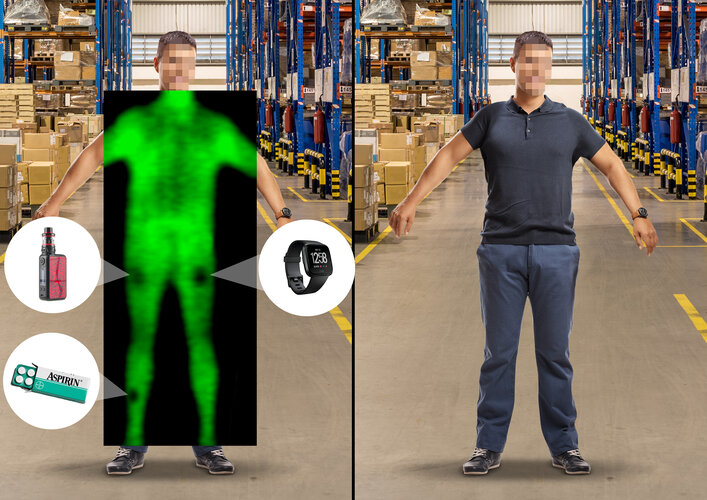
COVID-19 has revolutionised security practices along with other parts of everyday life: screening people via personal ‘patdowns’ is no longer safe. ESA-developed passive terahertz technology – enabling the detection of items hidden under clothing from a distance – is helping to fill the gap. The US Customs and Border Protection agency is among the latest of more than 200 users of the technology, deploying it to secure the US border.
How far we've come: Galileo’s 500th ESA Engineering Board
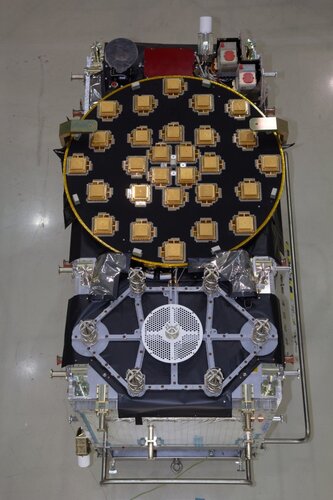
The end of 2020 marked a notable milestone for Europe’s Galileo First Generation, as the programme chalked up its 500th ESA Engineering Board.
 Image:
Cosmic neon lights
Image:
Cosmic neon lights Intelsat orders two satellites from Airbus
WASHINGTON — Intelsat has ordered two geostationary communications satellites from Airbus Defence and Space that will support the satellite operator’s aviation connectivity business.
The companies announced Jan. 8 the order of two spacecraft from Airbus’ OneSat family of fully reconfigurable geostationary satellites.
NASA Highlights Astrophysics Missions at ‘Super Bowl of Astronomy’
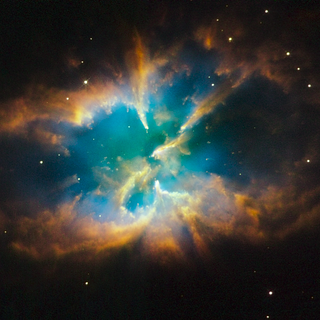 Experts from across NASA will discuss topics ranging from black holes to exploding stars to planets beyond our solar system at the 237th meeting of the American Astronomical Society (AAS).
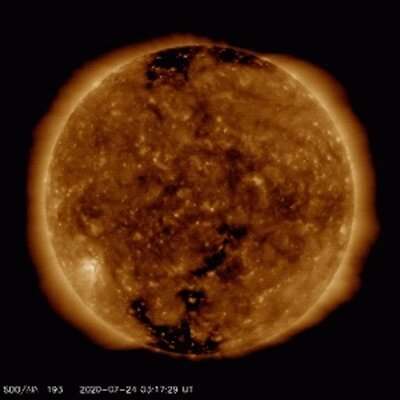
 Coronal holes during the solar maximum
NOAA proposes future geostationary constellation with East, West and Center satellites

SAN FRANCISCO – NOAA’s National Satellite, Data and Information Service is recommending flying three satellites over the United States in the satellite constellation that will follow the Geostationary Operational Environmental Satellite R Series (GOES-R).
In addition, to operating satellites in orbits similar to those of the current GOES East and GOES West satellites, NOAA recommends placing a third spacecraft over the center of the United States, Pam Sullivan, GOES-R system program director, said Jan.
Researchers find Mars has a Chandler wobble
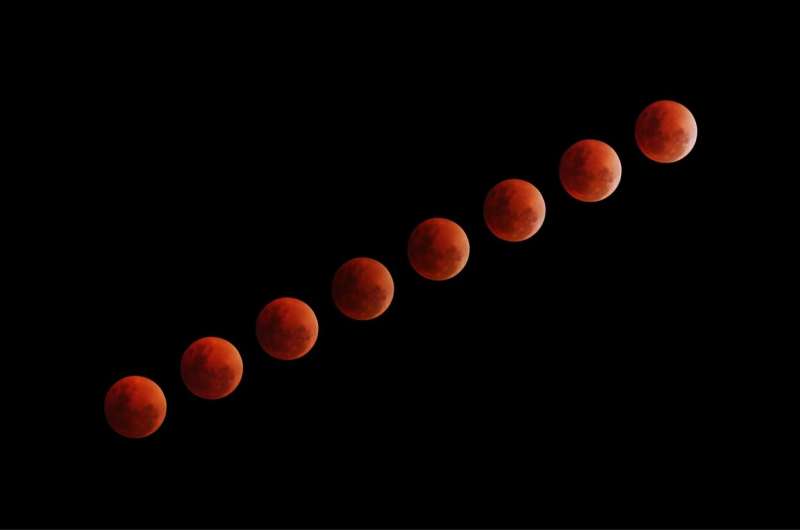
A combined team of researchers from the Jet Propulsion Laboratory, California Institute of Technology and the Royal Observatory of Belgium, has found evidence that Mars has a Chandler wobble. In their paper published in the journal Geophysical Research Letters, the group describes their study of decades of data from Mars probes and what it showed them.
Approximately a century ago, astronomer Seth Carlo Chandler discovered that imperfectly round objects (such as planets) sometimes spin off their axis for periods of time. The phenomenon has come to be known as the Chandler wobble, and has been documented for planet Earth, which veers from its axis for distances up to 30 feet in a pattern that repeats approximately every 433 days. Researchers have suggested that other planets likely have a Chandler wobble, but until now, it has never been observed because measuring it on the planet scale requires precise measurements over many years. In this new effort, the researchers obtained the right kind of data from space probes that orbited Mars over many years: The Mars Reconnaissance Orbiter, the Mars Global Surveyor and Mars Odyssey.