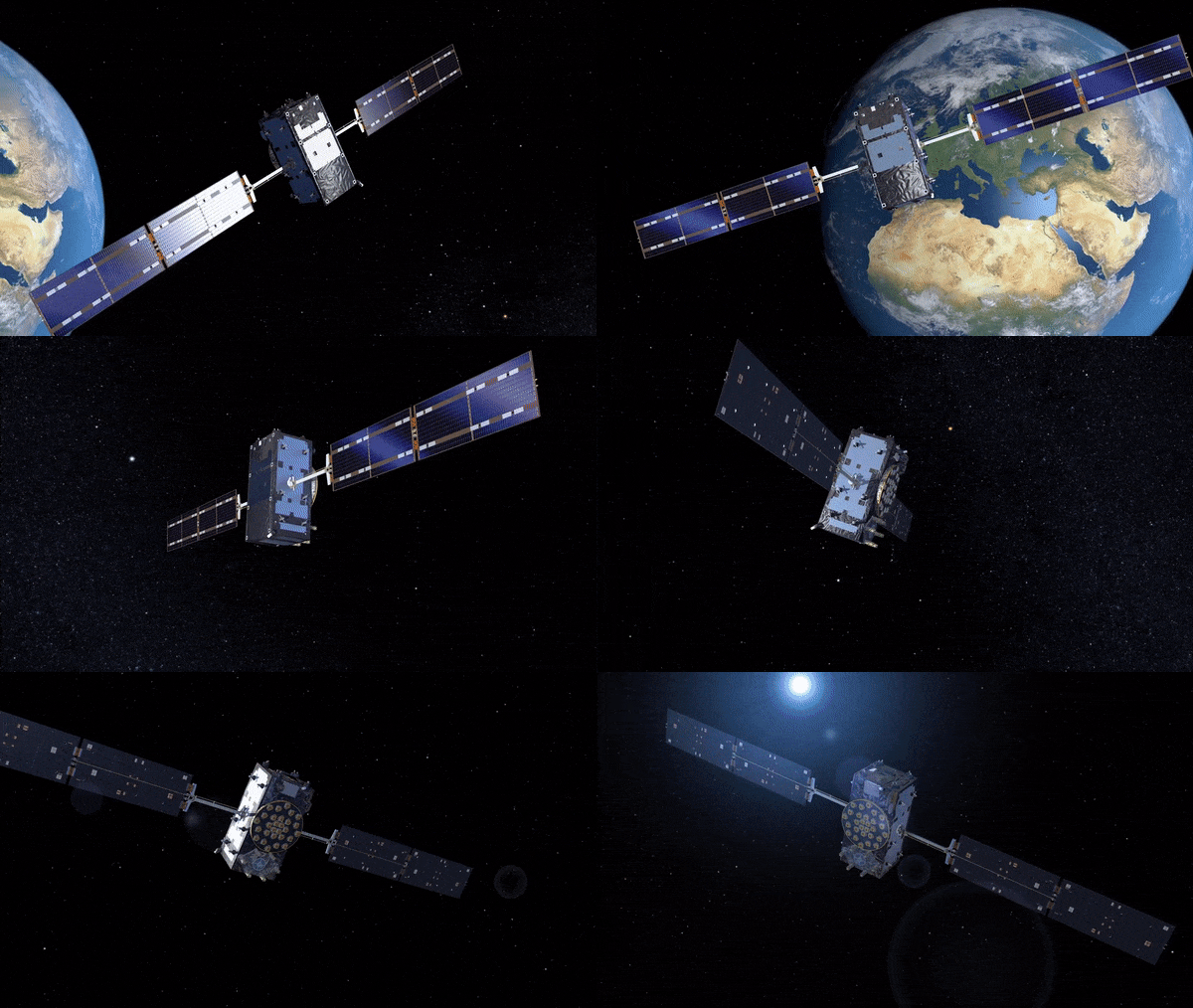
Approaching storm may delay launch try for NASA moon rocket
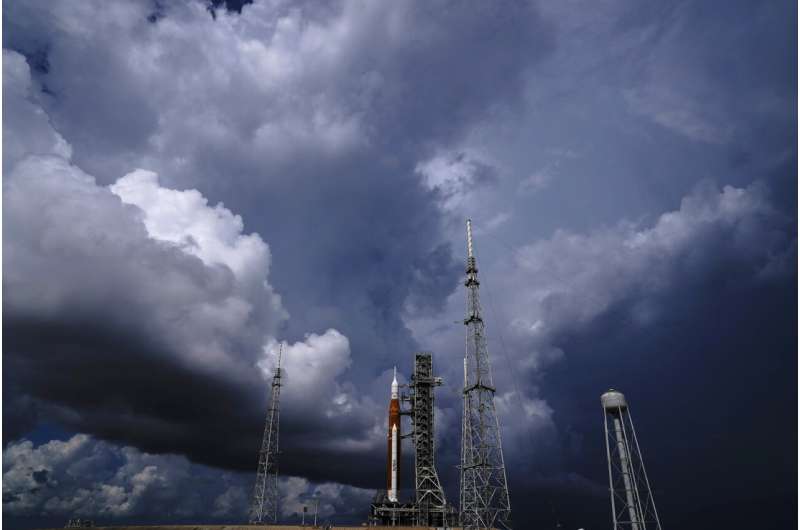
An approaching storm threatens to delay NASA's next launch attempt for its new moon rocket, already grounded for weeks by fuel leaks.
NASA says test good enough to try for Artemis launch next week
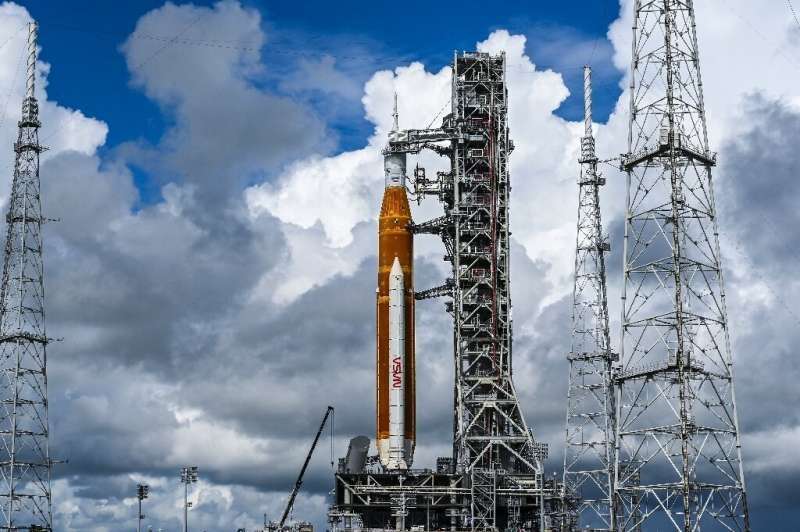
NASA announced Thursday that the cryogenic fueling test this week at Kennedy Space Center did well enough to keep moving toward a launch attempt as early as Tuesday.
"Based on data from the test, teams are fine-tuning procedures for the next launch opportunity, targeted for no earlier than Sept. 27," reads a statement on the NASA website. "The rocket remains in a safe and flight-ready configuration at the launch pad."
The nearly 10-hour test at Launch Pad 39-B on Wednesday saw several issues with liquid hydrogen leaks, some similar to what caused a scrub on the last attempt to launch on Sept. 3.
But mission managers were able to troubleshoot and push through to accomplish all the goals for the test setting the rocket up for what would be its third attempt to get off the ground.
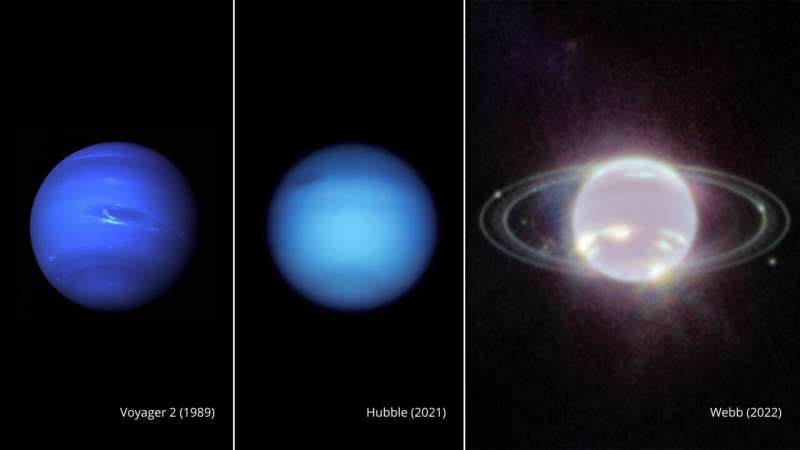
Neptune and rings shine in photos from new space telescope
NASA postpones Artemis 1 launch because of tropical storm
NASA has called off plans to attempt to launch the Artemis 1 mission on Sept. 27 as a tropical storm, with the potential to become a major hurricane, heads for Florida.
The post NASA postpones Artemis 1 launch because of tropical storm appeared first on SpaceNews.
NASA scraps Tuesday Moon launch due to storm
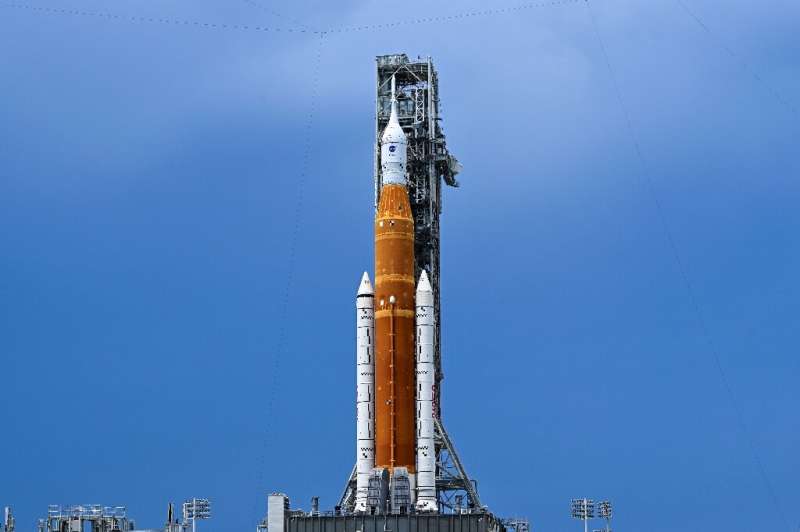
NASA has called off the scheduled Tuesday launch of its historic uncrewed mission to the Moon due to a tropical storm that is forecast to strengthen as it approaches Florida.
After two previously canceled launch attempts, NASA is weighing returning the Artemis 1 mission rocket to its assembly site under the threat of extreme weather.
"NASA is forgoing a launch opportunity... and preparing for rollback (from the launchpad), while continuing to watch the weather forecast associated with Tropical Storm Ian," it said on Saturday.
The US National Hurricane Center (NHC) said Ian is due to "rapidly intensify" over the weekend as it moves toward Florida, home to the Kennedy Space Center, from which the rocket is set to launch.
NRO satellite flies to orbit in Delta 4’s final West Coast launch
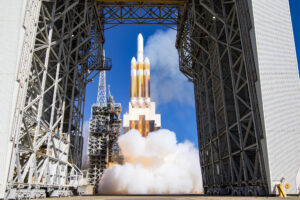
ULA launched a classified National Reconnaissance Office spy satellite on a Delta 4 Heavy rocket September 24 at 3:25 p.m. Pacific from Space Launch Complex-6 at Vandenberg Air Force Base, California.
The post NRO satellite flies to orbit in Delta 4’s final West Coast launch appeared first on SpaceNews.
DART on track for asteroid collision
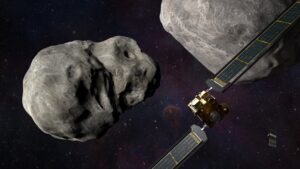
A NASA spacecraft is on course to deliberately collide with a small asteroid Sept. 26 to test how that technique could be used to deflect a potentially hazardous asteroid.
The post DART on track for asteroid collision appeared first on SpaceNews.
SpaceX's Florida launch seen as far as New York, Massachusetts
 Elon Musk's SpaceX sent 52 more Starlink satellites into low-Earth orbit on Saturday as the company continues weekly launches to build out its constellation.
The Falcon 9 rocket lifted off from Space Launch Complex 40 at Cape Canaveral Space Force Station in Florida at 7:32 p.m., SpaceX said in a news release.
The first stage landed on the A Shortfall of Gravitas drone ship stati
Elon Musk's SpaceX sent 52 more Starlink satellites into low-Earth orbit on Saturday as the company continues weekly launches to build out its constellation.
The Falcon 9 rocket lifted off from Space Launch Complex 40 at Cape Canaveral Space Force Station in Florida at 7:32 p.m., SpaceX said in a news release.
The first stage landed on the A Shortfall of Gravitas drone ship stati Beams of muons used to analyze the elemental composition of Asteroid Ryugu samples
 Stone samples brought back to Earth from asteroid Ryugu have had their elemental composition analyzed using an artificially generated muon beam from the particle accelerator in J-PARC. Researchers found a number of important elements needed to sustain life, including carbon, nitrogen, and oxygen, but also found the oxygen abundance relative to silicon in asteroid Ryugu was different from all met
 Analysis of particles of the asteroid Ryugu delivers surprising results
 Frank Brenker and his team are world leaders in a method that makes it possible to analyse the chemical composition of material in a three-dimensional and entirely non-destructive way and without complicated sample preparation - yet with a resolution of under 100 nanometres. Resolution expresses the smallest perceptible difference between two measured values. The method's long name is "Synchrotr