United Arab Emirates to launch first lunar rover in November

Valery Polyakov, took longest single trip to space, dies

Lynk Global gets first commercial satellite direct-to-cell operating license
Lynk Global secured regulatory approval Sept. 16 to operate its initial cellphone-compatible constellation globally, although the startup needs to deploy more satellites and get landing rights before it can start services.
The post Lynk Global gets first commercial satellite direct-to-cell operating license appeared first on SpaceNews.
UAE rover to fly on China’s Chang’e-7 lunar south pole mission
The United Arab Emirates will fly its Rashid 2 rover on China’s 2026 Chang’e-7 lunar landing mission following an agreement between the two countries.
The post UAE rover to fly on China’s Chang’e-7 lunar south pole mission appeared first on SpaceNews.
Astrobotic announces plans for lunar power service
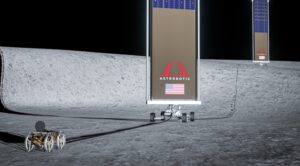
Astrobotic unveiled plans Sept. 19 to develop a commercial power service for the moon that the company argues is essential for creating long-term infrastructure on the lunar surface.
The post Astrobotic announces plans for lunar power service appeared first on SpaceNews.
NASA gears up for Artemis I tanking test for shot to launch next week
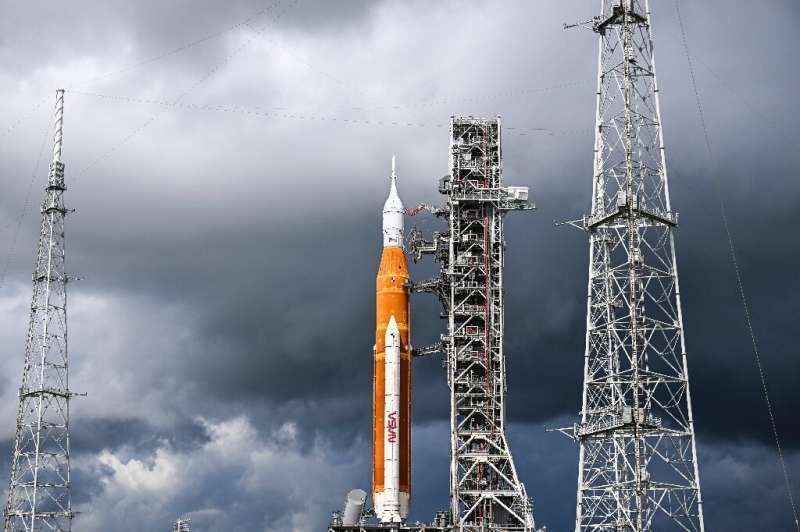
The fixes have been addressed, so now it's time to add some stress to ensure NASA's Artemis I mission success.
NASA says it has repaired fuel lines running from the mobile launcher into the Space Launch System rocket at Kennedy Space Center's Launch Pad 39-B in the last week. Now, it will run through a full propellant load, targeting 7:15 a.m. Eastern time Wednesday as part of a test that could give the space agency a shot to launch as early as Sept. 27 to send the Orion spacecraft on a multiweek mission to orbit the moon.
Artemis I is an uncrewed flight that will push the extremes of the capsule sending it farther out beyond the moon and bring it back home to Earth faster than any other previous human-rated spacecraft to make sure it will be safe for astronauts on future Artemis missions.
Getting SLS and Orion off the ground, though, has proved difficult, with a variety of problems surfacing during two previous launch attempts. The most recent involved a large leak of the cryogenic liquid hydrogen on one of the supply lines.
Undergrad publishes theory on immune dysfunction in space
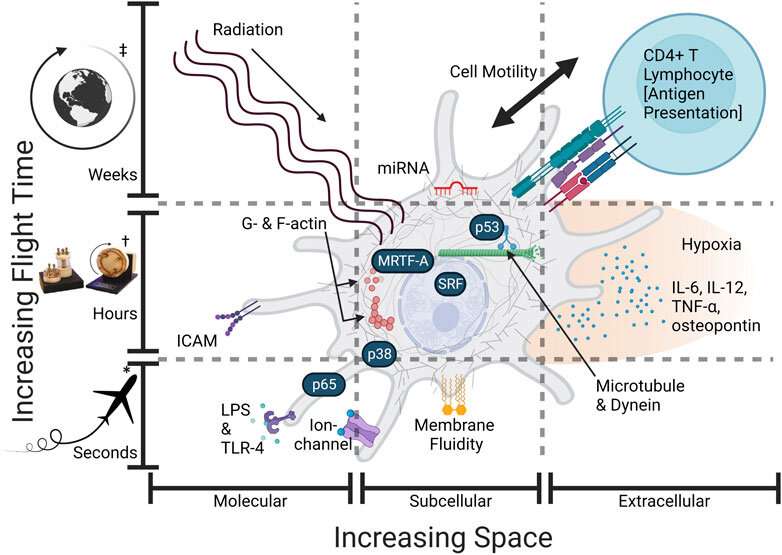
It's been known for decades that though astronauts' immune systems become suppressed in space, leaving them vulnerable to disease, the exact mechanisms of immune dysfunction have remained a mystery. Now a Cornell undergraduate has found a potential solution.
A biological and mechanical engineering double major in the College of Engineering, Rocky An published his theory, "MRTF May be the Missing Link in a Multiscale Mechanobiology Approach toward Macrophage Dysfunction in Space," Sept. 12 in Frontiers in Cell and Developmental Biology.
An reviewed the last 20 years of literature on the behavior of macrophages—key cells in the body's immune response—in space and recent research about how macrophages respond to forces in normal gravity, identifying a transcription factor that could prove to be the missing piece of the puzzle.
"I just kept asking questions about how the data is presented," An said. "There are these two really important papers, in particular, one a review of how macrophages are suppressed in microgravity, and another about the mechanobiology of macrophages.
New exoplanet detection program for citizen scientists
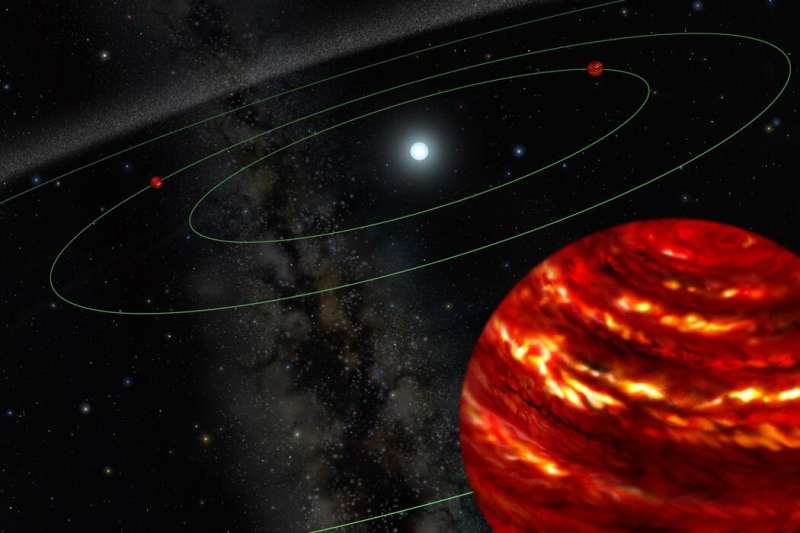
The SETI Institute and its partner Unistellar are launching a new exoplanet detection program that will engage citizen scientists worldwide. Amateur astronomers, using either Unistellar's eVscope or another telescope, will be invited to help confirm exoplanet candidates identified by NASA's Transiting Exoplanet Survey Satellite (TESS) by observing possible exoplanet transits from Earth.
Most known exoplanets have been detected using the transit method, most notably by the Kepler Mission and now TESS. A transit is when a planet passes between its star and the observer, who will see the star dimming as the planet orbits. The demand for follow-up observations of transiting exoplanets is greater than ever. There are currently more than 5,100 confirmed exoplanets, with thousands more detections to be confirmed. This program will focus its efforts on exo-Jupiters detected by those NASA missions.
Some estimates suggest that TESS will identify more than 10,000 exoplanet candidates.
Space Force shifting resources to intelligence and cybersecurity
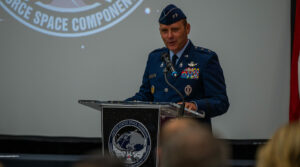
The U.S. Space Operations Command is assigning cybersecurity and intelligence specialists to work side-by-side with satellite operators so they’re better prepared to protect U.S. systems from electronic and physical threats, said Maj.
SAIC to build small satellites with startup Rogue Space
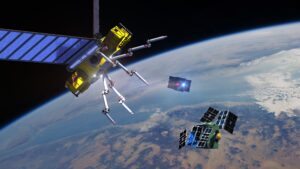
SAIC is partnering with startup Rogue Space Systems to develop small satellites for in-space services, the companies announced Sept. 20.
The post SAIC to build small satellites with startup Rogue Space appeared first on SpaceNews.