Chinese astronauts successfully grow rice in space
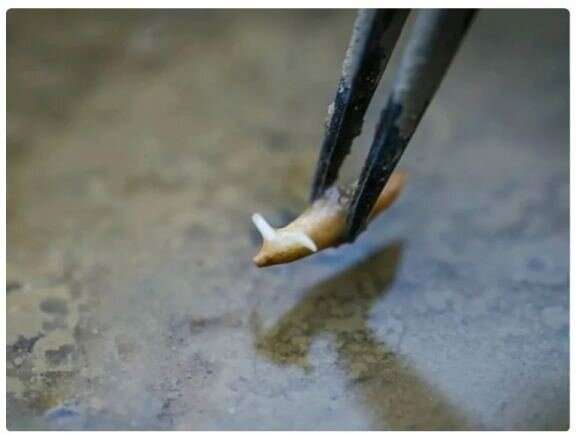
Rice is one of the world's staple crops. It is regularly eaten by more than half the world's population. And now, it's been grown in microgravity, on board the newly launched Chinese Wentian space laboratory.
Wentian launched in July and joined up with the Tianhe module of China's new space station. Its original complement of eight experiments included one that attempted to grow rice in microgravity.
Rice typically grows to 3 to 4 feet over four months, and the stalks on Wentian have not been able to complete their entire maturation cycle since the experiment started in July. However, they seem to be on track compared to their Earth-bound counterparts.
There were actually two types of rice launched as part of the experiment. A tall shoot variety reached almost 30 centimeters in the first month of growth, and a dwarf variety reached around 5 cm. Both of these growth amounts are on par for these particular rice varieties on Earth.
Martian rock-metal composite shows potential of 3D printing on Mars
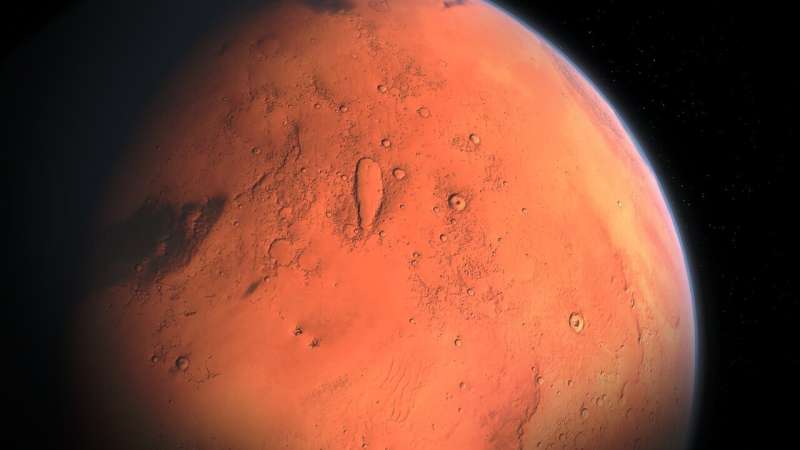
A little Martian dust appears to go a long way. A small amount of simulated crushed Martian rock mixed with a titanium alloy made a stronger, high-performance material in a 3D-printing process that could one day be used on Mars to make tools or rocket parts.
The parts were made by Washington State University researchers with as little as 5% up to 100% Martian regolith, a black powdery substance meant to mimic the rocky, inorganic material found on the surface of the red planet.
While the parts with 5% Martian regolith were strong, the 100% regolith parts proved brittle and cracked easily. Still, even high-Martian content materials would be useful in making coatings to protect equipment from rust or radiation damage, said Amit Bandyopadhyay, corresponding author on the study published in the International Journal of Applied Ceramic Technology.
Aerospace opens $100 million facility in Colorado Springs for military space activities

Aerospace Corp. unveiled a 90,000-square-foot Space Warfighting Center to provide high-tech tools for military space agencies
The post Aerospace opens $100 million facility in Colorado Springs for military space activities appeared first on SpaceNews.
DoD updates space policy, formally adopts ‘tenets of responsible behavior’

The Defense Department released an updated policy document that recognizes space “as a priority domain of national military power” and formally adopts rules for safe operations in space.
The post DoD updates space policy, formally adopts ‘tenets of responsible behavior’ appeared first on SpaceNews.
NASA to repair SLS liquid hydrogen leak on the pad
NASA will attempt to fix on the pad a liquid hydrogen seal that caused a Space Launch System scrub, keeping open the option to proceed with a new launch attempt later this month.
Rocket Lab signs on to U.S. military’s ‘rocket cargo’ program

Rocket Lab has signed a cooperative agreement with the U.S. military to explore the possibility of using its space launch vehicles to transport cargo around the world.
The post Rocket Lab signs on to U.S.
Rocket Lab signs with USTRANSCOM to explore using Neutron and Electron tp deliver cargo worldwide
 Rocket Lab USA, Inc. (Nasdaq: RKLB) ("Rocket Lab" or "the Company"), a global leader in launch services and space systems, has announced that it has signed a Cooperative Research and Development Agreement (CRADA) with the United States Transportation Command (USTRANSCOM) to explore the possibility of using the Company's Neutron and Electron launch vehicles to transport cargo around the world. Th
 Gamma rays from neighboring galaxy related to millisecond pulsars
 A team of researchers, including UvA physicists and astronomers, has studied gamma rays caused by the Sagittarius Dwarf, a small neighbouring galaxy of our Milky Way. They showed that all the observed gamma radiation can be explained by millisecond pulsars, and can therefore not be interpreted as a smoking gun signature for the presence of dark matter. The results were published in Nature Astron
 Antenna enables advanced satellite communications testing
 On the rooftop of an MIT Lincoln Laboratory building sits a 38-foot-wide dome-shaped radio antenna enclosure, or radome. Inside the climate-controlled environment, shielded from the New England weather, a steel structure supports a 20,000-pound, 20-foot diameter satellite communications (SATCOM) antenna. The antenna - called the Multi-Band Test Terminal (MBTT) - can rotate 15 degrees per second,
 Back in Bordeaux with the A310 ZERO G
 The 39th parabolic flight campaign of the German Space Agency at the German Aerospace Center (Deutsches Zentrum fur Luft- und Raumfahrt; DLR) is taking place in Bordeaux for the first time in two years, from 29 August to 8 September 2022.
"We're delighted to be returning to the 'old home' of DLR parabolic flights after four campaigns that took place from the airport in Paderborn due to the
The 39th parabolic flight campaign of the German Space Agency at the German Aerospace Center (Deutsches Zentrum fur Luft- und Raumfahrt; DLR) is taking place in Bordeaux for the first time in two years, from 29 August to 8 September 2022.
"We're delighted to be returning to the 'old home' of DLR parabolic flights after four campaigns that took place from the airport in Paderborn due to the