Solar satellite breaks ground with new data
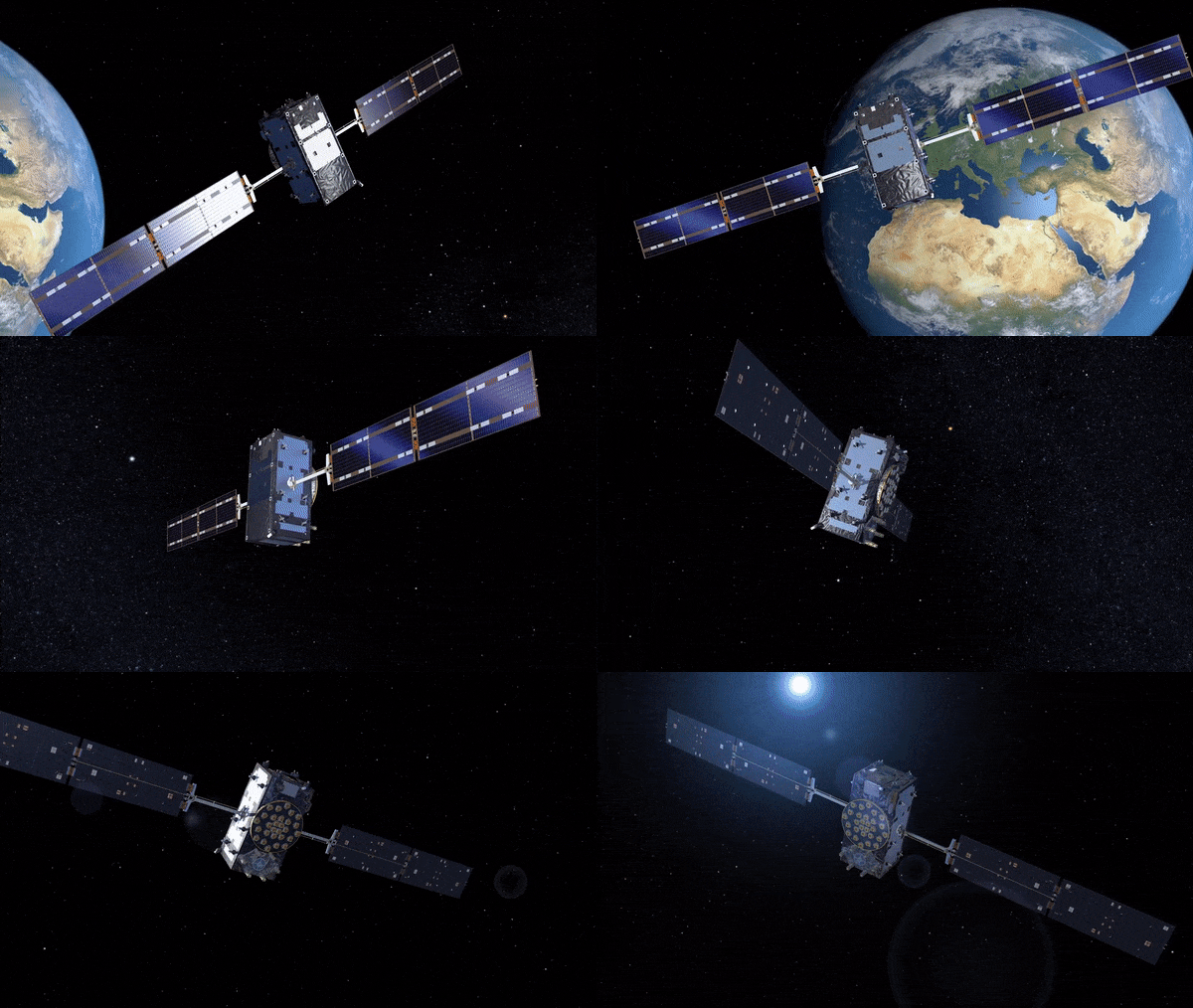
 China's solar observation satellite has achieved major scientific and technological feats during its in-orbit operation, according to the China National Space Administration.
The satellite Xihe, named after the sun goddess in ancient Chinese mythology, has carried out spectral scanning and imaging of the sun's H-Alpha waveband and has recorded the dynamics of the solar activities in the st
China's solar observation satellite has achieved major scientific and technological feats during its in-orbit operation, according to the China National Space Administration.
The satellite Xihe, named after the sun goddess in ancient Chinese mythology, has carried out spectral scanning and imaging of the sun's H-Alpha waveband and has recorded the dynamics of the solar activities in the st Plant growth in China's space lab in good condition
 The seeds of two plants in China's Wentian lab module have germinated and are now in good condition, according to a briefing on the progress of plant culture experiments in the country's space station on Monday.
Seed samples of the two plants, Arabidopsis and rice, were installed in the life ecology experiment cabinet of the lab module, which went into space in July. The space growth exper
The seeds of two plants in China's Wentian lab module have germinated and are now in good condition, according to a briefing on the progress of plant culture experiments in the country's space station on Monday.
Seed samples of the two plants, Arabidopsis and rice, were installed in the life ecology experiment cabinet of the lab module, which went into space in July. The space growth exper UK releases military ‘space power’ doctrine

The United Kingdom on Sept. 1 released “UK Space Power,” the military’s keystone doctrine publication focused on the space domain.
The post UK releases military ‘space power’ doctrine appeared first on SpaceNews.
Spire to add ThrustMe propulsion to Lemur cubesats
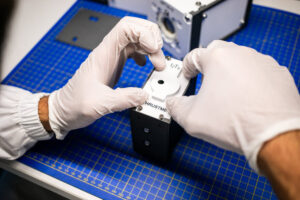
Spire Global is adding propulsion to its multipurpose Lemur satellite constellation.
The post Spire to add ThrustMe propulsion to Lemur cubesats appeared first on SpaceNews.
Space Force building ground station in Alaska ahead of launch of Arctic satcom mission

The U.S. Space Force broke ground on a new site at Clear Space Force Station, Alaska, will be the main gateway to the EPS-R payloads that will launch in 2023
The post Space Force building ground station in Alaska ahead of launch of Arctic satcom mission appeared first on SpaceNews.
Startups Scout and Privateer to collaborate on space-tracking technologies

Space startups Privateer and Scout are "looking into how we can best combine our capabilities."
The post Startups Scout and Privateer to collaborate on space-tracking technologies appeared first on SpaceNews.
Video: 'Fuel to Mars' study heads to moon

A Duke research study is preparing to blast off to the Moon with NASA on Artemis I.
Dr. Tim Hammond, professor of medicine at Duke, and co-investigator Dr. Holly Birdsall created the "Fuel to Mars" study to identify genes and gene pathways that fuel-producing algae use to survive deep space. A duplicate control experiment is housed at the Durham VA hospital to see how the algae grow without exposure to radiation and microgravity.
Their findings could help pave the way for future human space explorers.
The Artemis I, which has been delayed once already, is scheduled to blast off Saturday.
Explore further
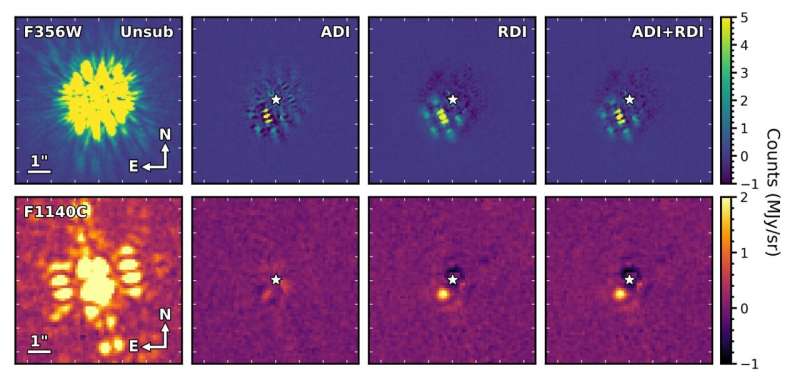
First exoplanet image from James Webb Space Telescope revealed
This team of amateurs built a satellite that NASA is taking to space
If NASA is to boldly go where no man has gone before, the federal agency might have Tampa to thank for it.
NASA is set to launch the unmanned Artemis 1, the first flight of its larger Artemis program mission to build a moon base and send astronauts to Mars.
Such accomplishments will require affordable and reliable deep space communication. That's where Tampa comes in.
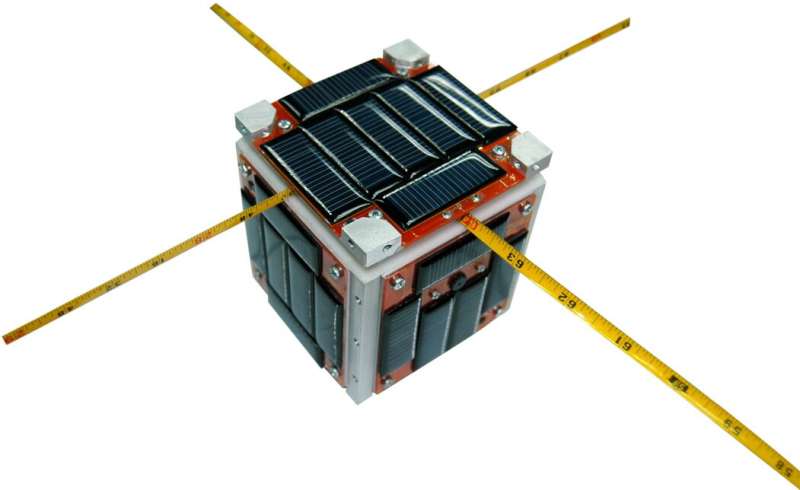
A team of mostly amateurs from around the country—but based out of Tampa—built a CubeSat, which is a miniature, cubed-shaped satellite used in space exploration in recent years.
The size of two loaves of bread side by side, their solar-powered CubeSat will hitch a ride on Artemis 1, get dropped off short of the moon and then propel itself as far as 28 million miles farther. All the while, their CubeSat will transmit information back to Earth.
"It's pretty unbelievable," said Wesley Falor, head of the group known as Team Miles.
We're heading to the moon and maybe Mars. So who owns them?