China's space tracking ship sails for monitoring missions
 China's space tracking ship Yuanwang-3 set sail for monitoring missions from its home port on Monday morning, according to China Science Daily.
The vessel has prepared for the new missions as the technicians have completed the overhaul and test of shipborne tracking and monitoring equipment and carried out operation drills.
In 2022, Yuanwang-3 sailed for more than 70 days and complet
China's space tracking ship Yuanwang-3 set sail for monitoring missions from its home port on Monday morning, according to China Science Daily.
The vessel has prepared for the new missions as the technicians have completed the overhaul and test of shipborne tracking and monitoring equipment and carried out operation drills.
In 2022, Yuanwang-3 sailed for more than 70 days and complet The global hunt for dark matter has arrived in Australia at the Stawell Underground Physics Laboratory
 Located 1km underground in the Stawell Gold Mine, the first dark matter laboratory in the southern hemisphere is preparing to join the global quest to understand the nature of dark matter and unlock the secrets of our universe.
Recently unveiled, the Stawell Underground Physics Laboratory (SUPL) will be the new epicentre of dark matter research in Australia.
Lead researcher on the pr
Located 1km underground in the Stawell Gold Mine, the first dark matter laboratory in the southern hemisphere is preparing to join the global quest to understand the nature of dark matter and unlock the secrets of our universe.
Recently unveiled, the Stawell Underground Physics Laboratory (SUPL) will be the new epicentre of dark matter research in Australia.
Lead researcher on the pr Astrobotic wins NASA funding for CubeRover mission

Astrobotic, a company developing landers and other lunar technologies, has secured NASA funding to fly a small rover on a future mission to test its ability to survive the lunar night.
The post Astrobotic wins NASA funding for CubeRover mission appeared first on SpaceNews.
Scout Space and university labs win contracts for on-orbit servicing project

Scout Space, a startup developing technologies for in-space services, won two U.S. Space Force contracts in support of the debris-cleanup project known as Orbital Prime
The post Scout Space and university labs win contracts for on-orbit servicing project appeared first on SpaceNews.
NASA to fly six scientific balloons from New Mexico
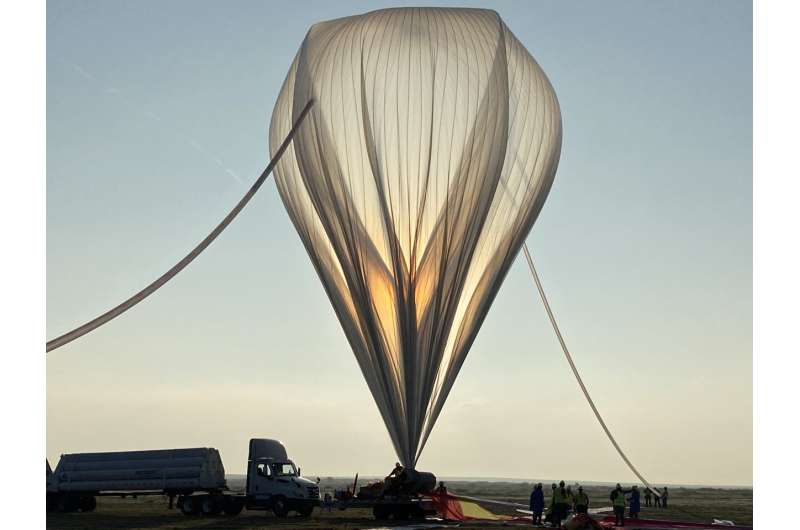
NASA's Scientific Balloon Program is moving full-steam ahead into the fall 2022 campaign with six scientific, engineering, and student balloon flights supporting 17 missions. The flights are scheduled to launch from Fort Sumner, New Mexico, from mid-August through mid-October.
With one balloon already off the ground, a test flight carrying several different technology payloads and other piggyback missions, the team hopes to launch the five remaining balloons by the end of the launch window in support of multiple science and technology initiatives.
"Our balloon platforms can lift several thousand pounds to the edge of space, allowing for multiple, various scientific instruments, technologies, and education payloads to fly together on one balloon flight," said Debbie Fairbrother, Scientific Balloon Program chief at NASA's Wallops Flight Facility in Virginia.
Some of the science missions flying this campaign include the BALloon-Based Observations for sunlit Aurora (BALBOA), testing a wide-view infrared camera designed to study daytime auroras; the Planetary Imaging Concept Testbed Using a Recoverable Experiment—Coronagraph (PICTURE-C) mission that will directly image and characterize dust and debris orbiting nearby stars with the possibility of detecting bright, gas giant planets outside our solar system using a telescope; the TinMan mission hopes to better understand the effects of thermal neutrons in Earth's atmosphere on aircraft electronics; and the 16th High-Altitude Student Platform (HASP) mission that will fly 12 student-built payloads.
Negotiations are underway to avoid conflict and damage to spacecraft between international moon missions
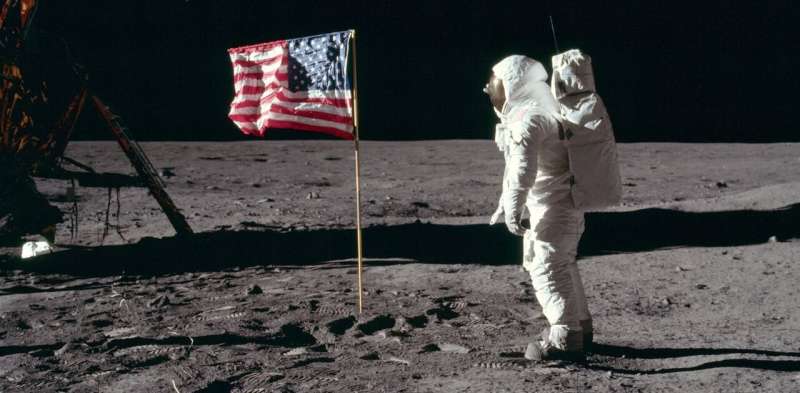
It's been 50 years since humans last visited the moon, and even robotic missions have been few and far between. But the Earth's only natural satellite is about to get crowded.
At least six countries and a flurry of private companies have publicly announced more than 250 missions to the moon to occur within the next decade. Many of these missions include plans for permanent lunar bases and are motivated in large part by ambitions to assess and begin utilizing the moon's natural resources. In the short term, resources would be used to support lunar missions, but in the long term, the moon and its resources will be a critical gateway for missions to the broader riches of the solar system.
But these lofty ambitions collide with a looming legal question. On Earth, possession and ownership of natural resources are based on territorial sovereignty.
‘State of the space industrial base’ report calls for national plan to compete with China
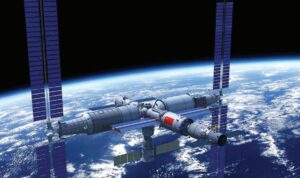
The "State of the Space Industrial Base 2022" report urges the U.S. government to lay out a national strategy for space that embraces the private sector as a key partner
The post ‘State of the space industrial base’ report calls for national plan to compete with China appeared first on SpaceNews.
Megaconstellation startup E-Space expands leadership team
E-Space has expanded its leadership team as the startup prepares to start serial production next year for a network of potentially hundreds of thousands of satellites.
The post Megaconstellation startup E-Space expands leadership team appeared first on SpaceNews.
Op-ed | The Rare Earth Ripple Effect of Russia’s War on Ukraine

In the six months since Russia invaded Ukraine, a litany of follow-on effects from the conflict have reverberated throughout the globe, many of which could achieve permanence as a new norm or standard.
The post Op-ed | The Rare Earth Ripple Effect of Russia’s War on Ukraine appeared first on SpaceNews.
Working in tandem: NASA's networks empower Artemis I
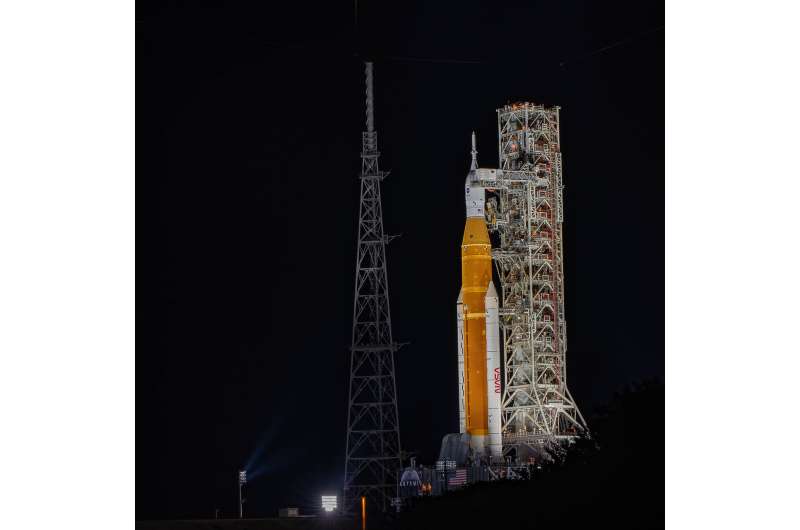
NASA's Artemis missions are returning humanity to the Moon and beginning a new era of lunar exploration. Soon, the agency plans to launch the Artemis I mission, an uncrewed flight test that will take a human-rated spacecraft farther than any before.
Although uncrewed, Artemis I will test essential systems for future crewed missions to the lunar region, including the first-ever launch of NASA's most powerful rocket, the Space Launch System (SLS). The SLS rocket will launch from NASA's Kennedy Space Center in Cape Canaveral, Florida, and enter a complex orbit to bring the Orion spacecraft to the Moon.