Small launch vehicle industry growth slows
The growth of the small launch vehicle industry is slowing, with fewer new vehicles entering the market and more vehicles going defunct, as demand for such vehicles lags expectations.
The post Small launch vehicle industry growth slows appeared first on SpaceNews.
Kayhan updates Pathfinder spaceflight safety platform

Spaceflight safety startup Kayhan Space is broadening its product line to address collision threats for launch vehicles and satellites with or without propulsion.
The post Kayhan updates Pathfinder spaceflight safety platform appeared first on SpaceNews.
FCC considers new rules for emerging space capabilities

An inquiry into updating rules around space debris and emerging on-orbit services seeks to position the U.S. as a leader in an emerging space economy.
The post FCC considers new rules for emerging space capabilities appeared first on SpaceNews.
Rocket launch to image supernova remnant

A Northwestern University astrophysics team is aiming for the stars—well, a dead star, that is.
On Aug. 21, the NASA-funded team will launch its "Micro-X" rocket from White Sands Missile Range in southern New Mexico. The rocket will spend 15 minutes in space—just enough time to snap a quick image of supernova remnant Cassiopeia A, a star in the Cassiopeia constellation that exploded approximately 11,000 light-years away from Earth. Then, the rocket will parachute back to Earth, landing in the desert—about 45 miles from the launchpad—where the Northwestern team will recover its payload.
Short for "high-resolution microcalorimeter X-ray imaging rocket," the Micro-X rocket will carry a superconductor-based X-ray imaging spectrometer that is capable of measuring the energy of each incoming X-ray from astronomical sources with unprecedented accuracy.
"The supernova remnant is so hot that most of the light it emits is not in the visible range," said Northwestern's Enectali Figueroa-Feliciano, who leads the project. "We have to use X-ray imaging, which isn't possible from Earth because our atmosphere absorbs X-rays. That's why we have to go into space.
Want to colonize Mars? Talk to this outer space anthropologist first
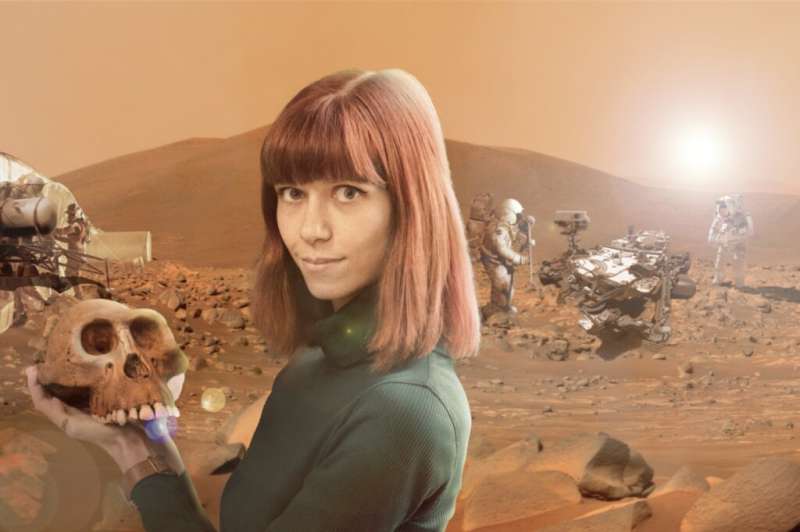
Maybe infinity and beyond should wait.
Prominent physicists and wealthy tycoons envision life scattered across the solar system. Elon Musk wants humans to become a multiplanetary species. Jeff Bezos pictures floating space colonies home to billions.
Simulated-gravity ecosystems powered by the sun.
Momentus to cut costs as it prepares for next Vigoride mission
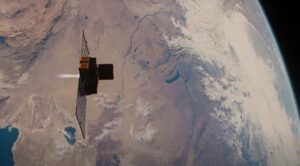
In-space transportation company Momentus plans to reduce spending to conserve cash while moving ahead with its next series of tug missions.
The post Momentus to cut costs as it prepares for next Vigoride mission appeared first on SpaceNews.
Army looking at new ways to use space technology for unconventional warfare
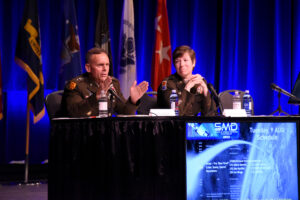
Army officials at the Space and Missile Defense Symposium said space and cyber technologies should be used in support of special operations and information warfare
The post Army looking at new ways to use space technology for unconventional warfare appeared first on SpaceNews.
Europe Ready For Artemis
 Video:
00:03:26
Video:
00:03:26
ESA and NASA are working hand in hand before the first Artemis mission to the Moon through a series of joint mission simulations. Teams based at the Erasmus Support Facility (ESF) at ESA’s ESTEC facility in The Netherlands, the German Space Operations Centre at ESA’s Columbus Control Centre in Oberphfaffenhofen and NASA’s Johnson Space Center in Houston are combining their expertise in a series of exercises to ensure a successful launch.
When it comes to simulations, it’s important that not everything goes perfectly right as it recreates - in real time - different stages of the mission to
Artemis I to launch first-of-a-kind deep space biology mission
 Poised to launch on Artemis I from NASA's Kennedy Space Center in Florida, BioSentinel - a shoebox-sized CubeSat - will perform the first long-duration biology experiment in deep space. Artemis missions at the Moon will prepare humans to travel on increasingly farther and longer-duration missions to destinations like Mars, and BioSentinel will carry microorganisms, in the form of yeast, to fill
 WVU space robotics research helps Mars rovers find their footing
 West Virginia University scientists have developed a way for extraplanetary rovers to use nonvisual information to maneuver over treacherous terrain. This research aims to prevent losses like that of the Martian exploration rover Spirit, which ceased communications after its wheels became trapped in invisibly shifting sands in 2010.
Space roboticist Cagri Kilic, a Statler College of Engine
West Virginia University scientists have developed a way for extraplanetary rovers to use nonvisual information to maneuver over treacherous terrain. This research aims to prevent losses like that of the Martian exploration rover Spirit, which ceased communications after its wheels became trapped in invisibly shifting sands in 2010.
Space roboticist Cagri Kilic, a Statler College of Engine