

China's newest research lab prepares launch to space
 China's Wentian space laboratory and its carrier-a Long March 5B rocket-were moved to a service tower on Monday morning to undergo final tests before their planned flight in the coming days, according to the China Manned Space Agency.
The agency said in a brief statement that prelaunch preparations will begin at the Wenchang Space Launch Center in the southernmost island province of Hainan
China's Wentian space laboratory and its carrier-a Long March 5B rocket-were moved to a service tower on Monday morning to undergo final tests before their planned flight in the coming days, according to the China Manned Space Agency.
The agency said in a brief statement that prelaunch preparations will begin at the Wenchang Space Launch Center in the southernmost island province of Hainan BlackSky to provide advanced AI for space-based dynamic monitoring
 BlackSky Technology Inc. (NYSE: BKSY) received a $4.4 million award from the Intelligence Advanced Research Projects Activity (IARPA) to support the second phase of the multi-year Space-based Machine Automated Recognition Technique (SMART) Program. As part of our work, BlackSky created a high-performance MLOps (machine learning operations) framework that was ultimately selected to perform as the core infrastructure to the entire SMART program," said Patrick O'Neil, BlackSky chief innovation officer.
 SpaceChain completes EVM blockchain testing in Space
 SpaceChain has announced the completion of the testing of the space node it created for Velas Network AG, which is hosted on an LEO satellite and independent of terrestrial networks. The space node is now capable of delivering the full functionalities designed for Velas, including transaction signatures, smart contract deployment, decentralized finance (Defi) activities and non-fungible token (N
 Ericsson, Qualcomm and Thales to take 5G into space
 Ericsson, Thales and Qualcomm Technologies, are planning to take 5G out of this world and across a network of Earth-orbiting satellites. After having each conducted detailed research, which included multiple studies and simulations, the parties plan to enter smartphone-use-case-focused testing and validation of 5G non-terrestrial networks (5G NTN).
The result
Ericsson, Thales and Qualcomm Technologies, are planning to take 5G out of this world and across a network of Earth-orbiting satellites. After having each conducted detailed research, which included multiple studies and simulations, the parties plan to enter smartphone-use-case-focused testing and validation of 5G non-terrestrial networks (5G NTN).
The result NASA seeks public's designs to throw shade in space
 Searching the universe for Earth-like planets is like looking for a needle in a haystack. To further this exploration, NASA is supporting the early-stage study of a concept for a hybrid observatory that would combine a ground-based telescope with a space-based starshade.
These devices block glare from stars when observing planets outside our solar system, known as exoplanets, from the grou
Searching the universe for Earth-like planets is like looking for a needle in a haystack. To further this exploration, NASA is supporting the early-stage study of a concept for a hybrid observatory that would combine a ground-based telescope with a space-based starshade.
These devices block glare from stars when observing planets outside our solar system, known as exoplanets, from the grou British-built satellite completes line-up for first launch from Spaceport Cornwall
 A new research satellite from international engineering firm Rhea Group, built in Oxfordshire by space company Open Cosmos, will be launched from the UK later this year.
Virgin Orbit will launch the 'DOVER' pathfinder satellite from Spaceport Cornwall. The satellite will transmit an innovative new signal, specially designed by engineers at RHEA, to provide data from space that can be used
A new research satellite from international engineering firm Rhea Group, built in Oxfordshire by space company Open Cosmos, will be launched from the UK later this year.
Virgin Orbit will launch the 'DOVER' pathfinder satellite from Spaceport Cornwall. The satellite will transmit an innovative new signal, specially designed by engineers at RHEA, to provide data from space that can be used TRUTHS shines
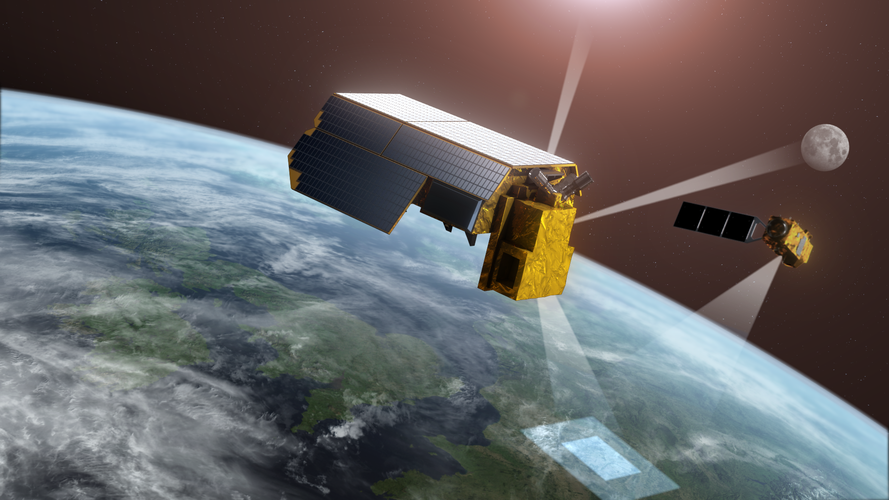
Satellites are essential for delivering key data to understand and monitor how the climate crisis is impacting our world, but, in turn, decision-makers need to be confident in the data they use for mitigation strategies and policymaking. TRUTHS, a new ESA mission, will do just this – and, now having passed an important milestone, it is one step closer to becoming a reality.
Millennium Space reveals results of DARPA’s ‘Red-Eye’ smallsat experiment

The DARPA-funded Red-Eye experiment demonstrated capabilities such as on-board data processing, inter-satellite communications and software-defined radios.
The post Millennium Space reveals results of DARPA’s ‘Red-Eye’ smallsat experiment appeared first on SpaceNews.
OneWeb and Hanwha partner to tap Australia’s military broadband market

OneWeb and two subsidiaries of South Korean conglomerate Hanwha Group have partnered to explore the joint provision of connectivity services to the Australian defense market.
The post OneWeb and Hanwha partner to tap Australia’s military broadband market appeared first on SpaceNews.
Engineer uses ancient art of origami to solve a very modern aerospace problem
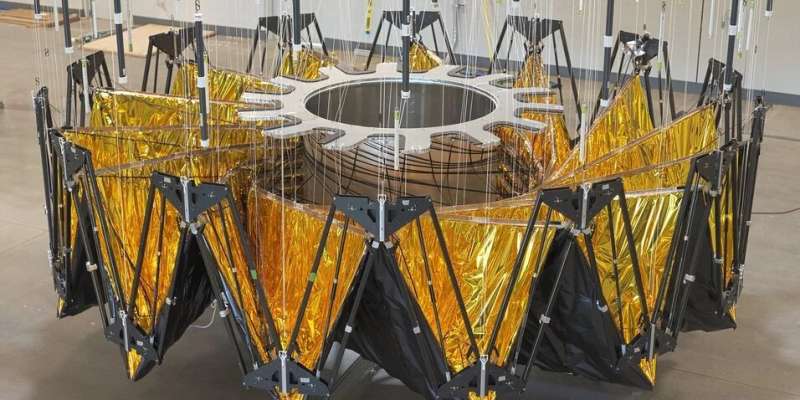
If you've ever made an origami paper crane, using folds and creases to transform a square piece of craft paper into the delicate long-necked bird, it may seem odd that those same folding techniques are being used to develop structures used in one of the most advanced areas of modern technology: space missions.
Yet aerospace engineers have turned to the millenary art of origami to solve a serious conundrum: How do you fit massive structures, like shields that can block starlight and sails that can help propel spacecraft, into the significantly smaller rockets that carry these structures into space? While the sizes of each of these structures vary, picture yourself trying to fit a beach umbrella with a 28-meter diameter (about the length of a basketball court) into a minivan.


