

UAE announces plans for radar satellite constellation and space fund
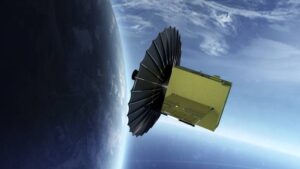
The United Arab Emirates will develop a radar satellite constellation as part of a new fund worth more than $800 million to support the country’s space sector.
The post UAE announces plans for radar satellite constellation and space fund appeared first on SpaceNews.
The secrets of Jupiter
 Video:
00:00:55
Video:
00:00:55
Discover the top five mysteries that ESA’s Jupiter Icy Moons Explorer (Juice) mission will solve.
Jupiter, its magnetic environment, and its moons form one of the most intriguing systems in the Solar System. Juice, planned for launch in 2023 and arrival at Jupiter in 2031, will reveal more about this fascinating planet and its natural satellites.
Foust Forward | For JWST, celebrating the future while remembering the past

The technical achievements of deploying JWST and the anticipation about its first images have overcome what JWST had been known for: billions of dollars in cost overruns and years of schedule delays.
The post Foust Forward | For JWST, celebrating the future while remembering the past appeared first on SpaceNews.
Raytheon to acquire UK startup Northern Space and Security

Raytheon announced July 18 it intends to acquire Northern Space and Security, or NORSS, a UK startup that specializes in space domain awareness.
The post Raytheon to acquire UK startup Northern Space and Security appeared first on SpaceNews.
US-UK special relationship deepens in space

U.S. and U.K. space officials are discussing steps to strengthen their partnership. It's a conversation that has gained momentum in recent month due to concerns that satellites are becoming military targets.
The post US-UK special relationship deepens in space appeared first on SpaceNews.
Op-ed | Don’t Let Recession Fears Threaten Space Sustainability Gains

The space industry must think long term, unify around big problems and tap into defense as key funding partner
The post Op-ed | Don’t Let Recession Fears Threaten Space Sustainability Gains appeared first on SpaceNews.
Op-ed | No Borders in Space
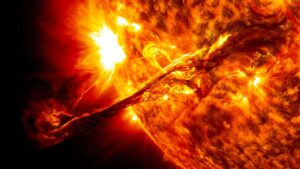
As the Sun becomes more active after a nearly three-year activity slumber, the massive solar storms that lie ahead of us for the upcoming several sunspot-cycle years will not respect any geographic boundaries or political borders.
To get artificial gravity on the moon, you'd need a giant rotating lunar base
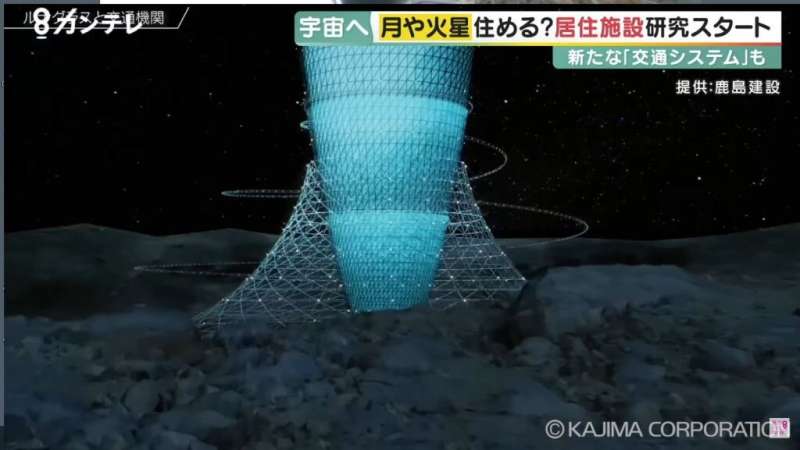
Living and working in space for extended periods of time presents a number of challenges. These include radiation, as locations beyond Earth's protective magnetosphere are exposed to greater levels of solar and cosmic rays. There's also the need for self-sufficiency since lunar or Martian bases are too far to rely on regular resupply missions like the International Space Station (ISS). Last, there's the issue of low gravity, which is especially pressing for long-term missions and habitats beyond Earth. If humanity's future truly lies in space, we must devise solutions to this issue in advance.
A popular idea is to create rotating habitats in space that simulate artificial gravity, like the Pinwheel Station or the O'Neill Cylinder. Another proposal by a team of Japanese researchers calls for something bolder: a rotating habitat on the moon. On July 5, representatives from Kyoto University and the Kajima Corporation (one of the oldest and largest construction companies in Japan) announced that they would be partnering to conduct a study on this concept and how it could make humanity's plans for living on the moon and Mars a reality.
How reduced gravity affects astronauts' muscles and nerve responses
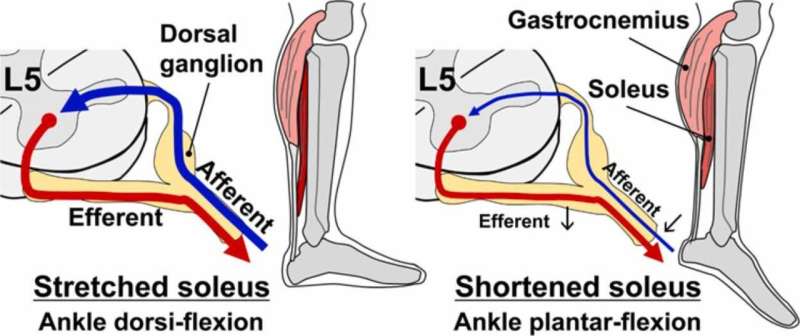
Among the many functions performed by skeletal muscles, an important one is maintaining our posture. If it weren't for these muscles, Earth's gravitational pull may make it difficult for us to stand and walk around. The group of muscles—mostly present in our limbs, back, and neck—which are responsible for maintaining our posture and allowing us to move against the force of gravity are rightly called "anti-gravity" muscles.
But what happens to these muscles when there is no gravity (or an "unloading" of gravitational force) for them to work against? The question might sound ridiculous to some, but not to an astronaut aboard the International Space Station (ISS). In outer space, where gravity is minimal, our muscles (especially the anti-gravitational ones) are not used as much, which might result in their atrophy and changes to their structure and properties. In fact, human calf muscles are known to reduce in volume during a flight in space.
Northrop Grumman taps Solstar for HALO Module Wi-Fi
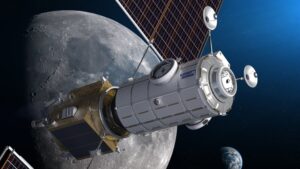
Solstar Space will provide Wi-Fi access for crew and devices in NASA’s Habitation and Logistics Outpost module, under a contract the New Mexico in-orbit communications startup signed with Northrop Grumman Corp.
The post Northrop Grumman taps Solstar for HALO Module Wi-Fi appeared first on SpaceNews.


