

AIR and Nigerian Space Agency sign MOU to collaborate on agriculture monitoring
 On July 4, 2022, the Aerospace Information Research Institute (AIR), Chinese Academy of Sciences (CAS) signed a memorandum of understanding (MOU) in Beijing through an online event with the National Space Research and Development Agency (NASRDA) of Nigeria to boost collaboration on crop monitoring with the goal to help the country achieve Zero Hunger goal, which is among 17 sustainable developme
 Why Does the Inside of the Solar System Not Spin Faster
 The motion of a tiny number of charged particles may solve a longstanding mystery about thin gas disks rotating around young stars, according to a new study from Caltech.
These features, called accretion disks, last tens of millions of years and are an early phase of solar system evolution. They contain a small fraction of the mass of the star around which they swirl; imagine a Saturn-like
The motion of a tiny number of charged particles may solve a longstanding mystery about thin gas disks rotating around young stars, according to a new study from Caltech.
These features, called accretion disks, last tens of millions of years and are an early phase of solar system evolution. They contain a small fraction of the mass of the star around which they swirl; imagine a Saturn-like Smart competition for clever navigation at NAVISP Industry Days
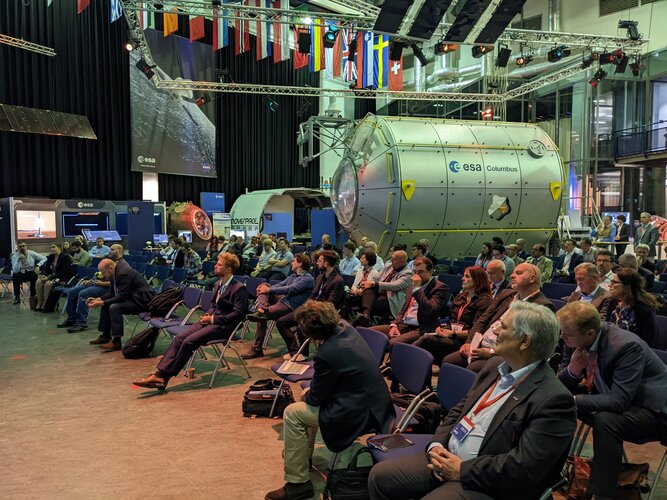
Europe’s leading companies and research institutes working on positioning, navigation, and timing (PNT) technologies met at ESA’s technical heart in the Netherlands in mid-June for this year’s NAVISP Industry Days, devoted to the latest developments in the Agency’s Navigation Innovation and Support Programme.
Defense Innovation Unit selects contractors to build hybrid space network

Anduril, Aalyria, Atlas Space and Enveil won contracts for the Defense Innovation Unit's hybrid space architecture program
The post Defense Innovation Unit selects contractors to build hybrid space network appeared first on SpaceNews.
Vega-C pre-launch press briefing
 Video:
00:43:03
Video:
00:43:03
Watch the replay of the Q&A session with the media to learn more about the preparations for the upcoming launch of Vega-C. The inaugural flight of this new rocket in the Vega family is currently planned on 13 July 2022. Speakers include Stefano Bianchi, ESA Head of Flight Programmes Department, Benoit Pouffary, ESA Vega & Space Rider Launch System Engineering Manager, Ettore Scardecchia, Avio Head of Engineering and Mario Cosmo, ASI Director of Science and Research.
Just add graphene for greener Li-ion batteries
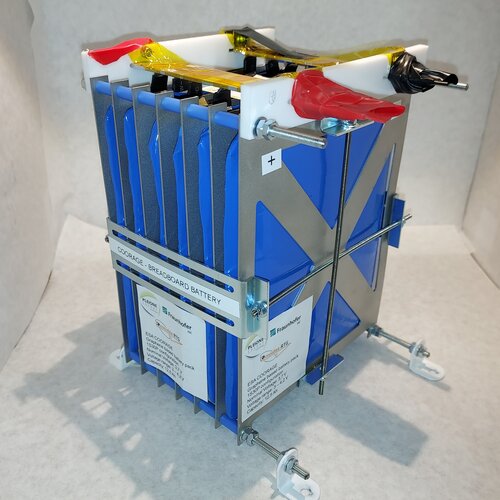
Harder than diamond and more electrically conductive than copper while also a million times thinner than paper: graphene is the single greatest discovery of 21st century materials science, and ESA has been working to benefit from its miraculous properties. A project to add ultra-thin graphene to traditional Lithium ion cells offers enhanced capacity and cycle life for future space batteries, which can now be manufactured in a cheaper, greener way – swapping toxic solvent for water and plant-based cellulose.
NASA Updates Coverage for Webb Telescope’s First Images Reveal
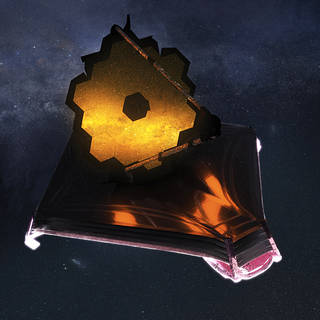 NASA, in partnership with ESA (European Space Agency) and CSA (Canadian Space Agency), will release the James Webb Space Telescope’s first full-color images and spectroscopic data during a live broadcast beginning at 10:30 a.m. EDT Tuesday, July 12, from NASA’s Goddard Space Flight Center in Greenbelt, Maryland.
 Stellar Ventures unveils $23 million early-stage fund
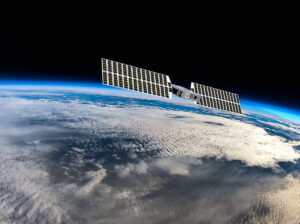
Stellar Ventures unveiled a fund July 7 with $23 million to invest in early-stage space-related startups.
The post Stellar Ventures unveils $23 million early-stage fund appeared first on SpaceNews.
NASA releases James Webb telescope 'teaser' picture
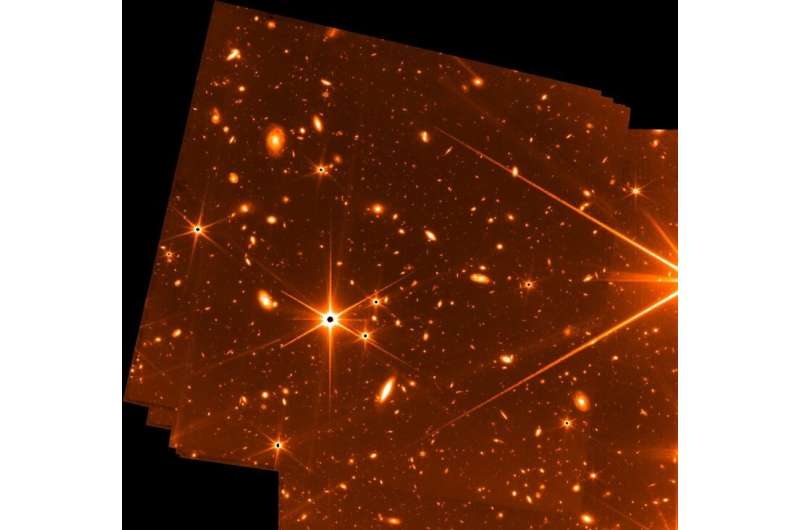
NASA has a provided a tantalizing teaser photo ahead of the highly-anticipated release next week of the first deep-space images from the James Webb Telescope—an instrument so powerful it can peer back into the origins of the universe.
The $10 billion observatory—launched in December last year and now orbiting the Sun a million miles (1.5 million kilometers) away from Earth—can look where no telescope has looked before thanks to its enormous primary mirror and instruments that focus on infrared, allowing it to peer through dust and gas.
The first fully formed pictures are set for release on July 12, but NASA provided an engineering test photo on Wednesday—the result of 72 exposures over 32 hours that shows a set of distant stars and galaxies.
NASA criticizes Russia for using space station to promote invasion of Ukraine
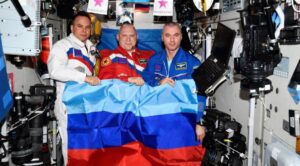
NASA strongly criticized Russia for using the International Space Station to promote its invasion of Ukraine, a break from the agency’s approach of emphasizing ongoing cooperation despite the war.
The post NASA criticizes Russia for using space station to promote invasion of Ukraine appeared first on SpaceNews.


