

Avio gets pandemic recovery funds to develop launchers for the 2030s

Italian rocket maker Avio secured 340 million euros ($358 million) in government funding June 29 to develop launch vehicles for the next decade.
The post Avio gets pandemic recovery funds to develop launchers for the 2030s appeared first on SpaceNews.
Sierra Space signs agreement with Turkish Space Agency

Sierra Space announced an agreement with the Turkish Space Agency and an affiliated company June 29 that could lead to cooperation on human spaceflight and lunar missions.
The post Sierra Space signs agreement with Turkish Space Agency appeared first on SpaceNews.
Swarm of tiny swimming robots could look for life on distant worlds
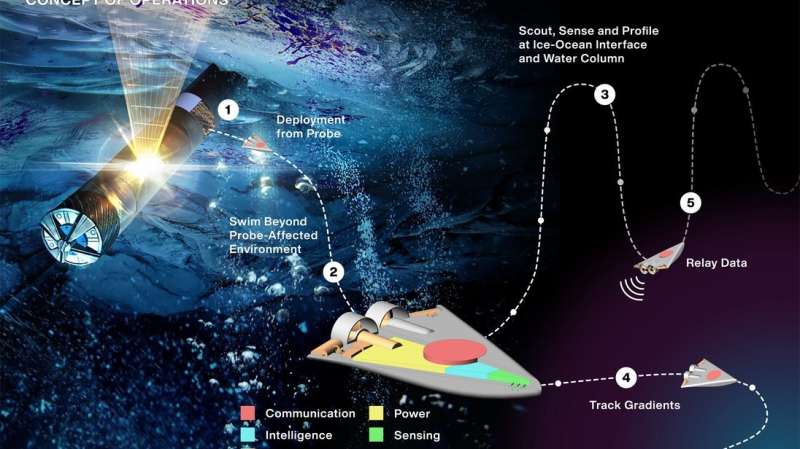
Someday, a swarm of cellphone-size robots could whisk through the water beneath the miles-thick icy shell of Jupiter's moon Europa or Saturn's moon Enceladus, looking for signs of alien life.
NASA administrator tests positive for COVID

NASA Administrator Bill Nelson has tested positive for COVID-19, he announced June 29, but is continuing to lead the agency as he isolates at home.
The post NASA administrator tests positive for COVID appeared first on SpaceNews.
Space Force considering strategy for procuring national security launch services
Space Force acquisition executive Frank Calvelli said he would be open to a different model than the current two-vendor approach for national security launch services procurement
The post Space Force considering strategy for procuring national security launch services appeared first on SpaceNews.
Escaping Gravity and the struggle to reshape NASA

Former NASA deputy administrator Lori Garver has written a book about her time at the agency. Rand Simberg reviews the book with a focus on Garver’s efforts to put NASA on a new course that leveraged commercial capabilities.
NASA mission aims to study ice and water on the moon's surface
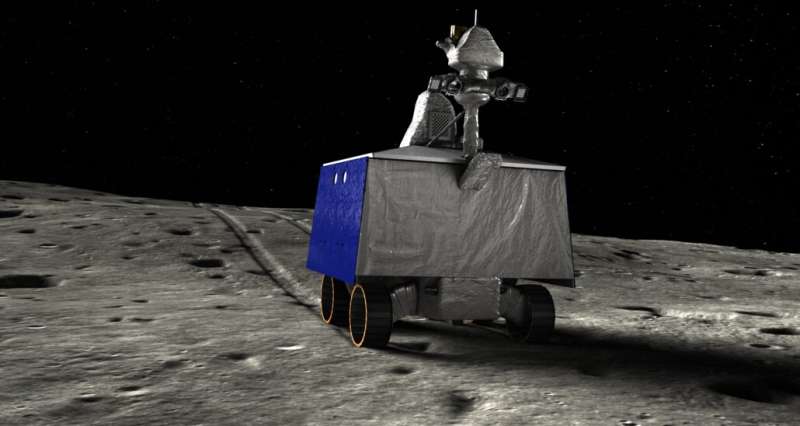
In the fall of 2023, a U.S. rover will land at the south pole of the moon. Its mission: to explore the water ice that scientists know lurks within the lunar shadows, and which they believe could help sustain humans who may one day explore the moon or use it as a launching pad for more distant space exploration.
NASA recently selected Kevin Lewis, an associate professor in the Krieger School's Department of Earth and Planetary Sciences who has also worked on missions on Mars, as a co-investigator of the mission. Using part of the rover's navigational system, he plans to explore the moon's subsurface geology from his office in Olin Hall.
"I have been on other rover missions, but on Mars, so I'm a little bit new to the moon," Lewis said. "We're going to see into shadows that have never seen the sun, let alone been seen by humans. So it could be a very different type of surface than we've seen in other photos of the surface of the moon."
Drier than a desert
NASA prepares to release first JWST science images
With commissioning of the James Webb Space Telescope nearly complete, project officials and NASA leadership promise the telescope’s first images will stun scientists and the public alike.
The post NASA prepares to release first JWST science images appeared first on SpaceNews.
SpaceX launches SES-22 C-band replacement satellite

SpaceX launched the first television broadcast satellite under SES’s C-band clearing plan June 29 from Cape Canaveral in Florida.
The post SpaceX launches SES-22 C-band replacement satellite appeared first on SpaceNews.
Webb telescope: NASA to reveal deepest image ever taken of universe
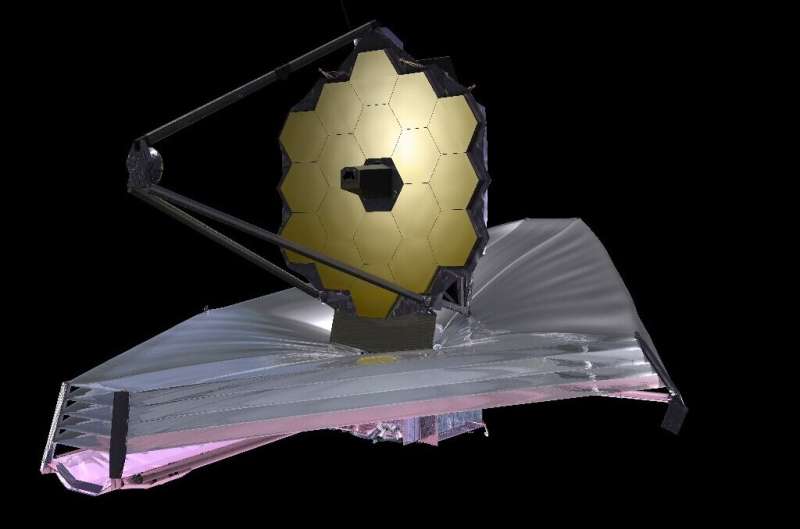
NASA administrator Bill Nelson said Wednesday the agency will reveal the "deepest image of our universe that has ever been taken" on July 12, thanks to the newly operational James Webb Space Telescope.
"If you think about that, this is farther than humanity has ever looked before," Nelson said during a press briefing at the Space Telescope Science Institute in Baltimore, the operations center for the $10 billion observatory that was launched in December last year and is now orbiting the Sun a million miles (1.5 million kilometers) away from Earth.


