European Space Agency appoints Austrian scientist new chief
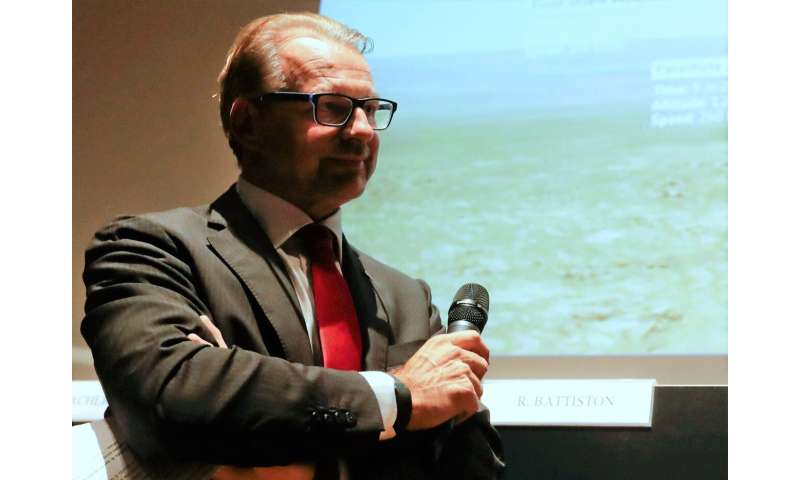
The European Space Agency said Thursday that Josef Aschbacher, an Austrian scientist who leads its Earth observation program, has been appointed as the organization's next head.
The agency's 22 member states elected Aschbacher to be ESA's director general succeeding Jan Woerner, whose term ends on June 30.
Raymond on China’s space program: “It’s alive, well and concerning”
WASHINGTON — China’s leapfrogging advances in space are cause for national security concern, the head of the U.S. Space Force said Dec. 17.
“China has gone from zero to 60 really quick,” Gen.
CesiumAstro founder closes in on decades-old dream
SAN FRANCISCO – Shey Sabripour was first exposed to active phased array antennas while designing satellites at Lockheed Martin in the early 1990s.
At the time, engineers spent three to five years building a geostationary communications satellite that cost hundreds of millions of dollars to perform a specific job.
New ESA director general sees EU relations and commercialization as priorities

WASHINGTON — The next leader of the European Space Agency says his top priorities are to improve the agency’s relationship with the European Union and support commercial space activities in Europe.
ESA announced Dec. 17 that the ESA Council selected Josef Aschbacher to be the next director general, effective at the end of June 2021 for a four-year term.
Blue Origin’s New Glenn added to NASA launch contract
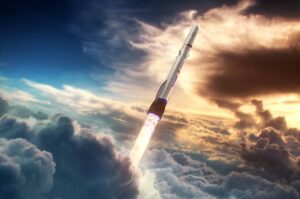
WASHINGTON — NASA has added New Glenn, the large launch vehicle under development by Blue Origin, to the list of vehicles eligible to compete for future agency missions.
NASA announced Dec. 16 it awarded a launch services contract to Blue Origin, adding New Glenn to its NASA Launch Services (NLS) 2 contract vehicle as part of an annual “on-ramp” process.
ULA’s new rocket Vulcan projected to launch in late 2021

WASHINGTON — United Launch Alliance’s new Vulcan Centaur rocket will be ready to launch its first mission in late 2021, CEO Tory Bruno said Dec. 17.
Bruno told reporters in a conference call that ULA is confident that both the launch vehicle and its first customer — Astrobotic’s Peregrine lunar lander — will be on the launch pad “by the end of next year.
Loss of Vega flight VV17: Independent Enquiry Commission announces conclusions
Press Release N° 33–2020
On Tuesday, November 17, Arianespace announced the loss of the Vega VV17 mission, which was carrying two payloads, SEOSAT-Ingenio, an Earth-science observation satellite for the European Space Agency (ESA), on behalf of Spain's Center for Development of Industrial Technology (CDTI), and TARANIS for France’s National Centre for Space Studies (CNES). The first three stages functioned nominally until the ignition of the AVUM upper stage, eight minutes after liftoff. At that time, a degraded trajectory was detected, followed by a loss of control of the vehicle and the subsequent loss of the mission.
New satellite propulsion test facility to propel UK into new space age
 A new gold standard national rocket test facility will soon open its doors, the Science Minister Amanda Solloway has announced 18 December.
The new centre will allow UK companies and academics to fire up and test state-of-the-art space propulsion engines at up to 1.5kN in high-altitude vacuum, an equivalent test altitude of 140,000ft. It will cement the international reputation of the West
A new gold standard national rocket test facility will soon open its doors, the Science Minister Amanda Solloway has announced 18 December.
The new centre will allow UK companies and academics to fire up and test state-of-the-art space propulsion engines at up to 1.5kN in high-altitude vacuum, an equivalent test altitude of 140,000ft. It will cement the international reputation of the West SpaceX aborts launch attempt of U.S. government spy satellite
 SpaceX on Thursday postponed the company's second spy satellite mission for the U.S. government due to a slightly high pressure reading in an upper stage liquid oxygen tank on the Falcon 9 rocket.
The countdown stopped at 1 minute, 53 seconds before the planned 9:45 a.m. EST liftoff from Complex 39A at Kennedy Space Center in Florida. SpaceX said it plans another attempt Friday morning.
SpaceX on Thursday postponed the company's second spy satellite mission for the U.S. government due to a slightly high pressure reading in an upper stage liquid oxygen tank on the Falcon 9 rocket.
The countdown stopped at 1 minute, 53 seconds before the planned 9:45 a.m. EST liftoff from Complex 39A at Kennedy Space Center in Florida. SpaceX said it plans another attempt Friday morning. Major upgrade to Fermilab accelerator complex gets green light
 The U.S. Department of Energy has formally approved the scope, schedule and cost of the PIP-II project at DOE's Fermilab.
The approval, known as Critical Decision 2 or CD-2, is an endorsement of Fermilab's detailed, formal plan for building the PIP-II accelerator, a high-power, superconducting machine that will become the heart of the laboratory accelerator complex.
PIP-II, the only
The U.S. Department of Energy has formally approved the scope, schedule and cost of the PIP-II project at DOE's Fermilab.
The approval, known as Critical Decision 2 or CD-2, is an endorsement of Fermilab's detailed, formal plan for building the PIP-II accelerator, a high-power, superconducting machine that will become the heart of the laboratory accelerator complex.
PIP-II, the only