
Copernical Team
Scientists propose new formation mechanism for solar coronal rain
 Rain is a common phenomenon on Earth. There is a similar phenomenon on the Sun, called coronal rain. It is related to the coronal heating and magnetic field, and plays a fundamental role in the mass cycle between the hot, tenuous corona and the cool, dense chromosphere.
Coronal rain usually takes place in post-flare loops and the non-flaring active region coronal loops. It is generally cla
Rain is a common phenomenon on Earth. There is a similar phenomenon on the Sun, called coronal rain. It is related to the coronal heating and magnetic field, and plays a fundamental role in the mass cycle between the hot, tenuous corona and the cool, dense chromosphere.
Coronal rain usually takes place in post-flare loops and the non-flaring active region coronal loops. It is generally cla Mars has right ingredients for present-day microbial life beneath its surface, study finds
 As NASA's Perseverance rover begins its search for ancient life on the surface of Mars, a new study suggests that the Martian subsurface might be a good place to look for possible present-day life on the Red Planet.
The study, published in the journal Astrobiology, looked at the chemical composition of Martian meteorites - rocks blasted off of the surface of Mars that eventually landed on
As NASA's Perseverance rover begins its search for ancient life on the surface of Mars, a new study suggests that the Martian subsurface might be a good place to look for possible present-day life on the Red Planet.
The study, published in the journal Astrobiology, looked at the chemical composition of Martian meteorites - rocks blasted off of the surface of Mars that eventually landed on Mars 2020 used key systems at AFRL for pre flight testing
 On February 18, 2021, NASA's rover Perseverance touched down on the surface of Mars to begin searching for evidence of past life. The success of this touchdown would not have been possible without the work of a team of researchers who operate unique erosion testing equipment in a windowless bunker at Wright-Patterson's Air Force Research Lab. And this is not the only Dayton connection to this pa
 SpaceX in orbit on route to ISS
 SpaceX launched its third crew to the International Space Station an hour before sunrise Friday, recycling a rocket and spacecraft for the first time. The Crew-2 mission, the first involving a European, blasted off from the Kennedy Space Center in Florida at 5:49 am Eastern Time (0949 GMT). "Endeavour launches once again - four astronauts from three countries on Crew-2, now making their way to the one and only International Space Station
 24 April: watch Mission Alpha docking live
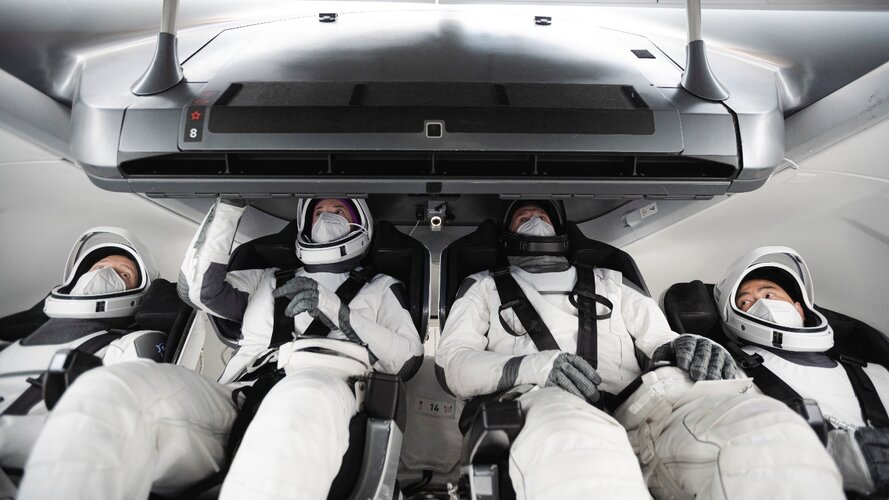
French ESA astronaut Thomas Pesquet is returning to the International Space Station on his second spaceflight. The mission, which is called Alpha, saw the first European to launch on a US spacecraft in over a decade. Thomas is flying on the Crew Dragon, alongside NASA astronauts Megan McArthur and Shane Kimbrough, and Japanese astronaut Aki Hoshide.
Mission Alpha liftoff
 Video:
00:04:13
Video:
00:04:13
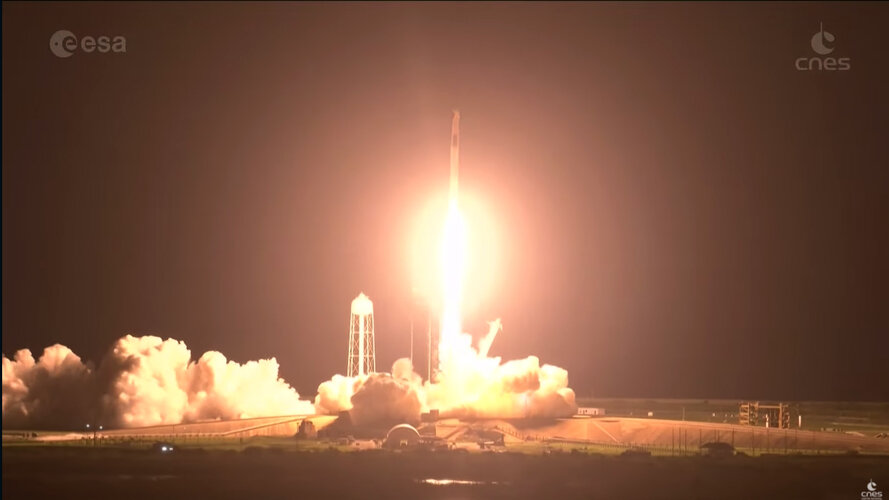
Liftoff of the Falcon 9 rocket and Crew Dragon spacecraft with ESA astronaut Thomas Pesquet, NASA astronauts Megan McArthur and Shane Kimbrough, and Japanese astronaut Aki Hoshide. The Crew-2 spend around 24 hours travelling to the International Space Station. The rocket lifted off at 11:49 on 23 April 2021 from Launchpad 39A in Cape Canaveral at NASA’s Kennedy Space Center in Florida, USA.
Thomas is the first ESA astronaut to fly in space in a vehicle other than the Russian Soyuz or the US Space Shuttle, and the first ESA astronaut to leave Earth from Florida, USA, in
Mission Alpha launch in images
Mission Alpha launch in images
Image gallery of the Mission Alpha
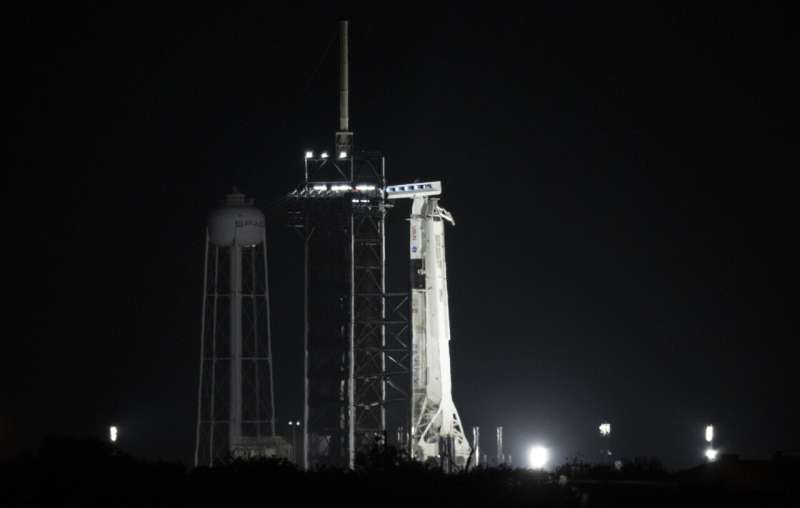
SpaceX set for pre-dawn launch to ISS
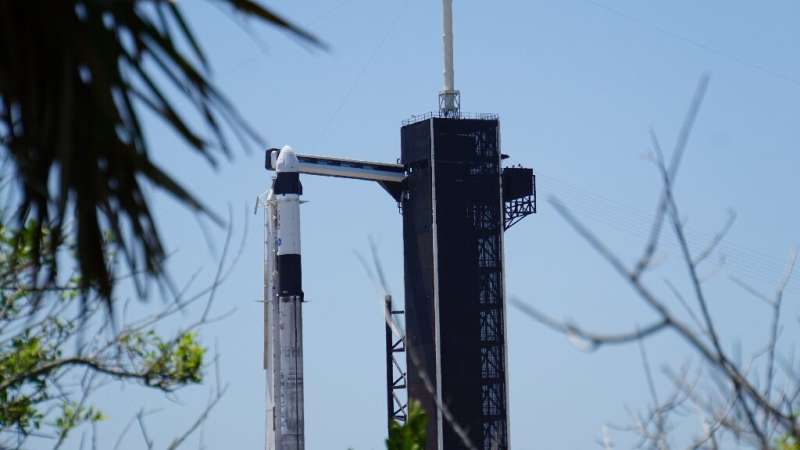
SpaceX is set to launch its third crew to the International Space Station an hour before sunrise Friday, recycling a rocket and spacecraft for the first time.
The Crew-2 mission blasts off from pad 39A at the Kennedy Space Center in Florida at 5:49 am Eastern Time (0949 GMT), after being delayed a day by adverse weather along the flight path.
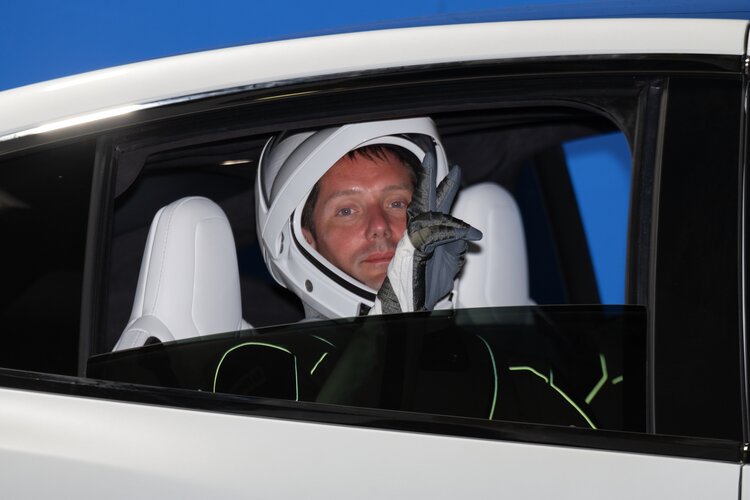
Around 2:30 am (0630 GMT), Thomas Pesquet of France—the first European on a SpaceX mission—along with Americans Shane Kimbrough and Megan McArthur and Japan's Akihiko Hoshide strode out in their suits to say goodbye to their families.
Astronauts arrive at pad for SpaceX flight on used rocket
Earth from Space: Laizhou Bay
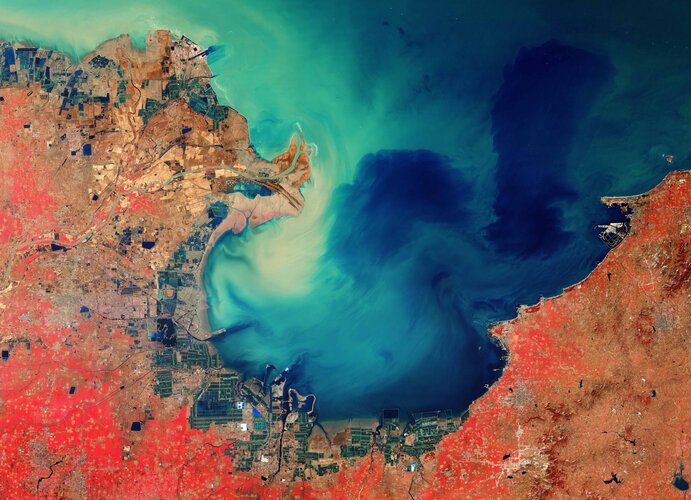
The Copernicus Sentinel-2 mission takes us over the sediment-stained waters in Laizhou Bay, located on the southern shores of the Bohai Sea, on the east coast of mainland China.