
Daniel is 52, a hospital administrator from Cleveland, and he arrives at every airport three hours early with a paperback he will not read. He told me this over a layover bar in Minneapolis, the way strangers tell you things when they know they will never see you again. He said his wife thinks he is anxious about missing the plane. His adult kids think he is getting rigid in his middle age. His assistant thinks it is a quirk worth teasing him about in the group chat. Daniel has let all of them keep their theories because the truth is harder to explain, and because explaining it would require admitting something he has only recently admitted to himself: the departure gate is the first place in about fifteen years where no one has needed anything from him.
He is not the only one. If you spend enough time in terminals, you start to notice the pattern. There is a specific demographic of traveler who arrives absurdly early, finds a seat facing the runway, and settles into a posture that is not vigilance but something quieter. They are not checking the departure board every three minutes. They are not pacing. They have the exact opposite energy of an anxious flyer. They look, if you watch long enough, like people who have been holding their breath for years and finally remembered they were allowed to exhale.
The conventional wisdom about early airport arrivals frames the behavior as anxiety — fear of missing the flight, fear of security lines, fear of the unknown variables that might stand between a person and their seat. That framing is not wrong for some travelers. For others, it gets the emotion backward. What looks like anxiety management is actually relief-seeking. The gate is not a threat to be neutralized three hours in advance. The gate is the destination.
Two people, same bench, different nervous systems
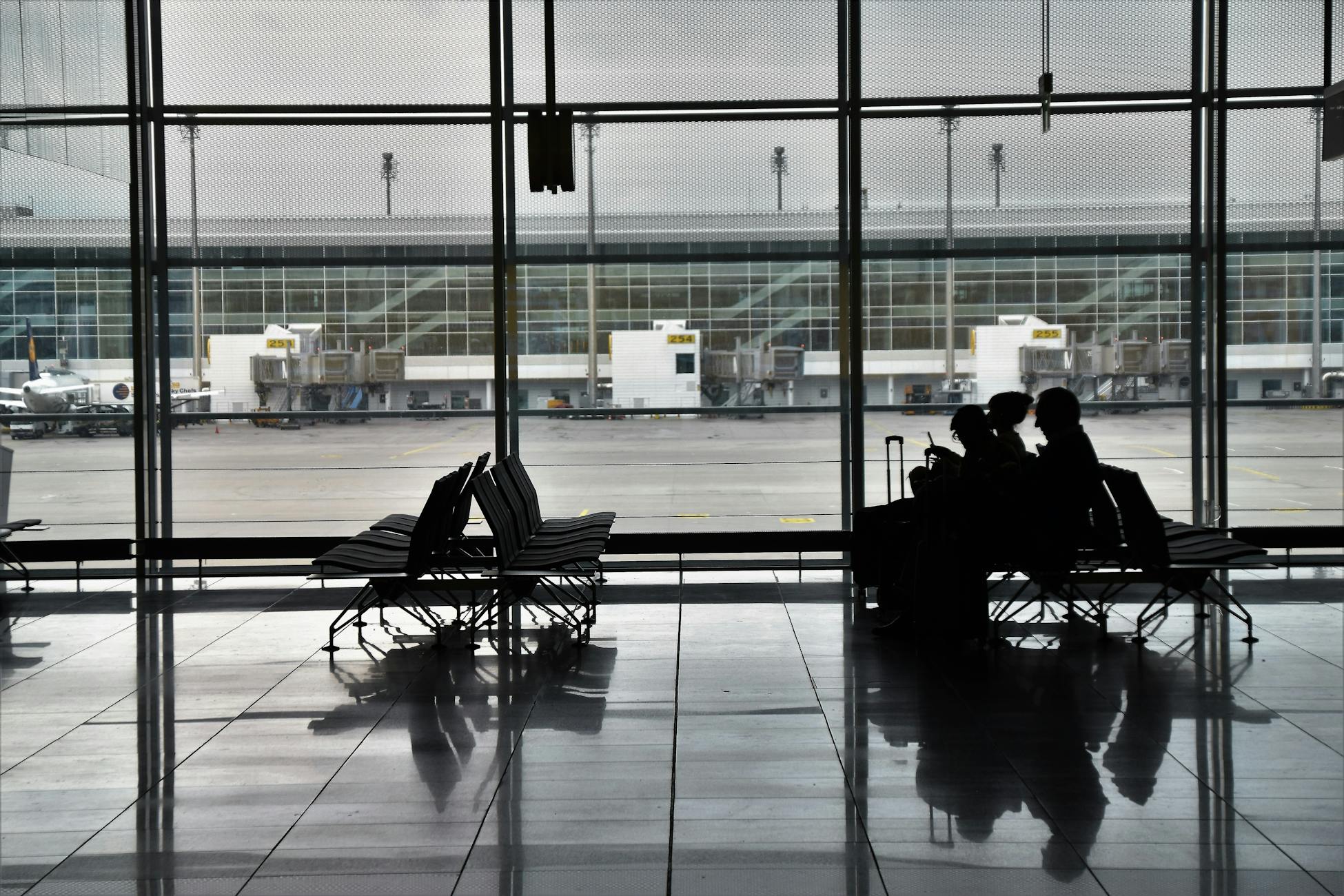
Sit near the window at any large American airport and you can usually tell the two groups apart within a few minutes. The first group vibrates. They check their boarding pass, then their watch, then the board, then their boarding pass again. Their shoulders are up near their ears. They are running a loop in their heads where something goes wrong and it is somehow their fault. Clinicians who study avoidance behavior recognize this pattern easily — the early arrival is a quick fix that temporarily lowers the anxious charge without addressing what is underneath it. These travelers are anxious about flying, or about lateness, or about disappointing whoever is picking them up on the other end.
The second group does something different. They arrive early, and then they go slack. They buy an overpriced sandwich and eat it slowly. They watch planes push back from the jet bridge without looking at their phones. Their faces are doing something that is not quite a smile but is clearly not distress. If you asked them what they were feeling, most of them would not have a word for it, because the word would be unreachable, and that is not a word people say out loud about themselves.
These are not anxious flyers. These are people for whom the airport gate has become one of the last places on earth where their phone is allowed to be on airplane mode for reasons no one will argue with.
The mathematics of being reachable
Consider what it takes, in 2026, to be unavailable. Most adults between forty and sixty-five have a phone that holds their work email, their family group chat, their aging parent’s medication reminders, their kid’s college financial aid portal, their spouse’s shared calendar, a half-dozen apps for coordinating other people’s lives, and a texting app where at least three separate people are waiting for a response they consider overdue. To be reachable is the default. To be unreachable requires a reason that other people will accept.
A flight is one of the last socially sanctioned reasons. Sickness does not count anymore, because you can text from bed. A meeting does not count, because you can respond between slides. A vacation certainly does not count, because the whole industry of remote work has made sure of that. But a plane — a plane still counts. The door closes. The flight attendant says the words. The phone goes into that strange liminal mode. And for the first time in possibly weeks, the ledger of obligations stops being updated in real time.
Which means the gate, the stretch of terminal where you are already past security and already committed to boarding but not yet boarded, becomes a kind of pre-silence. You are reachable in theory. You are not reachable in practice, because everyone who might reach you has already accepted that you are traveling. The group chat has told you to have a safe flight. Your boss has signed off. Your mother has reminded you to drink water. You are, for the first time in a long time, caught up. There is nothing owed at this exact minute.
For people who have spent years being the one others reach for, this feeling is almost unrecognizable at first. They often mistake it for boredom. Then, slowly, they start arranging their lives so that the feeling happens more often. Three hours early becomes the baseline. They tell people it is because of TSA. They do not tell people it is because the chair facing gate B14 is the only place they have sat down, fully, in months.
When reliability becomes a cage
There is a category of person who does not get to opt out of being useful. They are the family coordinator, the work fixer, the friend who handles the logistics, the adult child who manages the parent’s insurance calls. They were often trained for this role young. The people who became the reason nothing fell apart in their childhood households tend to grow into the adult who cannot let a text sit unanswered for twelve hours without a low, persistent hum of guilt. They do not experience their availability as a choice. It is closer to a posture the body holds automatically, the way some people sleep in a defensive curl.
Researchers who study burnout’s effect on personality have noted that chronic over-functioning doesn’t just exhaust a person — it reshapes what they can tolerate. The capacity to simply sit and be unsolicited atrophies. Silence starts to feel like a problem to solve. A day without requests starts to feel like a day where you must have forgotten something. The muscle for existing without task drains, and when it is finally used again, it cramps.
This is why the airport works. It is engineered, almost perfectly, to produce a state the over-functioning adult cannot produce for themselves at home. At the gate, there is nothing to fix. The infrastructure is someone else’s job. The plane will board when it boards. The snack bar will or will not have the thing you want, and neither outcome requires your intervention. The announcements are for everyone, not for you specifically. You are, for once, a passenger in the most literal sense.
The relief that dare not speak its name
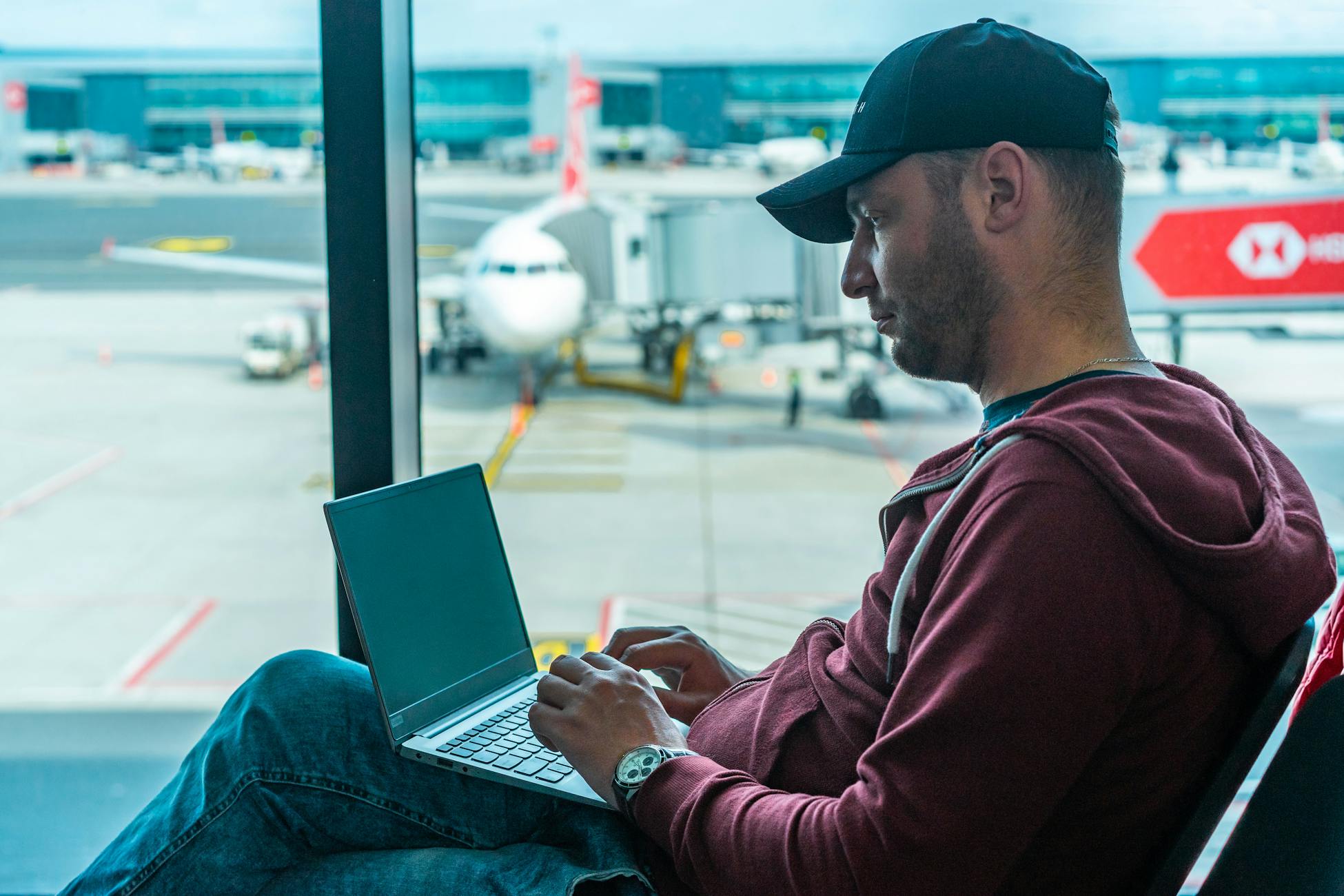
What makes this pattern hard to see is that the people living it will almost never describe it accurately. They will tell you they like to be early. They will tell you they hate feeling rushed. They will tell you security is unpredictable these days. They will not tell you that last Tuesday, sitting at a gate in Phoenix at 5:47 a.m. with forty minutes of battery on their laptop drained and nothing they could usefully do, they felt something close to peace for the first time since their father’s stroke, and that it scared them a little, because if peace is only available at an airport gate, that raises some questions about the rest of the architecture of their life.
Those questions are the ones that get deferred. It is easier to plan the next trip. A work conference in Denver. A wedding in Charleston. A visit to the in-laws that technically could be driven but, you know, with traffic, flying makes more sense. The frequency of travel goes up. The reasons given are always logistical. The actual reason — that the terminal has become a kind of refuge from a life where being needed has stopped feeling like being loved and started feeling like being consumed — stays unsaid, because saying it would require doing something about it.
And doing something about it is hard. It would mean going home and telling the people in your life that you need them to stop asking so much of you, which would require setting boundaries in ways that will initially feel like betrayal to everyone who has come to depend on your endless yes. It would mean admitting that the airport is not a quirk but a diagnosis. Most people will choose the airport.
What the gate reveals about the rest of the week
There is a useful diagnostic in all of this. If the only place in your life where no one is asking anything of you is a place you pay several hundred dollars to reach, something has gone wrong with how your week is structured. That is not a judgment. It is an observation about load-bearing. A life in which silence is only purchasable at the cost of a plane ticket is a life whose defaults have drifted somewhere unsustainable.
The people born in the generations that learned to measure their worth by their usefulness are particularly prone to this pattern, but it is not limited to them. Millennials raised on the ideology of availability — always responsive, always reachable, always the good employee and the good friend and the good child simultaneously — are arriving at airports earlier than their parents did, and for the same underlying reason, even if they would describe the feeling with different vocabulary. Recent neuroscience on approach-versus-avoidance circuitry suggests the brain treats chronic demand as a threat to move away from, which would explain why a terminal, of all places, can start to register as safety.
Daniel, in the Minneapolis bar, said something I have kept turning over. He said he had started checking into hotels the night before early flights, even when he lived twenty minutes from the airport. He said his wife did not understand it. He said he did not fully understand it either, except that the hotel room was quiet in a way his own house no longer was, and the quiet was not because nothing needed him. The quiet was because for one night, and then one gate, and then one flight, the people who needed him had agreed he was out of range. The permission was the gift. Not the silence. The permission to let the silence exist.
That is the part worth noticing the next time you are in a terminal and you see someone sitting three hours early with a paperback they are not reading. They might not be afraid. They might be the opposite of afraid. They might be the version of themselves they cannot access anywhere else, sitting in a row of plastic chairs, facing a runway, unreachable for the first time in a very long time, and not in any particular hurry for the plane to arrive.