
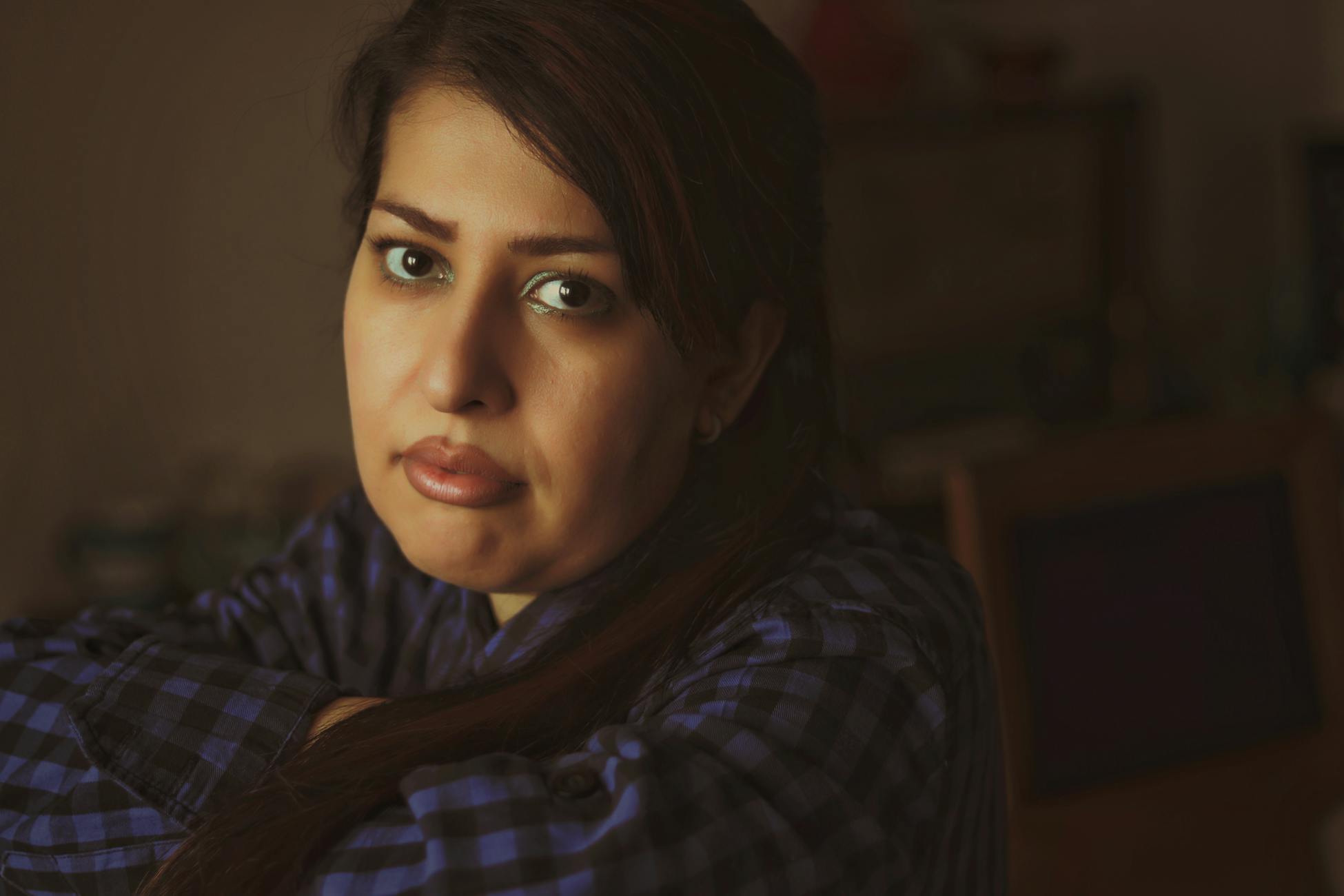
A woman named Priya, one of my wife’s former clients, once described her childhood to me in a single sentence she didn’t realize was devastating. She said her father used to call her "the serious one" the way other parents might say "the tall one." It was a category. It required no further inquiry. By the time she was nine, she had a running internal monologue about whether her face looked too grave at dinner, whether her silences were being read as sulking, whether her questions sounded too intense for the room. She is forty-three now. She runs a mid-sized nonprofit. She told my wife she still edits her face in Zoom windows before she speaks.
That detail has stayed with me. Because Priya didn’t describe herself as anxious, or traumatized, or hypervigilant. She described herself as a careful person. A thoughtful one. She believed — the way most people in her situation believe — that the constant background process of monitoring how she was being perceived was simply who she was. Part of her temperament. An ingredient of her personality, like her height or her handwriting.
It isn’t. That’s what this essay is about: the quiet reclassification that so many adults need to make, sometime in their late thirties or forties, when they begin to notice that what they thought was personality is actually a survival habit wearing formalwear.
The conventional wisdom about sensitive or serious children is that they "grew into themselves" — that the intensity got polished, the gravity matured into depth, and the adult is a natural continuation of the child. That framing collapses the second you interview the actual adults. What they describe is not a continuous identity. It’s a long adaptation. Somewhere between ages five and ten, they received a piece of information that changed everything: their interior experience was being misread by the people responsible for interpreting them. And they had no way to correct the record except by watching more carefully.
The Label Was Never a Description. It Was a Verdict.
When an adult tells a child they are "too sensitive," they are almost never describing the child’s sensitivity. They are describing their own discomfort with it. "Too serious" works the same way — it means the child’s register doesn’t match the register the adult wants to be in. The word that matters in both phrases is too. It signals that a measurement has been taken and the child has come in over the allowable limit.
Children absorb this. Not as feedback about a specific behavior, but as information about the fundamental legibility of their inner life. Research on self-criticism and internalized judgment suggests a predictable pathway: when a child’s emotional output is consistently treated as excessive or wrong, the child stops trusting the output itself. They begin running it through a filter before it leaves their body. The filter becomes the self.
This is not metaphor. The developing brain literally builds infrastructure around repeated demands. Neuroplasticity research has established that the neural pathways we use most often become faster, denser, and more automatic, while the ones we don’t use atrophy. A child who spends ten thousand hours monitoring their face, their tone, and the reception of their words is not practicing a skill. They are wiring a permanent observation tower.

The Tell Is That They Don’t Know They’re Doing It
The adults who carry this forward share a peculiar symptom: when you ask them whether they self-monitor, they usually say no. Not because they’re lying. Because the monitoring has achieved the same status as breathing. It happens below the threshold of conscious notice.
You can identify it by its residues instead. The thirty-second delay before answering a simple question, during which they are not thinking about the answer but about how the answer will land. The reflexive softening of anything that might be read as a complaint. The internal replay of a conversation hours after it ended, hunting for the moment they were misunderstood. The way they rehearse voicemails. The way they apologize for crying before they’ve finished the first sentence about what upset them. The fact that they can tell you, with surgical precision, what mood every person in the room was in — but cannot tell you what they themselves were feeling.
That last one is the tell. The people who were called too sensitive as children often grow into adults who can read every face at the table except their own. Their attention has been permanently aimed outward. The interior has become a place they visit through inference, the way an astronomer studies a planet they’ll never walk on.
This is the pattern behind a lot of what gets labeled as noticing everything about everyone. It is not a gift of empathy. It is a vigilance protocol that never got a shutdown signal.
Misreading Was the Original Wound, Not the Sensitivity
Here’s what most people miss when they try to understand this dynamic. The damage wasn’t being sensitive. The damage was being misread while sensitive, by the people whose job it was to read you accurately.
A child who cries because a scene in a movie scared them is having a legible experience. When the adult responds with "you’re too sensitive, it’s just a movie," two things happen at once. The feeling gets invalidated, which is the part everyone talks about. And the child’s interpretive accuracy gets revoked, which is the part nobody explains clearly. The child learns that their read of their own experience is not trustworthy evidence. Something else — the adult’s read, the room’s read, the culture’s read — is the real authority.
From that point forward, the child begins outsourcing. They watch faces to find out whether what they’re feeling is appropriate. They scan tone to determine whether their reaction is proportional. They develop what research on identity formation in adolescence describes as an externally-calibrated self — a self built in reference to other people’s reactions rather than in reference to internal signals.
This is also the origin story of people who apologize for taking up space in conversations. Their instinct for how much room they deserve was calibrated in a room that was always telling them it was too much.

Why the Habit Feels Like a Virtue
The cruel part is that the self-monitoring works. It really does prevent misunderstandings. It really does make other people comfortable. It really does produce people who are described, repeatedly, as "mature for their age," "so considerate," "easy to be around." The reward structure is real. Which is why the habit doesn’t feel like a wound. It feels like a competence.
And it is, in a sense. These adults are genuinely skilled at emotional navigation. They can de-escalate a tense dinner. They can sense when a friend is lying about being fine. They can write the difficult email that won’t be taken the wrong way. They have built, through ten thousand hours of enforced practice, something that looks from the outside like sophisticated emotional intelligence.
From the inside, it’s more complicated. Research on early parental responsiveness and emotional regulation suggests that what looks like composure in adults may have different developmental origins: some may have learned their emotions were safe to express, while others may have learned to prioritize managing others’ reactions over their own feelings. The behaviors look similar. The internal weather is not the same.
One costs nothing. The other is the particular exhaustion people describe when they say they can’t remember the last time they weren’t tired.
The Habit Doesn’t Know the War Is Over
The defining feature of a survival adaptation is that it runs whether or not it’s still needed. Studies on habit formation have shown that once a behavior becomes automatized — which, for complex behaviors, can take far longer than the popular 21-day figure suggests — it operates largely outside deliberate control. The brain treats the old environment as ongoing. It keeps sending out the old responses. It does this even when the adult is safe, loved, and surrounded by people who have no intention of mislabeling them.
This is why the thirty-eight-year-old who married a patient, kind partner still rehearses sentences in her head before saying them at breakfast. It’s why the forty-four-year-old who works for a boss who has never once snapped at him still feels his shoulders drop when he gets a one-line email asking if he has a minute. The external threat is gone. The internal monitoring is still on the clock. It was hired decades ago and nobody has told it the building closed.
I’ve written before about the people who look unusually calm in a crisis and the childhoods that produced them. The pattern here is a relative of that one. Same architecture, different finish. The hypervigilant adult and the preternaturally calm adult are often the same person wearing different uniforms on different days.
Reclassifying the Trait
The useful thing isn’t to stop self-monitoring. That’s not available, at least not quickly, and probably not completely. What’s available is reclassification.
The adult who begins to suspect that their constant scanning isn’t who they are, but something they built, starts to notice the difference between the watchtower and the person inside it. The watchtower keeps operating. But the person inside it is allowed, occasionally, to look away from the horizon. To have an unvetted feeling. To let a sentence leave the body without a compliance review. To find out whether they were actually sad, or just calculating the room’s tolerance for sadness.
This is quiet work. It doesn’t look like healing in any cinematic sense. It looks like a woman who has edited her face in Zoom windows for thirty years noticing, one Tuesday morning, that she didn’t edit it this time — and feeling, briefly, unmoored. The monitoring going quiet is not peace. Not at first. It’s closer to static. A missing signal where a signal used to be.
What comes after the static is not the point of this essay, partly because it’s different for everyone and partly because I don’t think anyone fully arrives there. But the reclassification matters on its own. Understanding that the vigilance is a habit and not a self is the first honest thing many of these adults will have thought about themselves in decades. It doesn’t fix anything. It just stops the misreading from being inherited one more generation down — by them, about themselves, in the voice they were handed at nine.