
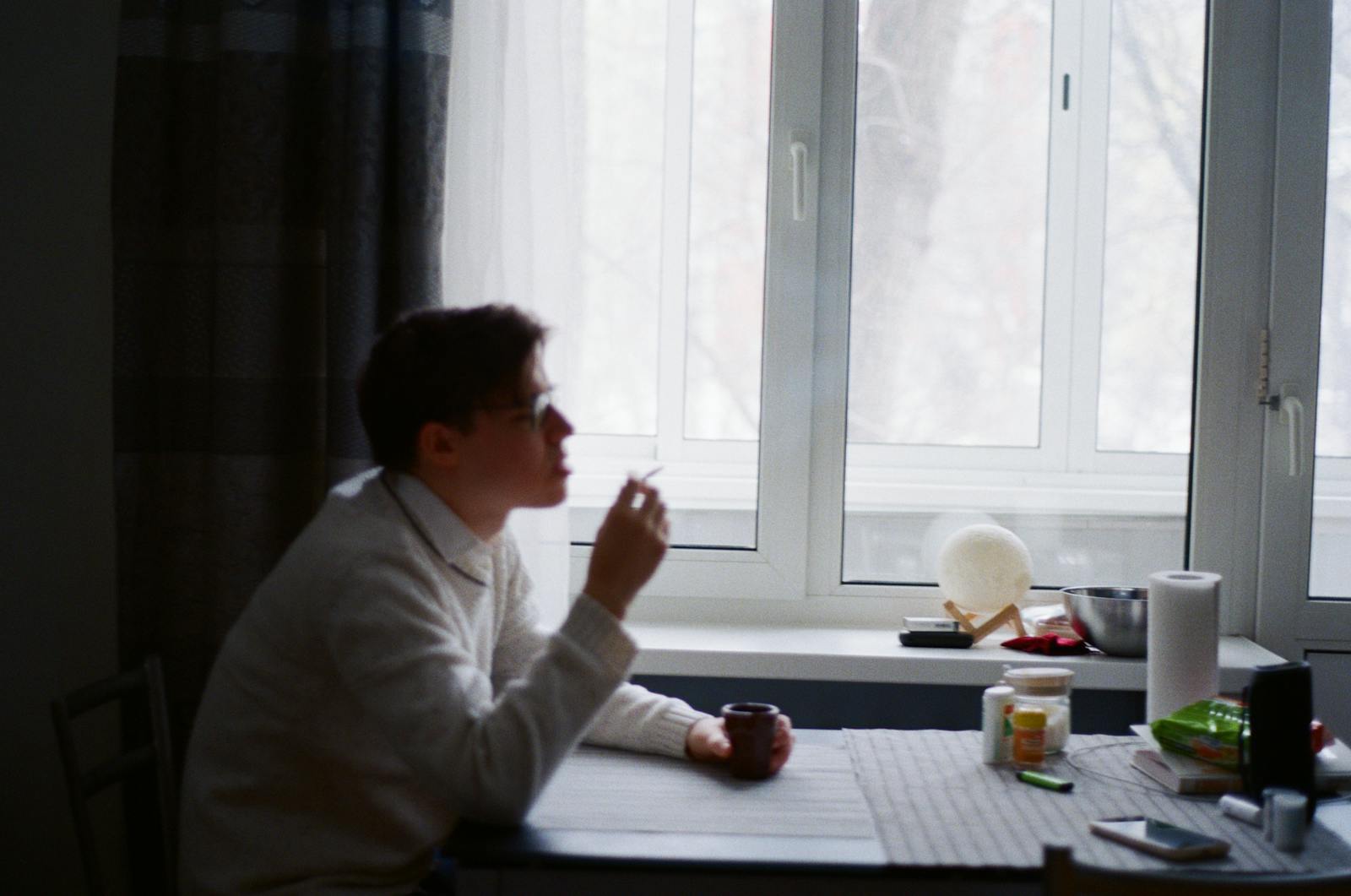
Restlessness gets a bad reputation it doesn’t fully deserve. We call people fidgety, high-energy, twitchy — as if the body is the problem. But watch someone who can’t tolerate five minutes of silence without reaching for their phone, tapping their foot, humming, or inventing an urgent task, and you’re usually not looking at excess energy. You’re looking at someone who has never been introduced to the person inside them, and finds that stranger unbearable to sit with.
Silence isn’t empty. It’s loud in a very particular way. It amplifies whatever you’ve been outrunning.
The fidget isn’t the issue. What the fidget interrupts is.
There’s a useful distinction between functional restlessness and avoidant restlessness. The first is what researchers describe when they talk about fidget objects helping people regulate attention and stay present during boring or demanding tasks. Research on fidget items published in The Conversation found that adults and children often use small tactile objects to fine-tune their level of stimulation — a smooth stone, a clicking pen, a popping toy that lets the nervous system settle into a task.
That kind of fidgeting is regulation. It helps people stay.
Avoidant restlessness looks similar from the outside but works in the opposite direction. It doesn’t help you stay with yourself. It helps you leave. The phone check at a red light. The television that has to be on before you can even make dinner. The podcast in the shower. The scroll the moment a conversation pauses. These aren’t tools for focus. They’re tools for preventing contact with whatever shows up when the noise stops.
Why silence feels like a threat
When external input drops, internal input rises. The body starts talking. You notice your jaw is tight. You notice a vague sadness that’s been hanging around for a week. You notice you’re angry at someone you told yourself you’d forgiven. You notice you don’t actually like the job, the friend, the version of your life you’ve been defending.
For people who were never taught that any of that was allowed — let alone useful — this flood of information arrives as a threat, not as data. The natural response is to make it stop. So you reach for whatever reliably overrides the signal.
Research on interoception, the sense of your own internal state, suggests that our ability to perceive body signals is closely tied to how we experience time and self-awareness. A recent study on consciousness and bodily signals found that the felt sense of being a self is constructed, in part, from the ongoing stream of information the body sends the brain. When that stream is chronically muted or overridden, the self becomes harder to locate. People describe feeling foggy, hollow, not quite real. Silence threatens to make that hollowness visible.
The skill nobody taught us
The ability to sit with yourself — to notice what you feel, label it accurately, and not flinch away — is a learned skill. It doesn’t develop on its own. Someone older has to show you that feelings are information rather than emergencies, that discomfort can be held rather than fixed, that your internal life deserves attention and language.
Most of us didn’t get that education. We got the opposite. Stop crying. Don’t be dramatic. You’re fine. Go play. Figure it out.
A growing body of work on what schools actually prepare children for suggests that emotional literacy has historically been treated as optional. Researchers at the University of South Australia have argued that the human skills machines cannot replicate — self-awareness, emotional regulation, the ability to form accurate internal narratives — are precisely the skills classrooms spend the least structured time teaching. We produced generations who can solve equations and still can’t name what they feel on a Tuesday afternoon.
When the tools for internal conversation were never handed to you, sitting in silence isn’t peaceful. It’s a blank page in a language you were never taught to read.
Suppression wears a calm face
People often mistake chronic restlessness for anxiety, and sometimes it is. But often it’s something more specific: the downstream effect of a lifetime of emotional suppression, which looks composed until it doesn’t.
Psychologist James Gross’s research on emotion regulation, discussed in a Psychology Today analysis of how emotion regulation is commonly misunderstood, distinguishes between reappraisal — actually processing what you feel and reframing it — and suppression, which is the strategy of pushing the feeling out of view without ever examining it. Suppression works in the short term. You look fine. You get through the meeting. You don’t make a scene.
Over time, it costs you access to yourself.
People who have relied on suppression as their primary regulation strategy often describe the same thing: a growing sense that they don’t know what they actually want, what they actually feel, or who they actually are when no one is watching. The restlessness is the symptom. They can’t be alone with a self they’ve spent decades filing down.
How this shows up in relationships
The inability to be alone with yourself rarely stays private. It shapes who you pick, how you treat them, and what kind of intimacy you’re capable of sustaining.
A Forbes analysis by psychologist Mark Travers describes three patterns of emotional disconnection that show up in long-term relationships. One of the most revealing is what he calls the operational relationship — two people who talk constantly but rarely about anything internal. Logistics replace intimacy. Conversations stay at the level of groceries, schedules, weekend plans, and what the kid did at school. Nothing wrong happens. Nothing real happens either.
That pattern almost always reflects two people who cannot, individually, tolerate the kind of silence where real conversation begins. If you can’t sit with yourself, you cannot sit with another person in any deep way. You have to keep the surface busy. The relationship becomes a co-regulated avoidance strategy.
This is part of why people who are excellent at listening often feel starved for someone who can ask them a real question back. They’ve become skilled at occupying the other person’s interior because their own has been a locked room for most of their lives. When somebody finally asks what they actually think or feel, they often discover they don’t know. The question itself is the silence they’ve been avoiding.
The cultural upgrade of the distraction
What makes this harder now than it was for previous generations is that the distractions have become socially encouraged. Constant availability is framed as responsibility. Scrolling is framed as staying informed. Filling every quiet moment with a podcast is framed as self-improvement. You can spend fifteen hours a day avoiding yourself and be praised for your productivity.
My wife runs a startup, and one of the patterns she talks about most is how founders confuse activity with progress. The same confusion plays out internally. We mistake motion for a life. We mistake stimulation for aliveness. We mistake the absence of boredom for wellbeing.
There’s a version of this I notice in myself as a parent. My daughter is seven, and the instinct to fill her silence — with a game, a show, a question, a snack — is constant. Sometimes it’s genuine engagement. Sometimes it’s me offloading my own discomfort with a quiet room onto her. Kids are often better than adults at sitting with nothing. We train it out of them pretty quickly.
What you’re actually avoiding
When people start to examine what silence brings up, the contents are usually not dramatic. It’s rarely repressed trauma or shocking revelation. It’s much smaller and more uncomfortable than that.
It’s the dissatisfaction you haven’t let yourself name. The grief for a version of your life that didn’t happen. The resentment you’ve been carrying toward someone you’re supposed to love without reservation. The low hum of loneliness that sits under an otherwise full social calendar — the kind of loneliness that comes from having plenty of friends and realizing not one of them would notice if you withdrew for a month.
It’s the honest assessment you’ve been outrunning. The one that might require you to change something.
That’s the real reason silence is uncomfortable. It’s not that nothing happens in it. It’s that something very specific happens: the truth you’ve been managing around gets a chance to speak, and once it does, you can’t pretend you didn’t hear it.

Learning the conversation in adulthood
The hopeful part of this is that the skill can be built at any age. You don’t need a therapist to start, though one helps. You need small, repeatable increments of exposure to your own interior, which is exactly what most of us have been structurally avoiding.
The beginning is unflattering. Most people who try to sit in silence for ten minutes report that the first five are agitating, the next three are boring, and somewhere in the last two something interesting shows up — a memory, a feeling, a question they hadn’t realized was sitting there. The practice is just staying long enough for that something to surface.
Journaling works through the same mechanism, which is why it feels so hard to start. The blank page is a form of silence. You have to be willing to let your actual thoughts appear, in their actual shape, without immediately editing them into something more presentable.
In my recent piece on why the loudest people in group settings often need days to recover afterward, I touched on this same mechanism from a different angle. The performance of being fine uses energy. The energy has to come from somewhere, and it usually comes from the reserves people would otherwise use for being with themselves. The more performance you run externally, the less available you are internally, and the more unbearable silence becomes when it finally arrives.
Not all restlessness means the same thing
It would be a mistake to read every tapping foot as repressed grief. Some people genuinely have high baseline energy. Some are managing ADHD, which is a distinct neurological pattern and not an avoidance strategy. Some are using fidget objects exactly the way the research suggests they work best — to stay regulated during long, demanding tasks.
The diagnostic question isn’t whether you move. It’s whether you can stop moving and stay, when staying is what the moment asks for.
Sit in a waiting room without reaching for your phone. Drive without a podcast. Eat a meal alone without a screen. Lie in bed for five minutes after waking up without checking anything. If these feel mildly inconvenient, you’re probably fine. If they feel threatening, that’s useful information about how much of your life has been organized around not meeting yourself.
The conversation waiting on the other side
What people eventually discover, when they learn to sit in silence, is that the self they were avoiding isn’t actually the enemy they’d built up. It’s more often a version of them that’s been trying to get a word in for a very long time and has been consistently talked over.
That self has opinions. Preferences. Grief that needs acknowledgment. Desires that have been deferred for so long they’ve almost been forgotten. Anger that has good reasons. Tenderness that’s been rationed to everyone but you.
The conversation isn’t scary once it starts. The scariness is in the decades of refusing to have it.

People who can sit in silence aren’t more disciplined than the rest of us. They’ve just been introduced to the person inside them, and they’ve found that person worth listening to. That introduction is available to anyone willing to stay in the room long enough for it to happen. The room is quieter than most of us are used to. That’s the point.
Photo by anait film on Pexels