
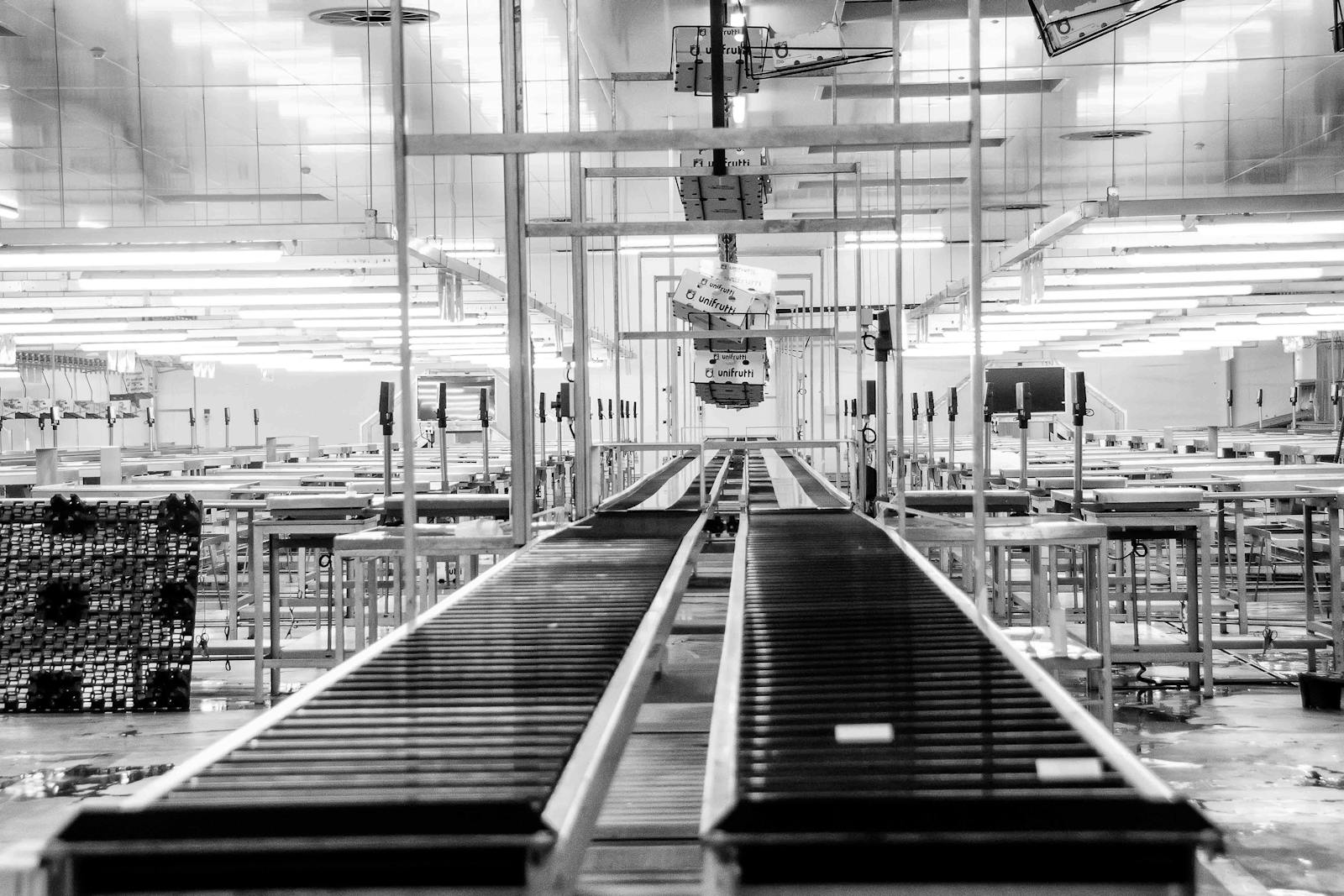
China has built or is building dozens of satellite factories with a combined theoretical output of over 7,000 spacecraft per year, yet launched just several hundred satellites in 2025 — a gap that defines both the ambition and the bottleneck of the country’s commercial space buildout.
The figures come from a survey by Chinese space industry outlet Hello Space, cited by SpaceNews, which reported dozens of operational facilities, with more under construction and additional plants planned. Operational plants alone can already turn out thousands of satellites annually, with future facilities expected to add significantly more capacity. Whether China can actually fill those production lines with orders, and then get the hardware to orbit, is a separate question entirely.
A manufacturing base built for constellations that don’t yet exist
The immediate driver is obvious. Guowang and Qianfan, China’s two flagship low-Earth-orbit broadband projects, are reportedly slated to comprise tens of thousands of satellites between them. Additional constellations filed with the ITU push the long-range paper total into the hundreds of thousands of spacecraft. No serious analyst expects all those filings to materialize, but the manufacturing buildout suggests Beijing wants the option.
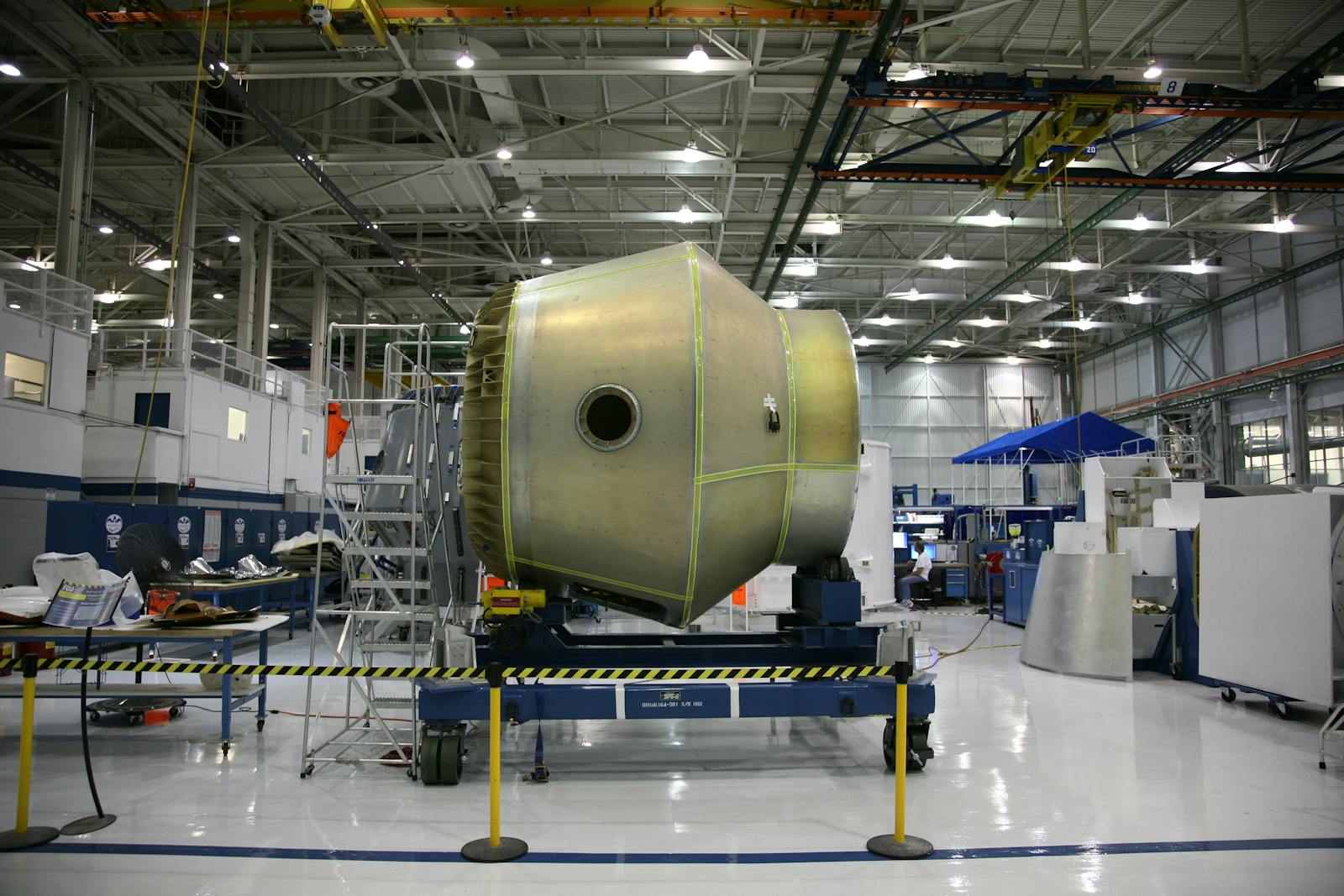
The geographic spread matters as much as the raw numbers. Shanghai, home to state-owned SAST and IAMCAS, hosts multiple operational factories with substantial capacity. Zhejiang province also has significant production capability. Jilin, anchored by Changguang Satellite, can produce hundreds of satellites annually. Beijing and Hainan are each working toward additional large-scale capacity. Hainan’s large-scale satellite production facility sits adjacent to launch facilities, a deliberate co-location designed to compress the supply chain.
This isn’t accidental sprawl. It’s industrial policy executed through regional governments competing for a piece of what Beijing has decided will be a strategic sector.
Three categories, one strategy
Hello Space’s analysis sorts the manufacturers into three buckets. Traditional state players — the China Academy of Space Technology and IAMCAS — anchor production for Guowang. Commercial firms like GalaxySpace, MinoSpace and Geespace operate market-driven factories chasing constellation contracts. And then there are the regionally-driven plants: Hainan’s hub, the Haiyang maritime spaceport in Shandong, and the Jinan Satellite Manufacturing Base, which is controlled by — of all things — the Jinan Iron and Steel Group.
A steel conglomerate building satellite factories is the kind of detail that tells you what’s actually happening here. Local governments and state-owned industrial groups are being pulled into the space sector because Beijing has signaled it wants them there. The central government has formally designated commercial space an emerging pillar industry, unlocking policy support, state financing and industrial development programs.
The pillar designation is the bureaucratic equivalent of a green light to every provincial governor and SOE chairman who wants to claim a piece of the next big thing.
The launch problem is the real problem
None of this matters if the satellites can’t get to orbit. And right now, they can’t — at least not at anything approaching the scale Chinese factories could supply.
Independent tracking by astronomer Jonathan McDowell, whose orbital statistics are the standard reference for this kind of accounting, shows China launched several hundred satellites in 2025. SpaceX launched over 3,000 Starlink satellites in the same period. China’s manufacturing capacity exceeds its actual deployment by a factor of more than ten.
The launch fleet explains most of the gap. China still relies heavily on expendable Long March variants — older hypergolic boosters and newer cryogenic and kerosene-fueled vehicles — supplemented by smaller solid rockets from commercial firms. None of these are reusable. None operate at Falcon 9 cadence. The economics don’t support batch deployments at Starlink scale.
That’s changing, slowly. Chinese commercial launch firms are developing reusable rockets and ramping up their capabilities. Existing launch centers are being expanded. New spaceports, including the commercial complex at Hainan, are coming online.
Why the overcapacity is the point
From an editorial perspective, the most interesting thing about China’s satellite manufacturing buildout is that the overcapacity isn’t a mistake. It’s the strategy.
Western commentary tends to treat the gap between substantial theoretical capacity and limited actual launches as evidence of dysfunction — proof that Chinese industrial planning produces white elephants. That reading misses what Beijing is actually doing. Building factories is the easy part of catching SpaceX. Building a launch industry capable of cadence comparable to Falcon 9 is the hard part. By front-loading manufacturing capacity, China ensures that whenever the launch bottleneck breaks, the supply side won’t be the constraint.
It’s a bet that production lines can sit half-idle for a few years and still pay off when reusable rockets finally close the cadence gap. Given how aggressively Chinese commercial launch firms are iterating, that bet looks defensible.
The commercial demand question is harder. Guowang and Qianfan are state-backed and will get filled regardless of unit economics. But the factories being built also target remote sensing, IoT, meteorology, direct-to-device connectivity, navigation augmentation and even on-orbit computing. Some of those markets are real. Others are speculative. The large-scale ITU filings look more like spectrum-and-orbit squatting than business plans.
What this means for the global constellation race
The competitive implication for Western operators is straightforward. SpaceX’s deployment lead remains enormous, and Amazon’s Kuiper is the only Western program with comparable ambition and capital. But China is building the industrial base for a sustained, high-cadence buildout that could persist for a decade or more, backed by state financing that doesn’t need to clear the same return hurdles as private capital.
The question of whether U.S. policymakers can establish workable rules for an LEO that may eventually host hundreds of thousands of operational spacecraft becomes less theoretical with every factory that comes online in Shanghai or Hainan. Spectrum coordination, conjunction management, and orbital debris policy were all designed for an era when satellite launches were measured in dozens per year, not thousands.
It also reframes how to think about China’s broader space program. The crewed lunar push and the deep-space missions get the headlines. The satellite factory buildout is the less glamorous but probably more strategically consequential story — the industrial backbone that determines whether China can sustain a presence in LEO comparable to what SpaceX has built largely on its own.
The watch items
Three things are worth tracking over the next 18 months. First, which Chinese reusable rockets actually achieve operational cadence, and how quickly they ramp. Vehicle reliability and turnaround time, not maiden flights, will determine the launch ceiling. Second, how Guowang and Qianfan deployment rates evolve. If both constellations start hitting hundreds of satellites per launch campaign, the manufacturing-to-orbit gap will close fast. Third, whether the regional factories find non-megaconstellation customers, or whether Beijing ends up subsidizing capacity that the commercial market can’t absorb.
The buildout itself is no longer in question. What’s being decided now is whether China’s satellite industry will look, by 2030, like a successful American-style commercial sector or like a state-directed program with a commercial veneer. The factories don’t tell you which. The launch numbers will.
Photo by Frans van Heerden on Pexels