
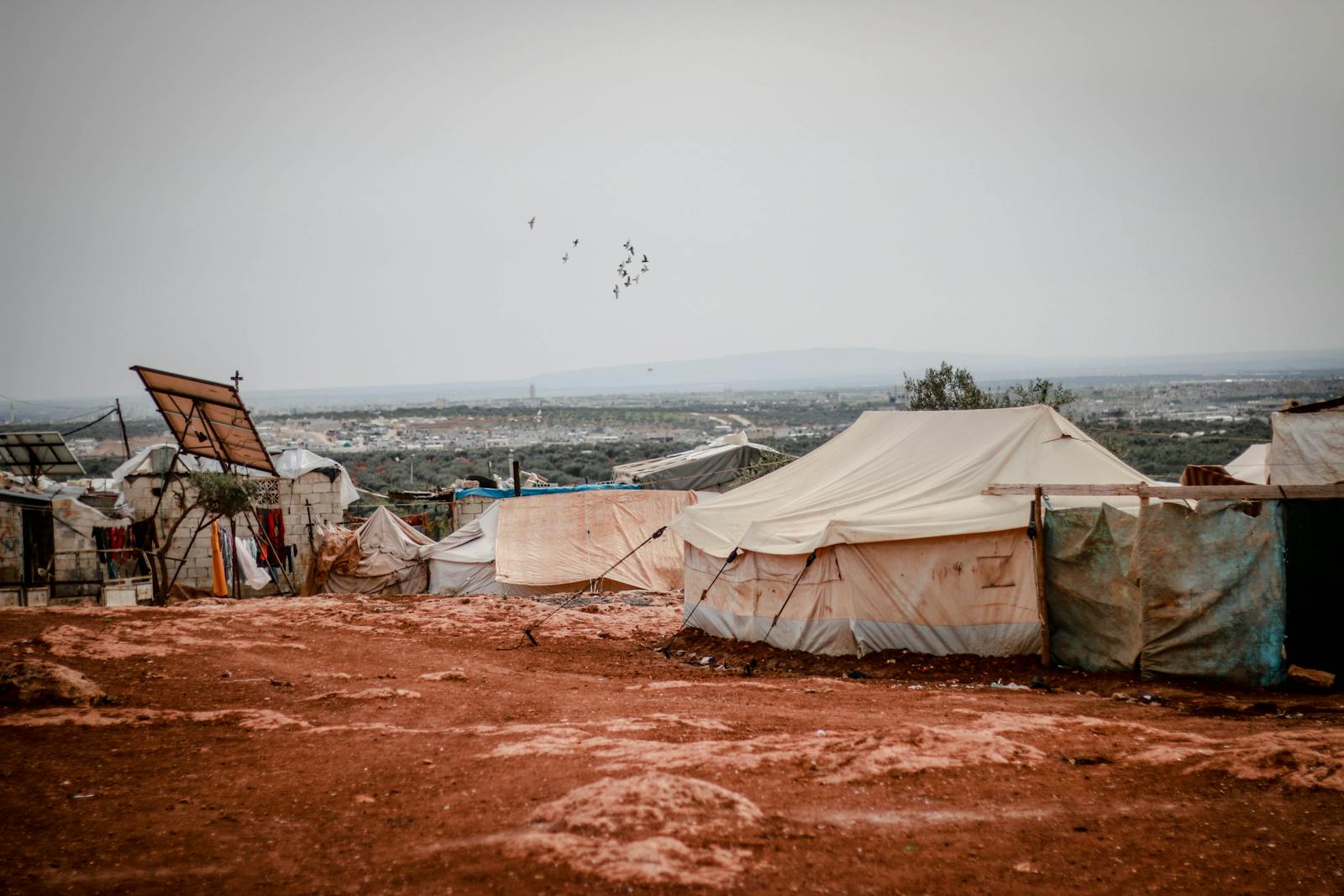
Morocco has become the reluctant terminus for Sudanese refugees fleeing a civil war now in its third year, yet the country’s refusal to implement a long-promised asylum law has left thousands in a legal vacuum with no right to work, no state housing, and the constant risk of being pushed back south. The pattern reveals something larger than any single border crisis: how middle-power states on Europe’s periphery absorb the political costs of migration while receiving none of the institutional tools to manage it.
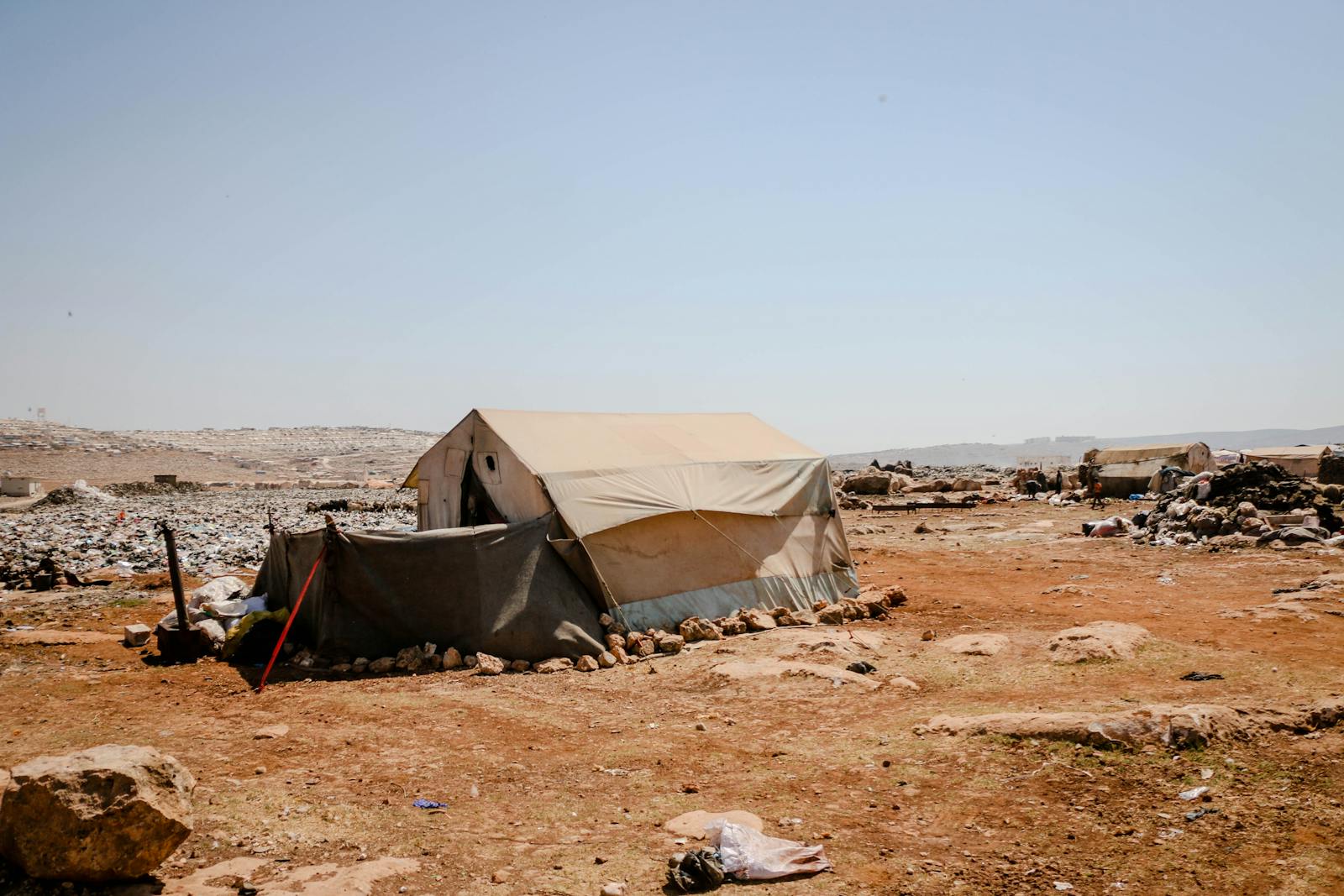
A three-country gauntlet
The route to Morocco is brutal. Sudanese refugees typically cross Libya and Algeria before reaching Morocco’s eastern border, a multi-year journey marked by detention, trafficking, torture, and forced labor, according to Al Jazeera’s reporting. Many arrive physically broken and psychologically shattered.
According to reports, Yasmina Filali, president of the Rabat-based Fondation Orient-Occident, has described the Sudanese refugee community as severely traumatized and in desperate condition. Filali reportedly characterized the situation as painful and tragic, emphasizing the dire circumstances facing the community.
Hind Benminoum, a psychologist at the organization, has reportedly described refugees along the route as being treated inhumanely and deprived of basic freedoms.
The war they fled began in April 2023, when a power struggle between the Sudanese Armed Forces and the paramilitary Rapid Support Forces exploded into open conflict. Space Daily has previously covered how 33 million Sudanese are now in humanitarian need, with disabled populations facing the steepest barriers to survival.
A signatory without a system
Morocco is a signatory to the 1951 Refugee Convention. It has been drafting an actual asylum law for over a decade. No law exists. UNHCR handles registration because the state apparatus that would normally do so has never been built.
The result is a two-tier system. Refugees get a UNHCR card that offers some protection against deportation in theory, but confers almost none of the rights the convention promises in practice. Fewer than 0.5 percent of registered refugees and asylum seekers in Morocco can access formal employment, according to UNHCR figures cited by Al Jazeera. The state provides no accommodation. It provides no secondary healthcare.
That 0.5 percent figure is the one worth sitting with. It means that for every 200 registered refugees, 199 are locked out of the legal labor market in a country that has positioned itself as a regional hub for African migration policy.
The Ethiopian contrast
The comparison with other African states is instructive. In late 2024, Ethiopia granted refugees the legal right to work, register businesses, open bank accounts, and move beyond camp settings. Ethiopia is not a wealthy country. It hosts close to a million refugees. It still concluded that locking refugees out of the economy creates more problems than it solves.
Morocco, by contrast, hosts a much smaller refugee population and has a larger GDP per capita. It has no formal camps. And yet the policy architecture is more restrictive than Ethiopia’s. The explanation is not economic. It is geopolitical.
The geography of deterrence
Morocco’s position matters because of where it sits. The Strait of Gibraltar is approximately 14 kilometers wide at its narrowest point. The Spanish enclaves of Ceuta and Melilla are the European Union’s only land borders in Africa. Any migration policy Morocco adopts is read in Madrid and Brussels first.
Refugees, aid groups, and UNHCR told Al Jazeera that Moroccan authorities consistently push Sudanese refugees toward the south of the country, further away from Europe. Meanwhile, Algerian and Libyan authorities push refugees back north. Refugees end up bouncing between borders, never stable, never deportable in bulk, never granted the paperwork that would let them settle.
This is deterrence by ambiguity. No government has to announce a policy of mass deportation. The absence of an asylum law, combined with the absence of work rights, combined with the absence of housing, accomplishes the same goal through attrition.
What the numbers hide
The 22,370 figure understates the problem. It captures only those who have made contact with UNHCR. Refugees who have been pushed south, who avoid authorities out of fear of deportation, or who are stuck in transit in Algeria and Libya don’t appear in Moroccan statistics at all.
Coverage of the Sudan conflict has described the war as the world’s largest humanitarian crisis, with displacement figures in the tens of millions. Morocco is receiving a rounding error of that total. The system is still failing.
Sudanese women face particular risks along the route. Space Daily has reported that women in Darfur live at near-constant risk of sexual violence, according to Médecins Sans Frontières. That risk does not disappear at the border. It compounds across Libya, Algeria, and into the informal economy in Moroccan cities.
A 17-year-old’s calculus
Young Sudanese refugees have reportedly described feeling they had no alternative but to make the dangerous journey, with limited options available to them.
That sentence is the entire migration policy debate in miniature. Deterrence strategies assume rational actors weighing alternatives. When the alternative is a war zone, deterrence does not deter. It only determines how much suffering the journey will contain.
The institutional question
Morocco is widely regarded by regional analysts as one of the safer countries in North Africa for refugees. That is a damning benchmark. It means the baseline for safety in the region is a country where 99.5 percent of refugees cannot legally work, where an asylum law has been promised for 13 years without being passed, and where authorities push vulnerable people toward the Sahara to keep them away from Europe.
The war in Sudan shows no sign of ending. U.S.-led efforts to extend truces have repeatedly collapsed under renewed air strikes. The flow of refugees north will continue. The question for Morocco, and for the European governments whose policies shape Morocco’s behavior, is whether the current arrangement is the unintended byproduct of institutional inertia or the intended outcome of a system designed to look humane while functioning as a wall.
The evidence, at this point, favors the second reading.
Photo by Ahmed akacha on Pexels