

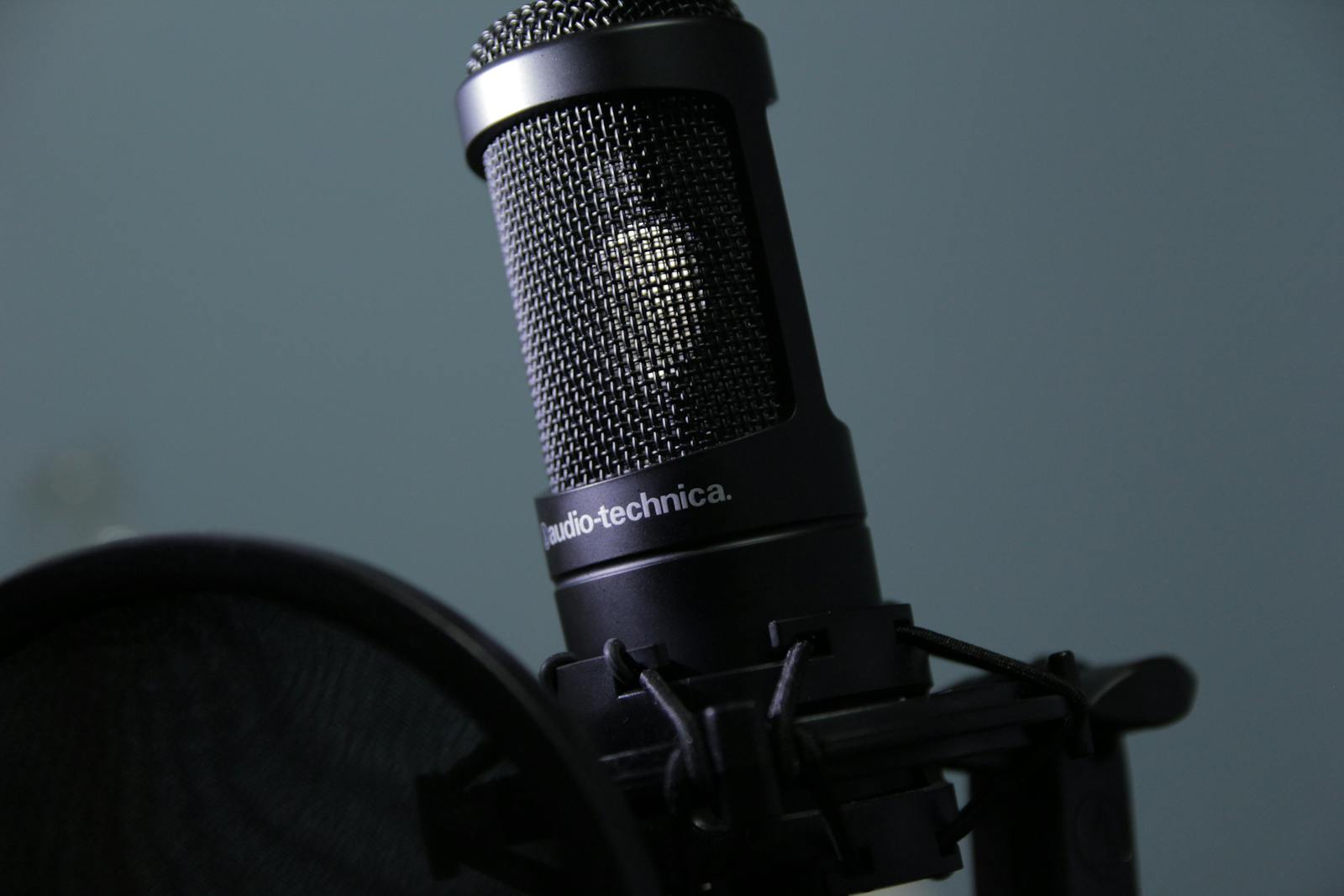
There’s a particular quiet in a Senate hearing room about ninety seconds before a witness begins testimony — that flat hum of the HVAC, the rustle of staff papers, the soft click of the microphone being nudged into position. I spent five years listening to that silence, watching people prepare to speak on the record. And the tell I came to recognize faster than any other was the preface. The throat clear. The patterns like apologizing before making a point or prefacing questions with unnecessary disclaimers. The phrases that preemptively apologize before asking clarifying questions. These weren’t polite formalities. They were flinches.
The person hadn’t said anything yet. They were already bracing.
I’ve been thinking about this pattern a lot since a conversation with my wife last week about one of her immigration clients, a woman who begins every sentence with an apology before she asks a question she has every legal right to ask. My wife described it the way a cardiologist describes an arrhythmia — as a signal of something older than the moment.
The preface is a defensive structure
Linguists and psychologists have been circling this behavior for years without quite agreeing on what to call it. In workplace research, it gets labeled over-apologizing. In trauma literature, it sits inside the broader category of fawning. In sociolinguistics, it shows up as hedging, softening, or qualifying speech. The labels differ. The underlying architecture is the same.
The person is pre-loading the conversation with an apology because somewhere, at some point, speaking without one produced a reaction they couldn’t afford. So the nervous system built a buffer.
Executive coach Melody Wilding, writing for Psychology Today, describes over-apologizing as a habit that undermines authority and corrodes self-esteem. She notes the pattern is especially common in women, partly because of how young girls are socialized toward deference while young boys are coached into boldness. But she also points to something deeper than socialization: the words become filler because the speaker doesn’t know what else to say. The apology is a placeholder for a confidence that was never built, or was knocked down somewhere along the way.
What the preface is actually doing
Watch the behavior closely and you can see it’s doing three jobs at once.
First, it’s lowering the stakes of whatever comes next. If the idea fails, the speaker already apologized for it — the failure was anticipated, so it can’t be used against them. Second, it’s reading the room for threat. The apology is a probe. How does the listener respond? Irritated? Dismissive? Warm? The speaker calibrates from there. Third, and this is the one that matters most, it’s signaling submission before submission is demanded.
That third function is what therapists call the fawn response. The British Psychological Society has written about how people who grew up around controlling or narcissistic adults often develop a near-automatic accommodation reflex. The fawn isn’t a conscious strategy. It’s a survival behavior the body learned when the alternative — arguing back, asking directly, taking up space — produced consequences that were too costly to repeat.
Clinician Arielle Schwartz, writing at Psychology Today, describes fawning as a trauma response in which a person suppresses their own needs to keep peace with someone they experienced as unsafe. Over time, the suppression generalizes. The person starts fawning in low-stakes interactions — with baristas, with coworkers, with spouses — because the body doesn’t distinguish between the original threat and its current echo.
How the reflex gets wired in
The origin stories vary. Some people learned it from a parent who treated every question as a challenge to their authority. Others learned it in classrooms where speaking up drew ridicule. Others learned it from bullying. Research published in The Conversation has documented how childhood bullying produces measurable, lifelong psychological changes in how people approach social situations.
The pattern isn’t confined to one demographic. It shows up in immigrants code-switching between languages, in first-generation professionals in rooms where they feel like impostors, in adult children of volatile parents, in survivors of domestic violence, in people with ADHD and PTSD who’ve been told their whole lives that their timing is off. Researchers writing at Psychology Today have explored how people with conditions like ADHD and PTSD may develop compensatory behaviors for emotional responses they’ve been shamed for in the past.
What unites all these origins is a single lesson: speaking without a buffer was punished.
The linguistic evidence
Language carries this history in ways most of us don’t notice. Linguistic research, including work discussed on WBUR’s On Point, has documented how the way we speak signals our cultural background, race, age, and class. Research on hedges and fillers — the likes, the you knows, the sorrys — pushes back against the common assumption that these words are weakness. They’re social tools. They manage relationships in real time.
But social tools can calcify into armor. A hedge that started as politeness becomes a verbal tic. A sorry that started as courtesy becomes a reflex. And once it’s a reflex, it stops serving the speaker. It starts serving the memory of the room that taught them to flinch.
This is the part that matters. The preface-apologizer isn’t choosing deference. They’re executing a script written years ago by someone else’s reaction.
Why the workplace rewards and punishes this at the same time
Here’s where the pattern gets cruel. The same workplaces that reward the over-apologizer for being easy to work with also quietly penalize them for lacking executive presence. The preface that makes you seem considerate in a one-on-one makes you seem uncertain in a pitch meeting. The softening that reads as collaborative in an email reads as hedging in a board presentation.
I saw this dynamic constantly in the think tank world. Brilliant analysts — often women, often people of color, often immigrants or children of immigrants — would caveat their way into invisibility. The substance was unimpeachable. The delivery had so much scaffolding around it that the point got lost. Senior leadership would then reward the person with fewer qualifications but more confidence, and the cycle would repeat.
The frustrating part is that the over-apologizer often knows this. Wilding’s coaching clients tell her they can’t help it — the words come out before they’ve decided to say them. That’s not a vocabulary problem. That’s a nervous-system problem.
The family inheritance
Some of what we’re describing gets passed down. A parent who flinches transmits flinching. A parent who apologizes for existing teaches a child that existence requires apology. Researchers at UC Berkeley’s Greater Good Science Center have examined family estrangement and pathways to healing between parents and adult children.
I think about this watching my young son. He’s at the age where he’s learning the shapes of conversation — when to ask, when to wait, when to push. My wife and I talk often about what we’re modeling. Kids don’t absorb the content of what you say. They absorb the posture you hold while saying it. A parent who braces before every sentence raises a child who braces before every sentence.
The space policy world has its own version of this. Staffers who came up under volatile principals speak differently than staffers who came up under secure ones. You can hear it in hearings, in briefings, in the way a question gets posed. The ones who were trained by yellers preface everything. The ones who weren’t, don’t.
Even unrelated anxieties carry the signature
The pattern shows up in places you wouldn’t expect. Research covered by Popular Science on extreme dental fear has traced how childhood experiences of powerlessness — being held down, being dismissed when expressing pain, being told not to cry — produce adults who apologize to their dentist for having a body. It’s not really about teeth. It’s about having learned that your discomfort is an inconvenience to the person with authority over you.
That lesson generalizes. It moves from the dental chair to the conference room to the dinner table to the text message you draft four times before sending.
What changes the pattern
The honest answer is: not willpower. You cannot white-knuckle your way out of a nervous-system response that was installed in childhood. The people who’ve managed it — and I’ve watched several close colleagues do it — do it slowly, and usually with help.
The first step is noticing. Most over-apologizers have stopped hearing themselves. The apology has become as audible to them as their own breathing. Catching it on a recording, or having a trusted person gently flag it in the moment, is often the entry point.
The second step is substitution, which Wilding writes about directly. Wilding suggests substitution strategies, such as replacing apologies for lateness with expressions of gratitude for others’ patience. The content is nearly identical. The posture is completely different. One apologizes for taking up space. The other takes it.
The third step is harder. It’s grief, essentially — sitting with the fact that somewhere along the way, someone taught you your voice was a problem. That realization is not a pleasant one. But without it, the reflex keeps running the program.
The point that gets lost
Apologies matter. A well-placed, specific apology — for a real harm, offered without excess — is one of the most powerful tools in human communication. That isn’t what we’re talking about. What we’re talking about is the apology that arrives before any harm has occurred, for the anticipated offense of simply existing in the conversation.
That apology isn’t politeness. It’s a receipt from an earlier transaction. Someone, somewhere, charged this person for speaking, and they’ve been paying the bill in advance ever since.

The work of unlearning it is the work of realizing the bill was never theirs to pay. The room they’re bracing for isn’t the room they’re in. It’s a room from a long time ago, and the person who ran it isn’t in charge anymore.
Most of the time, nobody in the current room is even keeping score.
The preface is a ghost. It takes a long time to stop speaking to ghosts. But it can be done, one unqualified sentence at a time.
Photo by Henri Mathieu-Saint-Laurent on Pexels