
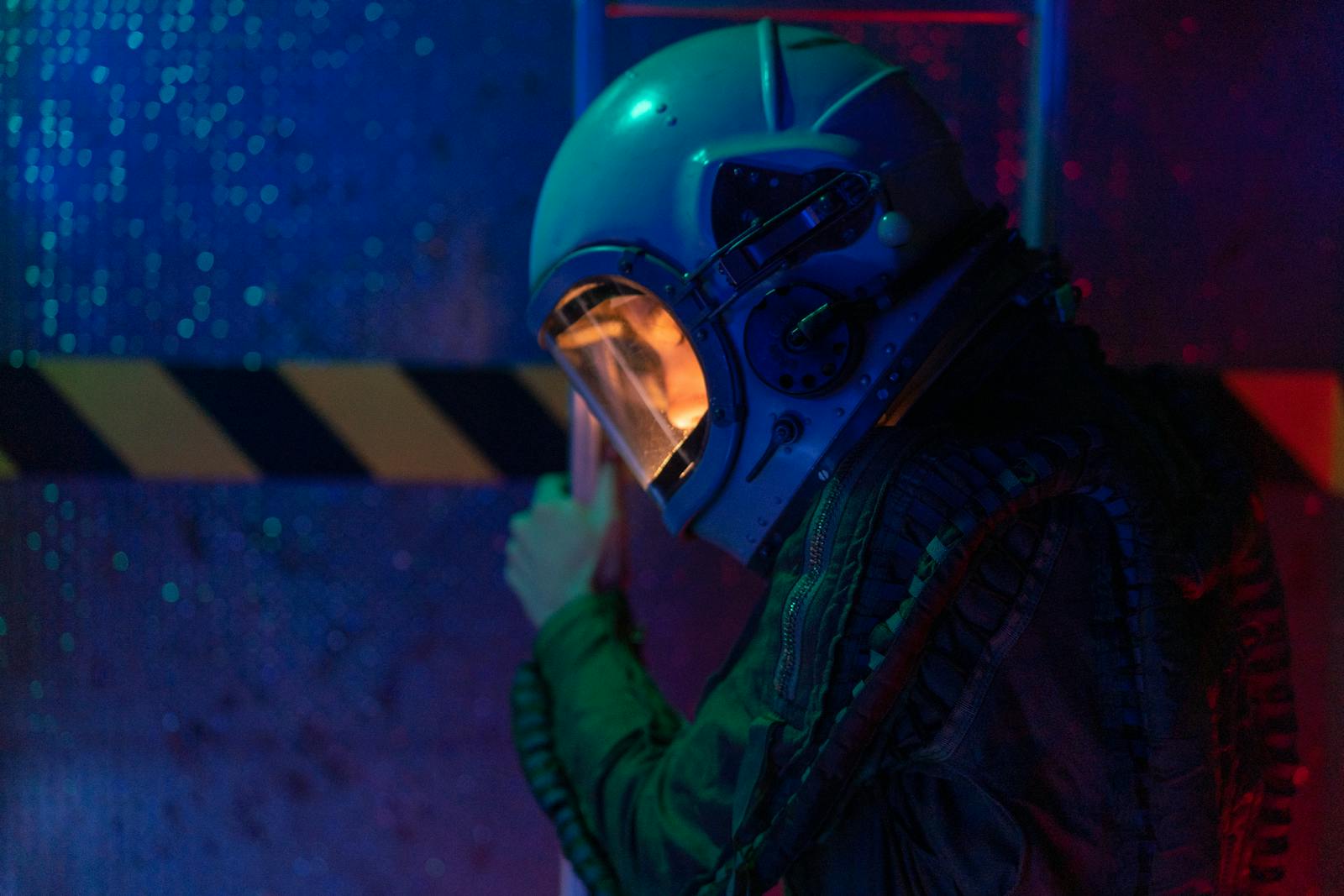
The fight that ends a mission is almost never about the oxygen budget. It’s about who gets to sit in silence without being asked what’s wrong.
In studying long-duration crews, the conflicts we prepared crews for — resource scarcity, command authority, task allocation — were rarely the ones that actually broke team cohesion. The ones that did were quieter, stranger, and almost impossible to write into a training manual. They were fights about psychological real estate. About who got to be tired without performing tiredness. About who got to withdraw without triggering an intervention.
The role nobody volunteers for and everyone wants
In long-duration crews, research suggests a pattern that emerges within the first several weeks. One person became the emotional barometer — the member whose mood the others read to decide how the day was going. Another became the fixer, the one who smoothed conversations and absorbed tension. A third became the task anchor, relentlessly productive, keeping the schedule moving.
And then there was the quiet one. The person who retreated into their work, their book, their headphones, and was permitted to do so without comment.
That role — the permitted solitude — is among the most contested positions on any isolated crew. Observations of otherwise stable professionals, people who passed every psychological screening an agency can devise, have documented simmering resentment over who got to be left alone.
Why solitude becomes a scarce resource
In a confined habitat, privacy isn’t a physical condition. It’s a social permission. You can close a door, but if three other people are tracking your mood, your silence still costs something. It registers. Someone asks if you’re okay. Someone adjusts their behavior around your perceived state.
The quiet one, by contrast, has been granted an exemption. Their silence has been socially coded as normal. They can close the door and nobody interprets it. That’s the luxury.
Nick Kanas, the psychiatrist who has studied crew interactions since Apollo, has documented dynamics of interpersonal tension in confined crews. That tension is partly because expressing it internally would require someone to break their assigned social role. The fixer can’t suddenly become difficult. The anchor can’t suddenly become withdrawn. And the quiet one, who would most benefit from speaking up, has built their equilibrium around not doing so.
What the research actually shows about role allocation
Team behavior in isolation doesn’t follow the tidy models we use in training. Work mapping team behavior across mission phases suggests that the social architecture of a crew consolidates early and becomes surprisingly rigid. The roles people fall into during the first weeks tend to persist, and attempts to renegotiate them later generate more friction than the original allocation ever did.
This matters because role allocation in isolation isn’t a conscious process. Nobody explicitly negotiates these roles by saying something like: I’ll be the emotional barometer, you be the quiet one. It emerges through thousands of micro-interactions: who laughs first at a joke, who flinches at bad news, who reaches for their headphones during the third week of bad food. By the time anyone notices the pattern, it has calcified.
And the person who got the quiet role didn’t necessarily want it more than anyone else. They just performed the relevant behaviors first, or most credibly, or with the least apparent effort.
The resentment nobody will name
After analog missions, crew debriefs often reveal resentment not about workload but about perceived emotional imbalances—frustration that some crew members appear to have fewer social obligations than others.
What sounds like petty grievance is something deeper. It’s the recognition that one crewmate has been granted an emotional exemption the others have not. And in a six-month mission, that exemption compounds. The person who doesn’t have to perform okayness saves energy every day. The person who does have to perform it spends energy every day. By month four, the deficit is enormous.
This exhaustion — of being the person everyone describes as doing fine when you haven’t actually been asked in months — is precisely what the non-quiet members of a crew accumulate. They are fine because they are performing fine. The quiet one is fine because they have been permitted to not perform at all.
Why task conflicts are easier to resolve
Task and resource conflicts have a grammar. You can quantify them. Two people want the same workstation at the same time; someone builds a schedule. The water ration is uneven; you redistribute. These problems are solvable because they have surfaces you can touch.
Role conflicts have no surface. If I tell my crewmate I resent that they get to be quiet while I don’t, I have just done the thing that proves I am not the quiet one. The complaint itself disqualifies me from the role I am complaining about. The only people who can credibly occupy the quiet role are the ones who don’t verbalize wanting it.
This is the trap. The resource is allocated specifically to those who don’t ask for it. Which means those who do ask for it — who notice the imbalance, who have the emotional literacy to articulate it — are structurally excluded from ever receiving it.
The commander problem
Commanders make this worse without meaning to. A supportive commander, the kind the research consistently identifies as protective against crew breakdown, tends to check in on crewmates. That checking-in is valuable. It’s also asymmetric. The commander checks in on the members who seem to need checking in on. The quiet one, by design, does not seem to need it. So they are checked on less. So their solitude is reinforced. So the asymmetry widens.
This dynamic plays out in analog studies. The commanders who are best at crew cohesion are often, unintentionally, the ones who most efficiently protect the quiet one’s privileges. They aren’t playing favorites. They are responding to signal. But the signal is itself the product of the role allocation they are reinforcing.
What happens when the quiet one cracks
The most destabilizing event in a long-duration crew is not a resource crisis. It’s the moment the quiet one becomes not-quiet. When the person who has been socially coded as self-sufficient suddenly needs something, the entire crew’s equilibrium collapses. Not because the need is unreasonable — it almost never is — but because the other roles have been built around the assumption of that person’s invisibility.
The fixer doesn’t know how to fix for them. The barometer can’t read them. The anchor can’t redirect around them. Everyone has to reorganize, and reorganization under six months of accumulated fatigue is brutal.
This is among the dynamics that long-duration isolation studies have surfaced. In extended confinement, crews experience delayed communication, autonomy challenges, and multiple stressors. Some isolation studies have documented patterns of withdrawal from group life, though the specific dynamics vary by mission.
Why outgroup members get hit hardest
In mixed crews — different nationalities, different agencies, different native languages — the role allocation is not neutral. The quiet role tends to fall, disproportionately, to whoever is the outgroup member. Not because they prefer quiet, but because they have fewer tools for claiming the more active social roles. Language friction, cultural unfamiliarity, and subtle exclusion push them toward the path of least social resistance.
The quiet role falling to the outgroup member means the ingroup is relieved of the obligation to draw them out. The quietness becomes self-reinforcing, and what looks like a respected personality trait is actually a social structure nobody designed and nobody can dismantle.

The loneliness inside the role
Being the quiet one is not a gift. It looks like one from the outside — the protected solitude, the permission to withdraw — but inside the role, it has its own cost. You become the person whose interiority nobody asks after. Your silence is interpreted as contentment. Your withdrawal is read as stability. And when you do need something, you have no script for asking, because the role was built on not asking.
This is a loneliness by social classification — not because the person is alone, but because the role they occupy has made certain forms of help socially unavailable to them.
What we can actually do about it
The standard intervention — scheduled interpersonal sessions, sometimes called ‘bull sessions’ in the literature — helps, but only if they’re structured to surface role dynamics rather than just task grievances. Most crews, given a free-form discussion hour, will talk about schedules and food. They will not talk about who gets to be quiet, because the grammar for that conversation doesn’t exist in most professional contexts.
What has been observed to work in analog environments is explicit role rotation. Not task rotation — role rotation. For one week, the quiet one is asked to be the first to speak in morning briefings. The fixer is given permission to withdraw. The barometer is told their mood is not the crew’s weather report.
It is uncomfortable. It is also an intervention that can actually redistribute the social economy of a confined crew. Team reflexivity — the practice of explicitly reflecting on how the team is functioning — is one of the few reliable predictors of resilience in high-stress project teams, and it works precisely because it makes invisible structures discussable.
The Mars problem
Everything I’ve described gets worse on a Mars mission. Two and a half years. Twenty-five minute communication delays. No real-time support from the ground. A receding Earth. The role a crewmember falls into during week six of the outbound transit will be the role they occupy when they’re walking on Mars, and again when they’re on the way home. There is no reset.
This is why psychological selection for Mars cannot just be about individual resilience. It has to be about role flexibility — the capacity to occupy different social positions at different times, to be the quiet one in one phase and the barometer in another. The crews that will survive Mars are not the ones with the most stable personalities. They are the ones whose personalities can be renegotiated without breaking.
What the fight is really about
When a long-duration crew finally erupts — and most of them do, at some point, in some form — the trigger looks trivial. A dish left in the sink. A tone of voice during a status update. A joke that landed wrong. The post-incident debriefs always identify these triggers and always miss the point.
The fight is almost never about the dish. The fight is about the fact that one person has been allowed to not-notice the dish for four months, and another person has been noticing it, and the noticing has been uncompensated. The role economy has been running a deficit, and the deficit finally came due.
Psychologists who study these crews have been converging, slowly, on the recognition that the hardest conflicts in isolation are not distributive. They are positional. They are about who gets to occupy which emotional space, and under what terms, and at what cost to whom. We have excellent tools for resolving conflicts about things. We have almost none for resolving conflicts about roles.
That gap is where the next generation of crew psychology research has to live. If we’re going to send humans on a two-and-a-half-year journey to Mars, we need to stop pretending the problem is the oxygen budget. The problem is the silence budget. And nobody has figured out how to ration that fairly yet.
Photo by Mikhail Nilov on Pexels